Milwaukee Hits Pause: Council Votes 13-0 to Freeze New Data Centers for a Year
Milwaukee's Common Council has halted new data centers and most expansions for up to a year so the city can write zoning rules for them, something its code has never had. The fight started with a 19,000-square-foot server room proposed for an empty Walmart. The rules now being drafted would block anything over 60,000 square feet, in a city that planners say was never going to attract a hyperscale campus anyway.
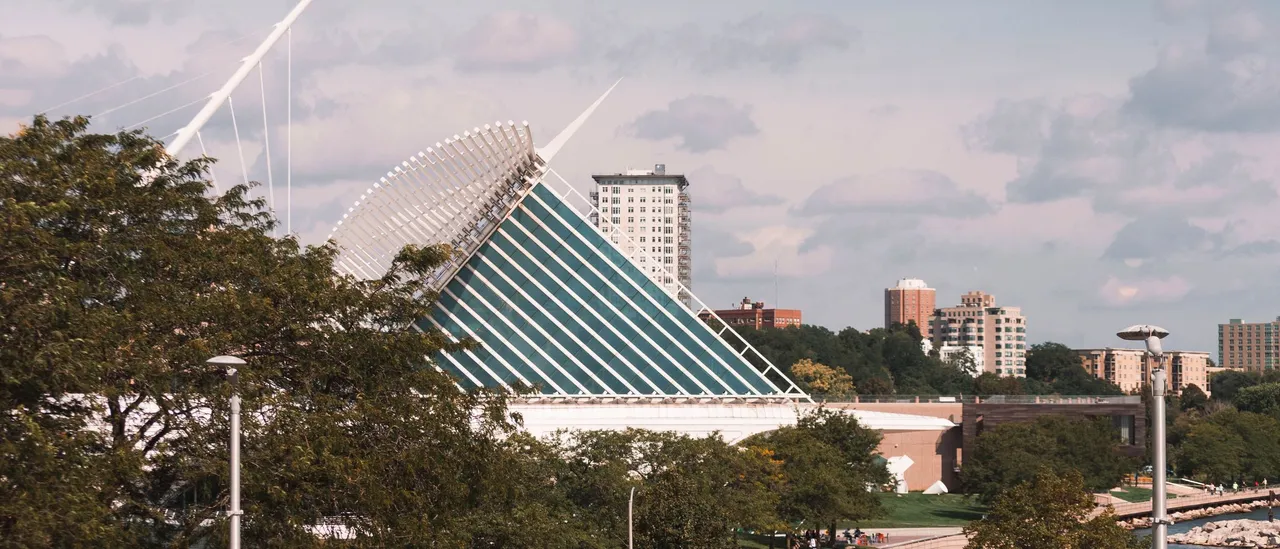
Milwaukee’s Common Council voted 13-0 on Tuesday, October 13, to put new data centers on hold for a year. The ordinance, File 251924, tells city departments not to issue permits or act on zoning applications for any new data center, whatever its size, or for most expansions of existing ones. The council wants the time to write rules on noise, energy use, water, and air quality, none of which the zoning code currently addresses, according to Urban Milwaukee. Ald. Robert Bauman and Ald. JoCasta Zamarripa were excused from the vote. A spokesperson for Mayor Cavalier Johnson confirmed Tuesday that he supports the measure.
The pause lasts one year, or until permanent regulations take effect if that happens sooner, and state law lets the city extend it by six months if it finds an extension absolutely necessary. It is not an outright ban. A developer can still apply for a site-specific Detailed Planned Development zoning change, which requires public notice, hearings, and approval from both the City Plan Commission and the full council.
How a vacant Walmart started it
The push for a moratorium began at Midtown Center, 5825 W. Hope Ave., where a Walmart has sat empty on a roughly 15-acre site that AFS Milwaukee, LLC bought in 2022, according to WPR. This spring the owners proposed a mixed-use redevelopment with a library, affordable housing, and a 108,000-square-foot building for self-storage and “data processing.” About 19,000 square feet of that building would have been computing space, per WPR and Urban Milwaukee. Ald. Mark Chambers, Jr. said residents “have not received nearly enough information,” per WPR, and the Plan Commission pulled the item from its May 18 agenda. By July, after months of opposition, the developer had dropped the computing portion of the project, Urban Milwaukee reported. The store is still empty.
Photo: Jan van der Wolf / Pexels
The episode exposed a gap in the code. Milwaukee’s zoning ordinance has no “data center” use at all, Urban Milwaukee reported, and the framework Ald. Marina Dimitrijevic had been drafting since December set its lowest threshold at 20,000 square feet, so a 19,000-square-foot facility would have fallen below it. “My goal is to do the regulation. But I had to have a backup plan,” she said on July 24, when she announced that the council would pursue a moratorium, per Urban Milwaukee.
The backup plan turned out to be complicated too. The city had last used a zoning moratorium in 2023, for vape and e-cigarette shops, but changes in case law since then meant the data center version had to go through the full zoning process, Urban Milwaukee reported. A committee postponed its July 28 vote after the City Attorney’s Office said state law required a public hearing first, per CBS 58, and that pushed the Plan Commission hearing back to September 28.
The rules the pause buys time for
The permanent framework, introduced in May and described by WPR, would create a “data center” land use for the first time and divide it into three tiers. Facilities of 20,000 square feet or less would be a limited use, permitted without a legislative hearing as long as they use closed-loop cooling and meet city noise rules. Facilities of 20,001 to 60,000 square feet would need special-use approval from the Board of Zoning Appeals, along with an engineer’s report on energy use and noise and a statement describing how the project benefits the community. Anything over 60,000 square feet would be prohibited unless the council approved a site-specific zoning change after public hearings. Developers “could actually still seek permission, but it would be quite difficult,” Dimitrijevic told WPR.
The May draft allowed data centers only in light and heavy industrial districts, per WPR. A substitute version in July narrowed that to Industrial Heavy parcels, which cut the eligible sites from roughly 2,400 to about 600, and added a requirement for three community meetings with the district alder, according to Urban Milwaukee. The moratorium itself also supplies the definition the code was missing. It defines a data center as a facility used mainly to operate or provide access to computer and network infrastructure, excluding ordinary server rooms, per Urban Milwaukee. The Department of City Development now has to turn the draft into law. Planning Manager Tanya Fonseca called the pause a “stopgap” and said the city is “certainly” trying to meet the one-year deadline, per Urban Milwaukee. She also told WISN that some of the noise from mechanical equipment may be beyond the city’s authority to regulate.
Who testified
The City Plan Commission endorsed the moratorium unanimously on Monday, September 28, after nearly two hours of discussion, Urban Milwaukee reported. More than a dozen people spoke, per FOX6, and most of them supported the pause, per WUWM. “Technology is moving at such a fast speed, the government can’t just keep up,” Dimitrijevic told FOX6. Melody McCurtis of Metcalfe Park Community Bridges told the commission, “We need a pause,” and argued that steering data centers onto heavy-industrial land would put the burden on Black and Brown neighborhoods.
One of the supporters runs a data center himself. Ryan Brooks is chief technology officer and general manager of Data Holdings, a 46,000-square-foot facility owned by the Forest County Potawatomi near 31st and Highland. He told the commission the building uses no water for cooling and runs on onsite solar, per FOX6. “I work at a data center and I am supportive of this proposed legislation,” he said, per WUWM. “It is a public data center, not a hyperscaler,” Brooks said, per Urban Milwaukee, which is the distinction the ordinance is trying to draw. Its rows of racks are roughly what the 20,000-to-60,000 tier was written to cover.

Photo: Brett Sayles / Pexels
Business groups opposed the moratorium. The Metropolitan Milwaukee Association of Commerce asked for “clear, predictable and enforceable standards” handled through the existing review process, and Chris Mambu Rasch of Building Advantage suggested a conditional-use path instead, per Urban Milwaukee.
“A pause of up to one year would effectively shut Milwaukee out of new data center investment.”
Andrew Davis, MMAC’s vice president of government affairs, said that in a September 25 statement quoted by the Daily Reporter. Joel Roberts, a UW-Milwaukee doctoral student who founded the AI traffic-analytics startup Shepherd Traffic, made a similar argument from a small-business perspective. “And when you strangle the ability to build stuff, the price goes up and the first people out are little tech, like us,” he told FOX6.
The Zoning, Neighborhoods and Development Committee endorsed the ordinance without opposition on October 6, Urban Milwaukee reported. Bauman, whose proposed exemption for the Potawatomi facility had been dropped from the file, argued that the statewide opposition is really aimed at large AI campuses on rural land, per Urban Milwaukee. At Tuesday’s vote, cosponsor Ald. Alex Brower said the council was sending “a message to the tech barons” and that “the revolt against AI is happening.” Council President José G. Pérez asked planners to consider the fiscal benefits along with the costs. Dimitrijevic told the Daily Reporter, “I think that this is a bubble that will bust soon.”
Why hyperscale was never coming downtown
Fonseca told the committee that the city does not expect hyperscale facilities because it does not have the land for them, per Urban Milwaukee and the Daily Reporter. The campuses that have made Wisconsin a national flashpoint are on farmland at the edges of the metro area, well away from the lakefront, where the breakwater and its lighthouse mark a shoreline that runs north toward Port Washington and south toward Racine County.
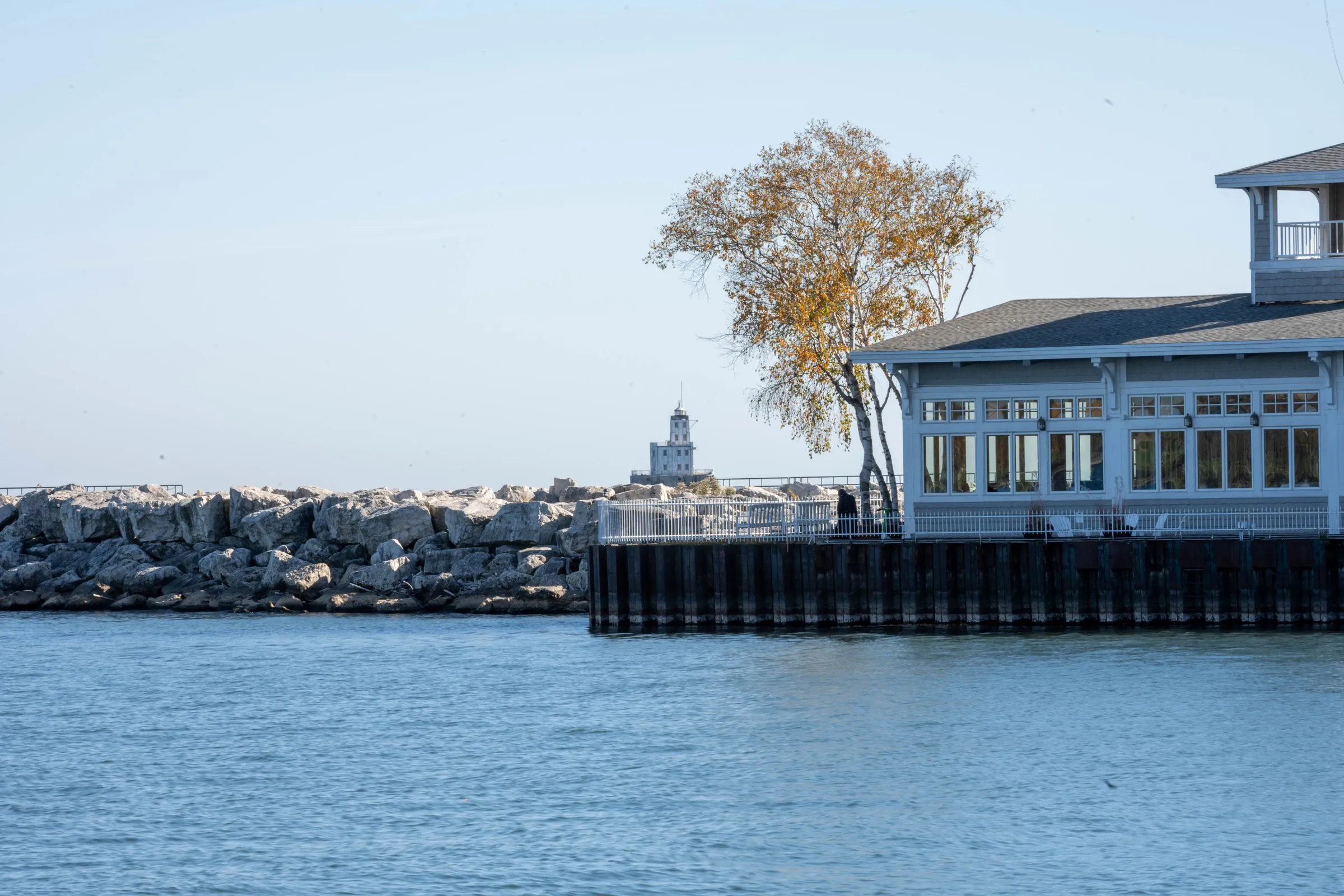
Photo: Quang Vuong / Pexels
To the south, Microsoft finished its first Mount Pleasant data center this summer, has a second under construction for 2028, and is planning two more campuses. It is redirecting its $5 million annual development incentive toward property tax relief, FOX6 reported. The company’s broader Wisconsin plans are covered in the Microsoft Kenosha report. To the north, Vantage Data Centers is building Project Lighthouse in Port Washington, a roughly $15 billion campus on 670 acres with four buildings totaling about 2.5 million square feet, operated for Oracle and OpenAI, with a promise of 1,000 permanent jobs, per FOX6. That project is covered in the Vantage Lighthouse report, and every operating facility in the state, including Data Holdings, is listed in the Wisconsin data center directory.
The Wisconsin count and the national wave
Milwaukee is far from the first Wisconsin community to do this. The Daily Reporter counted “more than 20 Wisconsin local governments” that have paused data centers. Wisconsin Watch’s running tally stood at 22 communities on July 6 and reached at least 24 by July 20, when Green County and the village of Hobart were the newest additions. Madison adopted a one-year pause in January, Dane County followed with 18 months in June, and Superior approved a year on June 16, per WPR. Winnebago County approved 12 months in August for the four towns where it controls zoning, per WHBY, and Janesville passed a one-year pause unanimously on September 28, per Kaukauna Community News. DeForest’s rejection of a $12 billion campus and the rest of the statewide pattern are covered in the statewide map.
There is a legal question hanging over the county actions. Richard Loeza, a senior analyst at the Legislative Reference Bureau, told FOX 11 in June that “counties are allowed to do a moratorium of any kind, except for development moratoriums,” because the statute Winnebago County relied on, in Chapter 66, applies only to municipalities.
Other cities and counties moved in the same two weeks. Anne Arundel County, Maryland, which had softened a proposed ban into a pause on September 21, voted 7-0 on Monday, October 5, for a moratorium on new data centers through January 31, 2028, or until it adopts comprehensive rules, per WMAR and the Capital Gazette. San Francisco and Oakland each passed 45-day urgency moratoriums unanimously on October 6, per SFist. They followed Richmond, California, which adopted a 45-day ordinance on September 15 and will hold a hearing October 20 on extending it by nearly two years, according to the city. Shelby County, Tennessee, advanced a pause for its unincorporated areas on first reading, 5-4 with four abstentions, on October 12. Memphis, where xAI is based, pushed the final council vote on Ordinance 5982 to October 20 after an October 6 meeting that ended with a fistfight in the lobby, per Action News 5 and E&E News. In Chicago, Mayor Brandon Johnson’s August 11 executive order asked the City Council for a “narrowly tailored, time-limited moratorium,” per Greenberg Traurig, days after a landmarks committee approved a five-floor server conversion at 300 W. Adams St. in the Loop, per the Chicago Sun-Times. The national picture is tracked in the backlash report.
The industry responded on October 2, when Amazon Web Services CEO Matt Garman announced “Built Together,” a program that will spend more than $1 billion over five years on tuition, job training, and home energy upgrades in Amazon’s host communities. Garman warned that more than 100 proposed moratoriums could cost the United States the AI race, per Fortune.
What happens now
The clock runs to October 2027. The Department of City Development will draft the permanent ordinance from Dimitrijevic’s three-tier framework, the Plan Commission and the Zoning, Neighborhoods and Development Committee will hold hearings, and the moratorium ends as soon as the council adopts the result. If the draft runs late, the council can vote once to extend the pause by six months. In the meantime, Data Holdings keeps operating, any expansion there would need zoning approval, and anyone who wants to build a data center in Milwaukee has one option, a Detailed Planned Development with all the hearings that come with it.
The framework the city is about to write would allow a 19,000-square-foot facility without a hearing, as long as it sits on heavy-industrial land and uses closed-loop cooling. The one that started all this was proposed for a shopping center.
More in Industry Growth
All Industry Growth →
Oregon Pulls the Permits: Kotek Orders a Nine-Month Freeze on Air and Water Approvals for New Data Centers
In a letter nobody announced, Gov. Tina Kotek told Oregon's environmental regulator to stop processing air and water pollution permits for new or expanded data centers until July 1, 2027. Without those permits, no hyperscale campus can be built on public or private land, which makes the order the closest thing to a statewide moratorium any governor has signed. Amazon, which runs more than a dozen hyperscale sites in Morrow and Umatilla counties, says it will cost thousands of jobs. The Legislature gets the problem in January.

Seven Signatures in Sacramento: What California's New Data Center Laws Actually Require
Governor Newsom signed a package of seven data center bills on September 21 that ends CEQA exemptions, orders the CPUC to write large-load tariffs, and makes water and energy disclosure a condition of permits. Here is what each law says, who fought it, and what it means for the projects already in the queue.

The Judge, the Desert and the 330-Megawatt Data Center: California's Environmental Law Catches Up With AI
A tentative ruling in Imperial County would push the largest data center ever proposed in California through a full environmental impact report, a year or more of delay for a project that would draw more electricity than the entire county. It also explains why the AI buildout has mostly skipped the state.