Oregon Pulls the Permits: Kotek Orders a Nine-Month Freeze on Air and Water Approvals for New Data Centers
In a letter nobody announced, Gov. Tina Kotek told Oregon's environmental regulator to stop processing air and water pollution permits for new or expanded data centers until July 1, 2027. Without those permits, no hyperscale campus can be built on public or private land, which makes the order the closest thing to a statewide moratorium any governor has signed. Amazon, which runs more than a dozen hyperscale sites in Morrow and Umatilla counties, says it will cost thousands of jobs. The Legislature gets the problem in January.
On Friday, October 9, Gov. Tina Kotek sent a one-page letter to Leah Feldon, director of the Oregon Department of Environmental Quality, asking her to “exercise your existing administrative authority and discretion to pause processing and issuance of air or water discharge permit applications until July 1, 2027 that involve new or expanded data center facilities within Oregon.” The letter names four permits: National Pollutant Discharge Elimination System permits, Water Pollution Control Facility permits, Air Contaminant Discharge Permits, and Title V air quality permits. It also tells DEQ to stop processing requests from cities and counties that want to modify a wastewater treatment plant permit “in order to accommodate wastewater discharge from data center industrial facility sources.”
Nobody announced it. Neither the governor’s office nor DEQ put out a release, and Kotek did not mention the order at her final debate with Republican challenger Christine Drazan on Tuesday, the Oregon Capital Chronicle reported. The letter surfaced on October 13 after Oregon Rural Action, a La Grande nonprofit, began circulating it and OPB obtained the correspondence from the governor’s office. The effect is not subtle. A hyperscale campus needs an air permit for its diesel generators and a water permit for its cooling discharge, and as OPB put it, without those permits most large data centers “wouldn’t be able to build in Oregon, whether on public or private land.”
What the letter actually says
The letter opens by thanking Feldon for speeding up air permitting under HB 4084, this year’s economic development bill, and for supporting the governor’s Prosperity Roadmap. Then it turns. “How we facilitate responsible economic growth is also critical to statewide prosperity,” Kotek wrote. “This is why I established the Data Center Advisory Committee, and why I have been taking actions to both support local moratoriums and restrict development of new Data Centers until we can assure Oregonians that our laws will adequately protect our communities and the environment of our state.”
The pause is framed as a bridge. It “will provide an opportunity for me to evaluate and digest recommendations forthcoming from the Advisory Committee, and to provide space for policy and/or regulatory reforms that may be considered in the upcoming 2027 session of the Legislature with my support,” the letter says. The Legislature convenes in January and the pause ends July 1, about a week after the session’s deadline.
Kotek has said repeatedly that she cannot impose a statewide moratorium without legislation, and the letter does not try to. It asks an agency she controls to use discretion it already has over the timing of permits, and it reaches the municipal wastewater permits most Oregon campuses depend on, since few of them discharge on their own.
The three steps that got here
The permit pause is the third move in six weeks. On September 8, about 100 people rallied outside the Capitol in Salem for a three-year statewide pause that backers call the Responsible Data Center Development Act, organized by Food & Water Watch, Oregon Rural Action, and Columbia Riverkeeper, according to the Oregon Capital Chronicle. Kotek came out to meet them. “I support a moratorium until we make sure that any data center development is done on our terms,” she said, and that day she ordered every state agency to stop work on easements, leases, land use permits, and sales of state property for data center projects, also through July 1, 2027.
“This is what I can do right now under Oregon law, but we need to do more, and the legislature needs to step up next year.”
Kotek said that to the crowd at the Capitol on September 8, according to the Oregon Capital Chronicle. Her office said the state “currently lacks authority to enact a statewide moratorium on data center development.”
The second step was already running. Kotek convened the Oregon Data Center Advisory Committee on January 20, a seven-member panel co-chaired by Margaret Hoffmann of the Northwest Power and Conservation Council and energy consultant Michael Jung, with Umatilla County Commission Chair Dan Dorran among its members. Its charge, in the committee’s own words, “is not to determine whether data centers should exist in Oregon.” After nine months, 127 expert presentations, and more than 700 written comments, it published a 20-page “preliminary learnings and questions” document in September instead of the cost-benefit analysis it was asked for, and it has said it will not recommend a moratorium, per the Capital Chronicle. Comment closes at 5 p.m. on October 24, and final recommendations are due before the end of the year.
The document is still the best public inventory of what Oregon is dealing with. Active facilities grew from 8 in 2000 to about 123 by 2025, 80 percent of them inside urban growth boundaries. Roughly 9,000 acres of new data center land are in the proposal pipeline, and 6,500 of those acres would need urban growth boundary expansions or rural rezoning. Surface and groundwater rights are “for all intents and purposes, fully allocated statewide.”
Eastern Oregon, where the permits bite
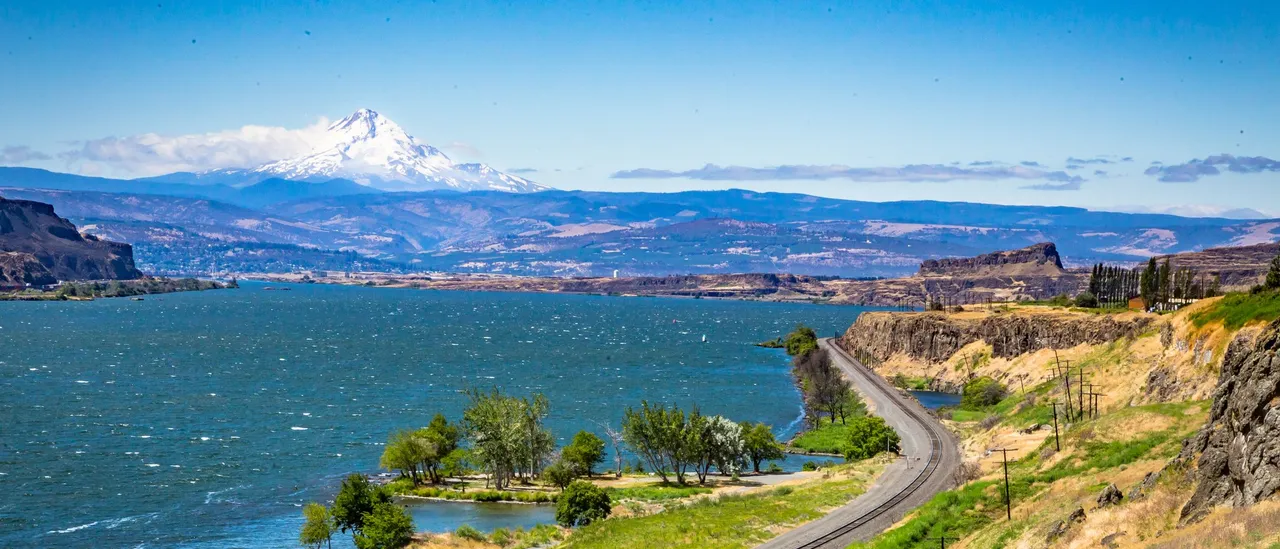
The order lands hardest along the Columbia River east of the Cascades. Amazon has built in Morrow and Umatilla counties for about 15 years and runs more than a dozen hyperscale data centers there, with four in Morrow County and local approval for ten more, according to OPB. The company says it employs more than 2,500 full-time staff in Eastern Oregon and has paid more than $70 million in taxes to the two counties despite its enterprise zone abatements. More than 50 data centers are online across the two counties, covering 15.7 million square feet, about 270 football fields, according to an ECOnorthwest analysis cited by OPB. The campuses sit among the irrigated circles and dryland wheat that run from Pendleton west through Hermiston and Umatilla to Boardman.
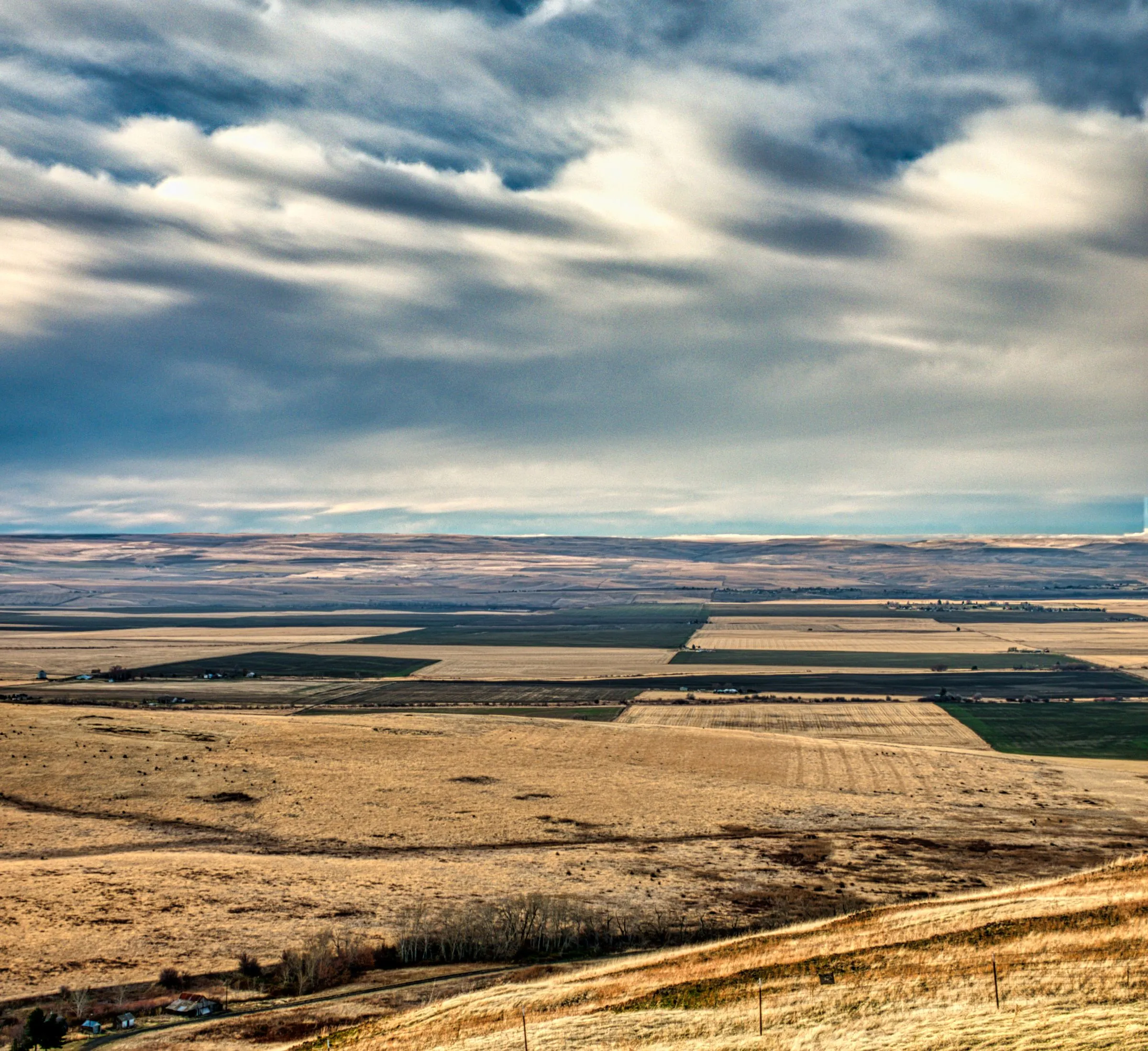
Photo: Tom Fisk / Pexels
Air permits are the lever because every campus runs on diesel when the grid fails. In July, OPB analyzed the permits for 14 large Amazon data centers in the Lower Umatilla Basin and found their backup generators are rated at about 3,700 megawatts combined. By OPB’s estimate, one hour of a regionwide outage would produce more diesel exhaust than 38,000 semi-trucks driving through town for the same hour. Amazon spokesperson Adrienne Talbot called that scenario “extraordinarily rare,” and the company says the generators run about 12 hours a year, mostly for testing. DEQ’s air quality administrator, Ali Mirzakhalili, told OPB the cumulative emissions during a heat wave or wildfire blackout could be “incredibly high.”
A permit was already on the table. In early September, DEQ opened public comment on a proposed air permit for a new Amazon facility near Boardman, OPB reported. Oregon Rural Action says about 700 people signed a petition asking for an in-person hearing, and the group believes the pause now covers that application, per the Capital Chronicle. “This should be left to the counties to decide what to do,” Morrow County Commission Chair David Sykes told OPB in September, when the pause applied only to state land. County planner Tamra Mabbott said none of the projects in Morrow County’s pipeline involve state property. That was true. It is also why the second order went after permits instead of land.
Hillsboro and the west side
The Portland suburbs moved first. On July 27, the Hillsboro City Council voted unanimously for a 120-day moratorium on land use applications for data centers as a primary use and for battery storage facilities, the first such pause in Oregon, according to OPB and the city. The moratorium runs to November 24 and can be extended once. On October 6, the council advanced its first permanent rules. Standalone data centers would be allowed on about 608 acres of industrial land, down from roughly 6,600 acres under the current code, every proposal would need a public hearing, and a 1,000-foot buffer from schools would apply for the first 12 months, the Hillsboro News-Times reported. The second reading is October 20.
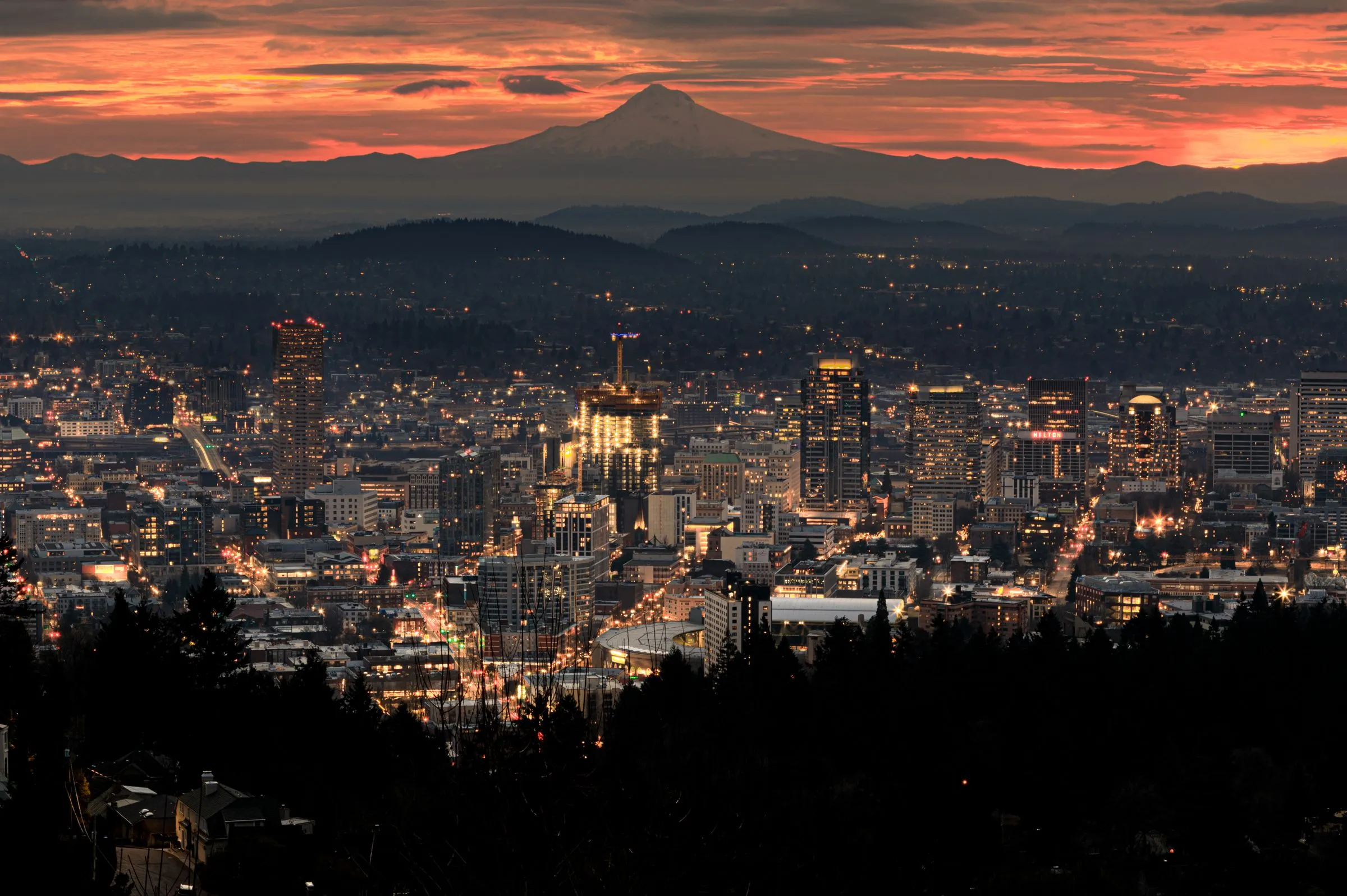
Photo: MICHAEL MCGARRY / Pexels
Money is the other west-side fight. Tech companies in Washington County collected close to $90 million in standard enterprise zone property tax breaks in 2025, and a group of elected officials and the teachers union sued Hillsboro and the county in June over the approvals, per the Oregon Capital Chronicle. The Legislature answered in March by amending Kotek’s own HB 4084, at Rep. Nancy Nathanson’s request, to bar new data center projects from enterprise zone benefits until summer 2027. Nathanson called it “a short pause.” The permit pause now runs to the same date. The water behind the cooling permits is covered in the water report.
Amazon’s answer, and the race
Amazon Web Services responded within hours. Shannon Kellogg, the company’s vice president of public policy for the Americas, said the directive “was issued abruptly, without meaningful stakeholder engagement” and called Amazon “a committed partner in Oregon for over 15 years.” Talbot said the pause would “eliminate thousands of construction jobs, hundreds of onsite operational jobs, halt billions of dollars in planned investment,” per the Capital Chronicle. The company said in early October that it would stop asking public officials to sign nondisclosure agreements and would spend more than $1 billion over five years in its host communities, a program Fortune reported and the Milwaukee moratorium report describes.
Advocates took the win and asked for more. “This temporary pause will give communities breathing room from more data center development, but we still need a three-year moratorium,” said Lilli DiPaola, Oregon organizing manager for Food & Water Watch, in a statement urging lawmakers to pass the three-year bill, filed as LC710. Kaleb Lay of Oregon Rural Action told OPB that “we need new laws to protect all of Oregon from these massive corporations.” Barrett Dash, a Morrow County farmer backing the group’s local moratorium petition, told OPB, “We cannot eat, drink, or breathe data.” Dorran, the Umatilla County commission chair on Kotek’s committee, calls Amazon a great partner and told OPB, “I don’t know on what grounds we would ban them.” The disagreement runs straight through the wheat country around Athena and Pendleton where the farmers who signed the petition live.

Photo: Tom Shamberger / Pexels
All of this is happening three weeks before an election. Kotek and Drazan, a state senator from Canby, both now say they favor a statewide moratorium and each accuses the other of coming to it late, OPB reported. Kotek points to Drazan’s vote against the 2025 POWER Act, which the governor’s office says has raised rates for Portland General Electric’s data center customers by 29 percent while lowering them for everyone else. A DHM Research poll commissioned by OPB found nearly two-thirds of likely voters favor a temporary statewide ban, and the race is within the margin of error in both directions. The vote is November 3.
What happens now
For the next nine months, DEQ will not finish any air or water permit for a new or expanded data center, and no city can amend its wastewater permit to serve one. Projects that already hold their permits can keep building, which is why Morrow County officials expect Amazon’s approved sites to proceed. The order does not define “expanded,” does not say what happens to applications already in review, and does not say what a developer can do if DEQ simply never acts. The first test will be the Boardman air permit that was already out for comment when the letter arrived.
Then the Legislature meets. Kotek has promised a bill, the advisory committee owes her recommendations by December, and the three-year pause advocates want is already drafted. The enterprise zone pause and the permit pause expire on the same summer day. Arizona froze its sales tax exemption, California wrote seven new laws covered in the Sacramento report, and more than a hundred cities and counties have passed local pauses tracked in the backlash report. None of them stopped the permits. Oregon just did, for 265 days, with a letter.
More in Industry Growth
All Industry Growth →
Milwaukee Hits Pause: Council Votes 13-0 to Freeze New Data Centers for a Year
Milwaukee's Common Council has halted new data centers and most expansions for up to a year so the city can write zoning rules for them, something its code has never had. The fight started with a 19,000-square-foot server room proposed for an empty Walmart. The rules now being drafted would block anything over 60,000 square feet, in a city that planners say was never going to attract a hyperscale campus anyway.
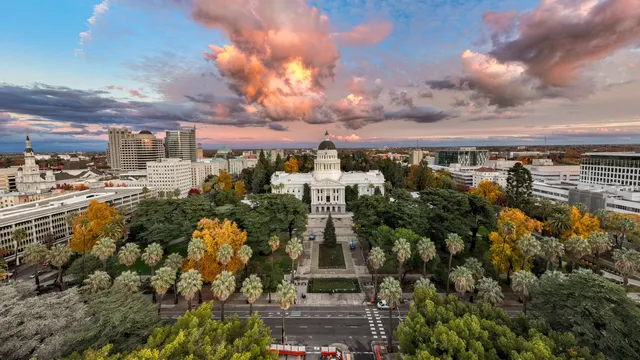
Seven Signatures in Sacramento: What California's New Data Center Laws Actually Require
Governor Newsom signed a package of seven data center bills on September 21 that ends CEQA exemptions, orders the CPUC to write large-load tariffs, and makes water and energy disclosure a condition of permits. Here is what each law says, who fought it, and what it means for the projects already in the queue.

The Judge, the Desert and the 330-Megawatt Data Center: California's Environmental Law Catches Up With AI
A tentative ruling in Imperial County would push the largest data center ever proposed in California through a full environmental impact report, a year or more of delay for a project that would draw more electricity than the entire county. It also explains why the AI buildout has mostly skipped the state.