How Much Water Does a Data Center Really Use? The Numbers Behind the Fight
A ChatGPT query uses a fifteenth of a teaspoon of water, or half a liter, depending on who is counting. Here is what the credible numbers say about data center water, where it actually goes, and why towns from Tucson to Port Washington are fighting over it.
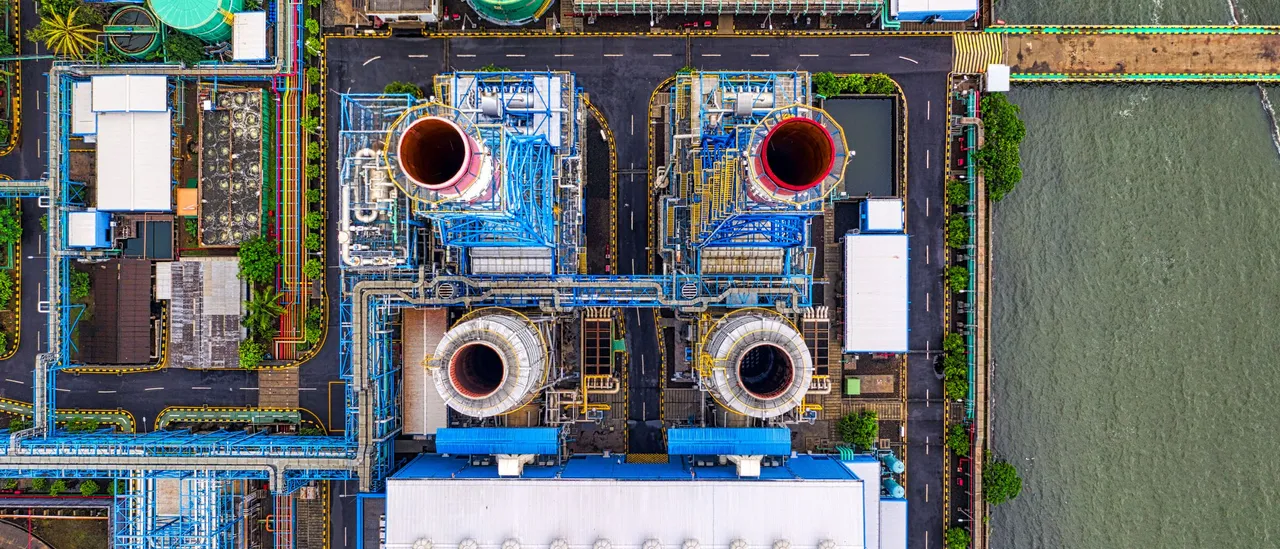
Ask what a ChatGPT answer costs in water and you can get two numbers that differ by a factor of 1,600. Sam Altman says a fifteenth of a teaspoon. A widely shared 2024 study said a bottle. Both are defensible, because they measure different things, and that gap explains most of the confusion.
Where the water actually goes
A data center consumes water for one reason: evaporation is the cheapest way to get rid of heat. In a conventional design, warm water from the chillers runs through a cooling tower, where a fraction evaporates and carries the heat away, which is why the Lawrence Berkeley National Laboratory’s modeling finds cooling towers produce the highest site water intensity of any common design. (For the shift to liquid cooling, see the cooling wars.)
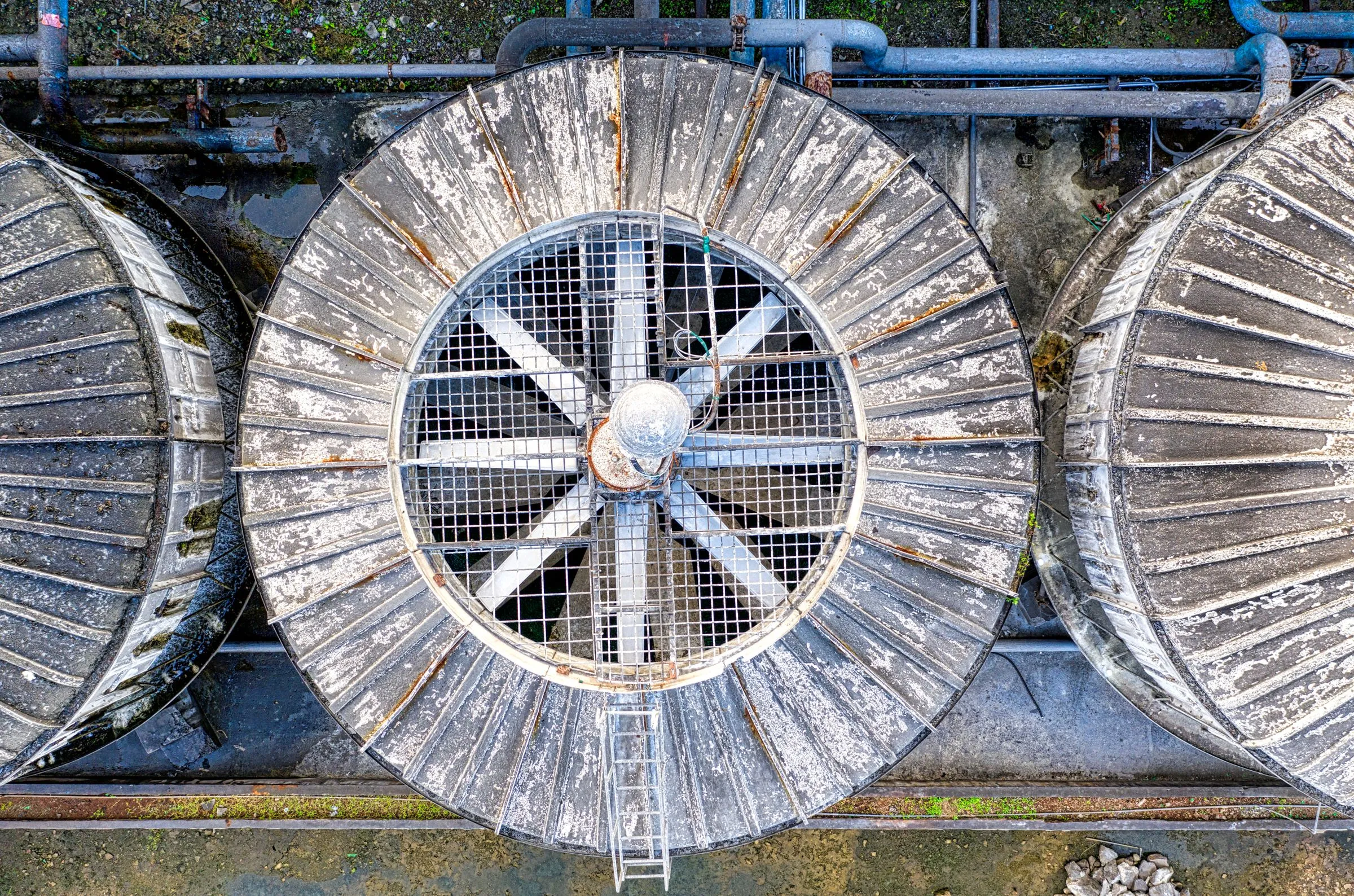
Photo: Tom Fisk / Pexels
The alternatives trade water for electricity. Dry coolers reject heat through finned coils, like a giant car radiator, and use no water until a hot afternoon forces them to mist the coils in “adiabatic” mode. Fully closed-loop liquid cooling, now Meta’s standard design (direct-to-chip coolant in sealed pipes, dumped to dry coolers), reports no operational water use; Microsoft’s zero-water design works the same way. The catch, in LBNL’s words, is that “while air-cooled chillers use no water, they use more energy.” Every gallon saved on site shows up as a higher power bill, a tradeoff our efficiency metrics explainer describes.
The numbers that matter
LBNL’s December 2024 report to Congress estimates US data centers directly consumed about 66 billion liters (17 billion gallons) in 2023, up from 21 billion liters in 2014, with hyperscale and colocation sites accounting for 84 percent. By 2028, hyperscale facilities alone are projected to consume 60 to 124 billion liters, roughly 16 to 33 billion gallons, as liquid-cooled AI halls push average site intensity from 0.36 to as much as 0.48 liters per kilowatt-hour. Per campus, Bloomberg reports, a 100 megawatt facility on evaporative cooling can consume about 2 million liters a day, the use of roughly 6,500 homes.
Company disclosures show the spread. Google, still heavily reliant on evaporative cooling, consumed 6.1 billion gallons at its data centers in 2024; its 2026 environmental report says it replenished 7.7 billion gallons in 2025, equal to 78 percent of freshwater consumption, and coverage of the report puts total consumption at 10.9 billion gallons, up 34 percent in a year. Microsoft reports a fleet water usage effectiveness of 0.27 liters per kilowatt-hour in 2025, down from 2.3 two decades ago.
Those are the companies that publish. Uptime Institute’s 2025 survey found only 47 percent of operators collect water data at all, and WUE is rarely disclosed outside Europe, where regulators now require it.
The ChatGPT query problem
In June 2025, Altman wrote that the average ChatGPT query “uses about 0.000085 gallons of water; roughly one fifteenth of a teaspoon,” about a third of a milliliter. Google’s August 2025 Gemini paper landed nearby at 0.26 milliliters per median text prompt. Both count only water consumed on site, for one short prompt.
The bottle came from a September 2024 Washington Post collaboration with Shaolei Ren’s group at UC Riverside: 519 milliliters to write a 100-word email with GPT-4. That estimate added the water evaporated at power plants to generate the electricity, assumed 2023-era hardware, and modeled a longer output. Mistral’s July 2025 lifecycle assessment, done with the French agency ADEME, found 45 milliliters per 400-token response, but that folds in server manufacturing and a share of training.
“The 2024 estimate for GPT-4 was time-specific, assumption-based, and should not be used to describe general AI/ChatGPT or today’s optimized systems.”
Ren said as much to Sentient Media in August 2026. “Water per query” is meaningless without three qualifiers: which model, how long an answer, and whether the electricity is counted.
The water you cannot see
That last qualifier is the big one. LBNL puts the indirect water footprint of US data centers, the water evaporated at thermoelectric and hydro plants to make their 176 terawatt-hours, at nearly 800 billion liters in 2023, about 211 billion gallons and twelve times the direct figure: 4.52 liters per kilowatt-hour on the grid against 0.36 on site. Wisconsin Watch, fact-checking a claim that Microsoft’s Mount Pleasant campus would use only four Olympic pools a year, summarized the split bluntly: 92.5 percent of the water attributable to US data centers went to generating electricity, 7.5 percent to cooling.
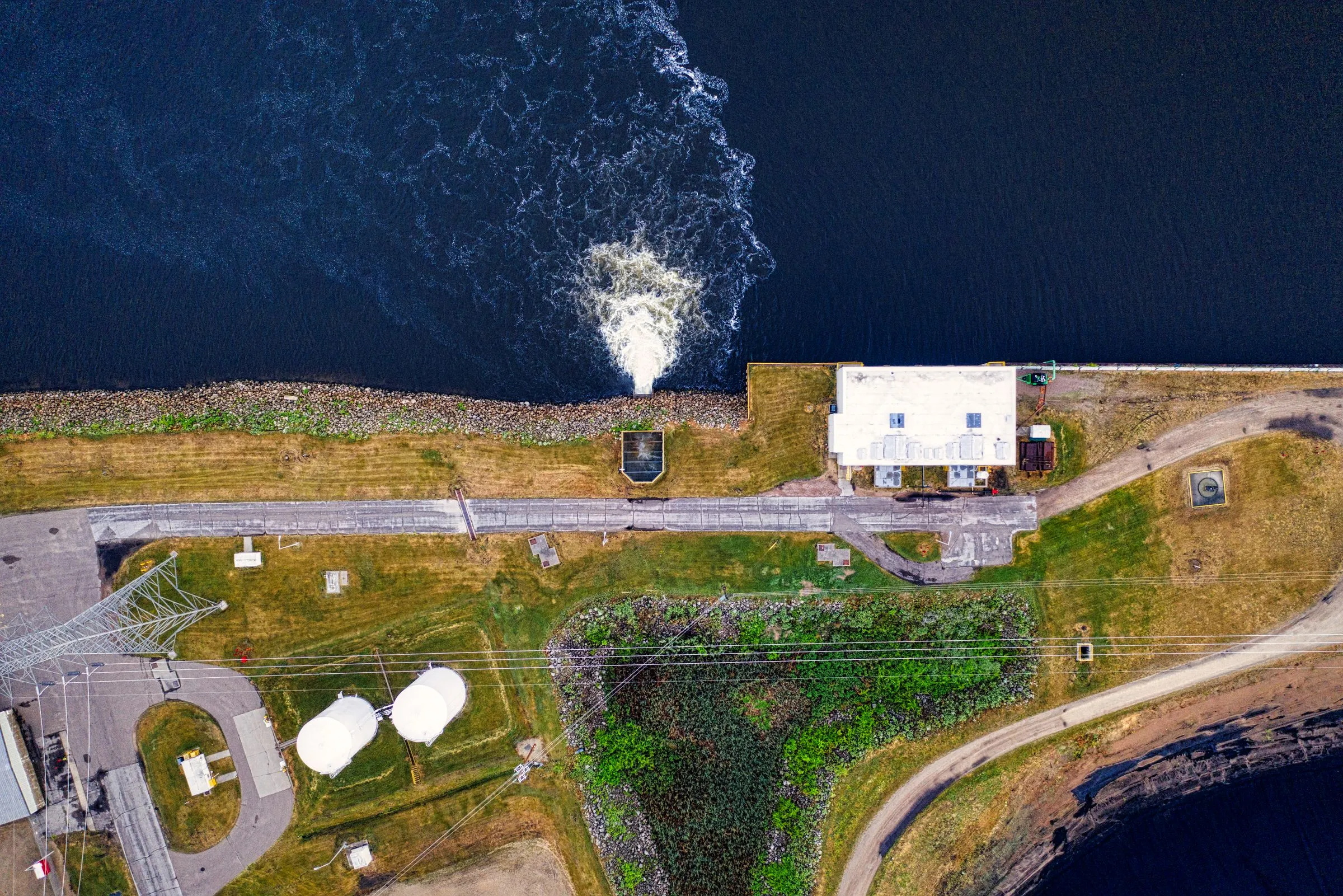
Photo: Tom Fisk / Pexels
This is why “zero-water” campuses are not quite zero. A closed-loop AI building drawing 900 megawatts from a gas-heavy grid has moved its water consumption to the power plant, not eliminated it.
Where it gets political
Two-thirds of US data centers built or planned since 2022 sit in areas of high water stress, according to Bloomberg, with Arizona and Texas hosting 26 each. Tucson became the test case. Project Blue, a 290-acre campus tied to Amazon Web Services, would have consumed 1,910 acre-feet a year at full build, about 6 percent of the city’s supply, and on August 6, 2025, the city council voted unanimously to stop all work on it. Amazon walked away late that year, but developer Beale Infrastructure bought the land from Pima County and kept building outside city limits, with state permits for two wells drawing up to 31 million gallons a year. In May 2026 the city revoked a construction water meter after a contractor trucked city water to the site, an act City Manager Timothy Thomure called “completely unacceptable.”
Photo: Papillon One / Pexels
Texas has no equivalent brake: the Houston Advanced Research Center estimated in January 2026 that the state’s data centers consume about 25 billion gallons a year and could reach 29 to 161 billion by 2030, with no water-planning process to match ERCOT’s queue for power. In Georgia, four families near Meta’s Stanton Springs campus in Newton County sued this week, alleging blasting and excavation clouded their wells with sediment; Meta says its water comes from the county utility and that groundwater flows away from their homes. Abroad, Google switched a Santiago campus to air cooling after a Chilean court challenged a design that would have consumed 7 billion liters a year, and did the same in drought-hit Uruguay.
Wisconsin is the newest front. Vantage’s Port Washington campus will draw municipal water from Lake Michigan under a contract allowing up to 1.2 million gallons a day, though the company says its closed loops will need about 22,000 gallons a day at peak once filled with 11.8 million gallons. Microsoft’s Mount Pleasant campus is projected at 8.4 million gallons a year at full build. Both sit far below the Great Lakes Compact’s trigger for regional review, a consumptive loss of 5 million gallons a day over 90 days, and because they buy from utilities rather than the lake, the Compact never applies. “As long as the water system has the capacity to supply, there’s really no requirement to report on that water usage,” Helena Volzer of the Alliance for the Great Lakes told Wisconsin Public Radio. More than 220 data centers are planned around the Great Lakes. In California, two disclosure bills reached Gavin Newsom’s desk on August 31, a year after he vetoed a similar one.
The honest answer is that a modern data center’s own faucet is a smaller problem than its reputation suggests, and its power plant’s is a larger one. Plumbing can fix the first. The second depends on what the grid burns, and on whether anyone is required to count.
More to read
All Cooling →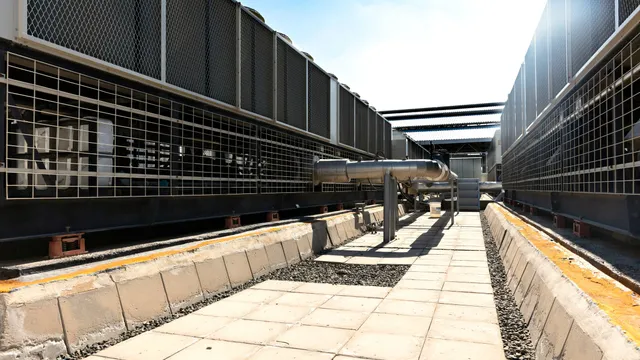
The Cooling Wars: Air, Liquid, and the 600-Kilowatt Rack
The average server rack still draws under 9 kW. AI racks are heading past 600. Inside the industry's forced march from air conditioning to liquid cooling, and the water politics that come with it.
The Second Life of Server Heat
Every watt a server draws leaves the building as heat, and Europe has spent a decade proving it can warm homes and swimming pools. So why does the EU's own data show just 1.8 percent of it gets reused?

Seven Signatures in Sacramento: What California's New Data Center Laws Actually Require
Governor Newsom signed a package of seven data center bills on September 21 that ends CEQA exemptions, orders the CPUC to write large-load tariffs, and makes water and energy disclosure a condition of permits. Here is what each law says, who fought it, and what it means for the projects already in the queue.