The Second Life of Server Heat
Every watt a server draws leaves the building as heat, and Europe has spent a decade proving it can warm homes and swimming pools. So why does the EU's own data show just 1.8 percent of it gets reused?
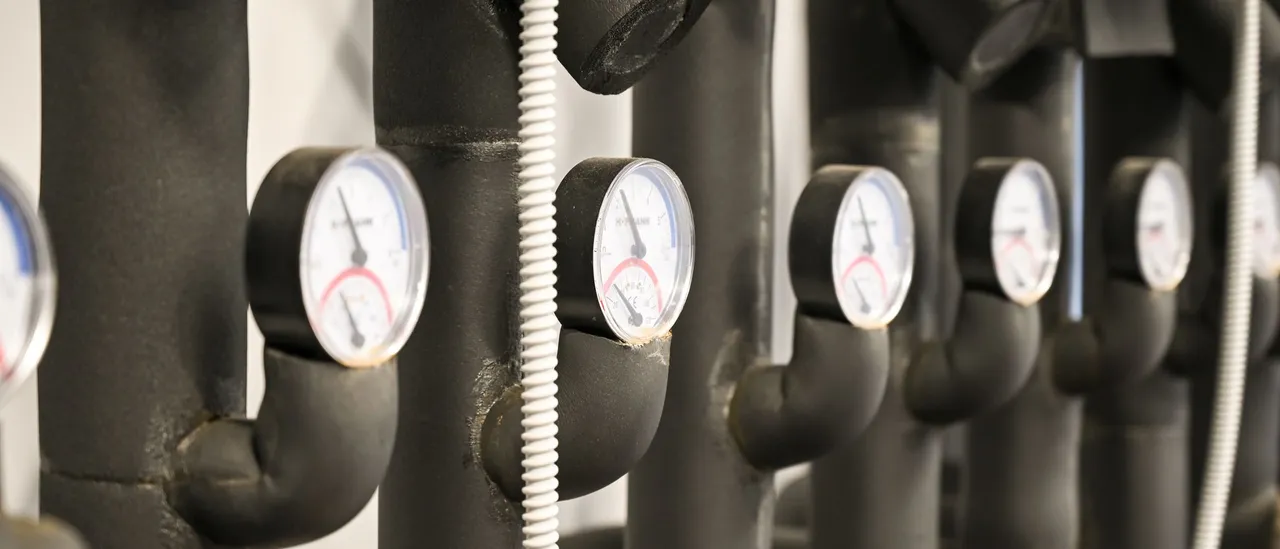
A data center is, thermodynamically speaking, a very expensive electric heater. Essentially every watt that flows into the servers leaves the building as heat, and for seventy years the industry’s answer has been to fan it into the sky. That heat is now the subject of national heating strategies, an EU directive, and a small British company warming swimming pools with servers. It is also, by the EU’s own first accounting, still almost entirely wasted.
The Nordic template
The proof that server heat can warm cities comes, unsurprisingly, from places with long winters and district heating pipes already in the ground.
Stockholm made it a market. Stockholm Exergi’s Open District Heating platform, recovering data center heat since 2014 and formalized under the Stockholm Data Parks banner in 2017, lets operators sell their exhaust into the city network under standardized, temperature-indexed contracts. According to Stockholm Exergi, the platform now connects more than 30 data centers and recovered roughly 113 GWh of heat in a recent year, about the annual heating demand of 11,000 apartments.
Denmark made it infrastructure. At Meta’s Odense campus, utility Fjernvarme Fyn built what engineering firm Ramboll describes as Denmark’s biggest heat pump plant: ammonia heat pumps that lift the servers’ warm exhaust to 70-75C and push roughly 45 MW of heat into the city network, enough for more than 12,000 homes, according to Ramboll. Meta says the recovered heat helped Odense retire coal from its heating supply.
Finland is attempting the largest version yet. Fortum’s heat-capture plants at Microsoft’s new data centers in Espoo and Kirkkonummi, connected to the Espoo Clean Heat network, will eventually supply about 40 percent of all district heat in the area, according to Fortum, with roughly 75 percent of the data centers’ annual waste heat put to use. Bloomberg reported in May 2025 that Finland now treats data center heat as a strategic piece of its decarbonization plan.
| Project | Heat delivered | Serves |
|---|---|---|
| Stockholm Data Parks (30+ sites) | ~113 GWh/yr | ~11,000 apartments |
| Meta Odense (Fjernvarme Fyn) | ~45 MW | 12,000+ homes |
| Microsoft/Fortum, Espoo region | in ramp-up | ~40% of area’s district heat |
Digital boilers for the local pool
You do not need a city-scale network to use warm water. UK startup Deep Green installs small immersion-cooled compute clusters, “digital boilers,” directly inside leisure centers and gives the heat away free while selling the compute. At its first site, a pool in Exmouth, Devon, the company said the donated heat cut the pool’s gas consumption by 62 percent and saved about 20,000 pounds a year, according to Data Center Dynamics. A 200 million pound investment from Octopus Energy in 2024 funded expansion, and by late 2025 Deep Green had opened its first site in northwest England at the Move Urmston leisure centre near Manchester, where it predicts 80,000 pounds in annual heating savings, per Data Centre Review. It is a clever inversion: instead of moving heat to the user, move the servers.

Photo: Miguel Guerra / Pexels
The thermodynamics problem
If the idea works this well, why is it rare? Because most data center heat is thermodynamically feeble. Air-cooled facilities exhaust air at roughly 28-35C, according to Data Center Knowledge, and heat at 30-40C is too cool for most district heating networks, which typically run far hotter. Low-grade heat also travels badly: it needs insulated pipes, and trenching hot-water lines can cost as much as 600 dollars per linear foot, per the same analysis. A data center in a rural Virginia field has no one nearby to sell to anyway.
The fix is the heat pump, which uses electricity to lift low-grade heat to useful temperatures, commonly 55-70C, at coefficients of performance around 3 to 6, according to Data Center Knowledge. That works, as Odense proves, but the pumps, the heat exchangers, and the pipes are all capital costs that a utility or operator must recover, and research published in Energy and Buildings notes that high-temperature heat pump economics depend heavily on local electricity and heat prices.
Liquid changes the math
Here the AI boom is accidentally helpful. Direct-to-chip liquid cooling, now standard for dense GPU racks, returns coolant tens of degrees warmer than air systems exhaust, and in a compact, pumpable form. Warmer return water means smaller temperature lifts, cheaper heat pumps or sometimes none at all for low-temperature networks, and a far better business case. The Uptime Institute, generally cool on heat reuse economics, notes that liquid cooling meaningfully improves heat’s usability, and newer fourth-generation district networks are designed for exactly these lower supply temperatures.
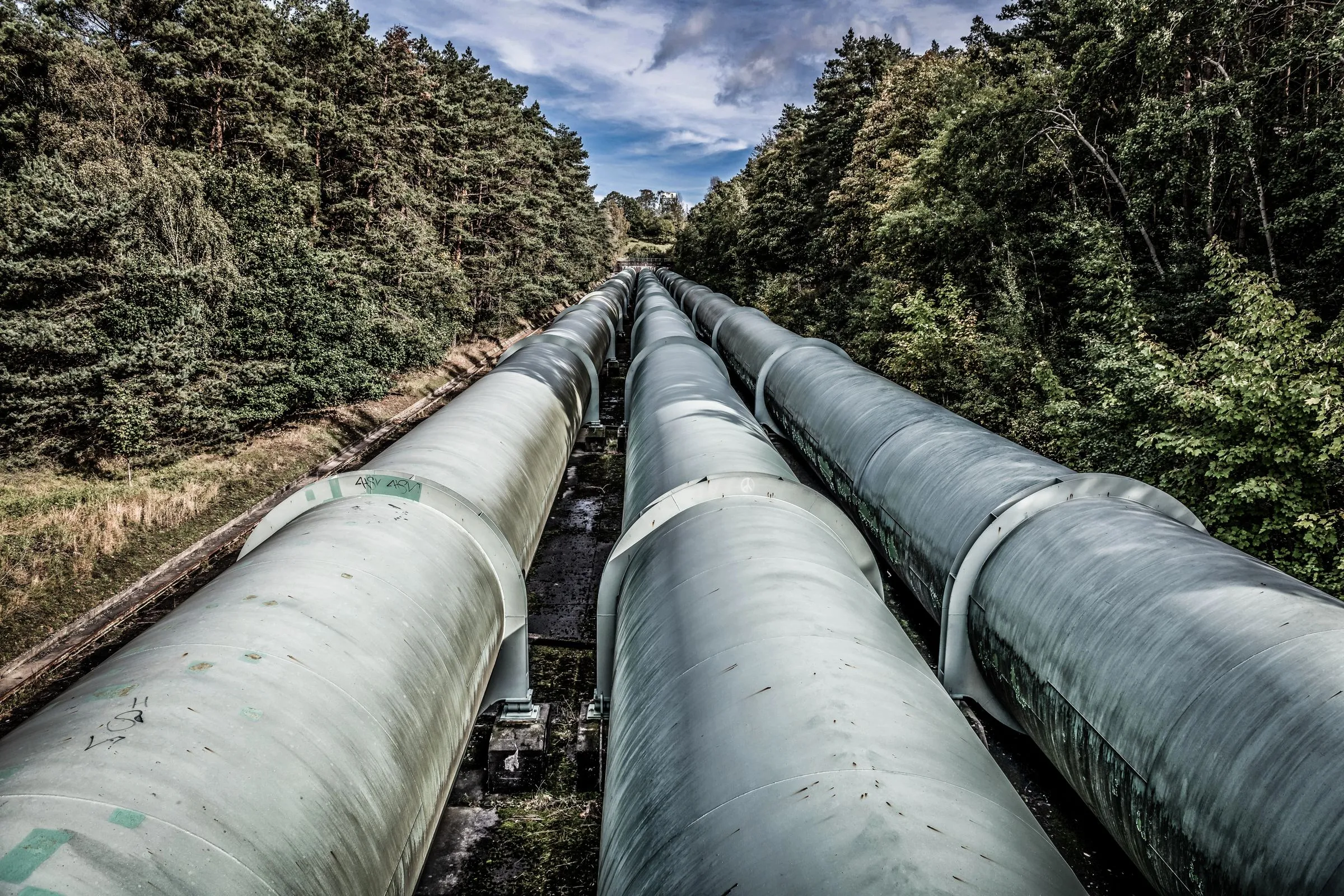
Photo: Wolfgang Weiser / Pexels
Brussels turns up the pressure
Regulators are no longer waiting for the economics. The EU’s recast Energy Efficiency Directive requires data centers with at least 500 kW of IT power demand to report annually into an EU database, including their energy reuse factor (ERF), with filings due each May 15, according to law firm Covington. Facilities over 1 MW must recover waste heat or formally demonstrate through a cost-benefit analysis that doing so is technically or economically unfeasible. Germany has gone furthest: under its Energy Efficiency Act, new data centers must reuse 10 percent of their heat from July 2026, rising to 15 and then 20 percent for later cohorts, per Taylor Wessing.
The 1.8 percent reality
The first EU-wide reporting round shows how far there is to go. An assessment of the 2023 data by the European Commission and partners found an EU-average ERF of 0.018, meaning about 1.8 percent of data center waste heat is actually reused, according to the Borderstep Institute. Facilities that reuse any heat at all average 20.5 percent, and national averages range from zero to 0.457, so the gap between leaders and laggards is enormous and the estimates diverge depending on which population you count.
Across all reporting EU data centers in 2023, the average energy reuse factor was 0.018: roughly 1.8 percent of waste heat found a second life.
The skeptics have a point, in other words. Uptime Institute’s assessment is blunt: the technologies are well understood but rarely used, because heat reuse adds engineering complexity and sizeable upfront cost while the revenue, where any exists, is thin. But the trend lines all push one way. Racks are getting hotter, liquid loops are making that heat portable, European law is making its disposal reportable and, increasingly, mandatory. Borderstep estimates Germany’s 90 largest data centers alone could heat 350,000 homes. The second life of server heat is no longer a physics problem. It is a plumbing, pricing, and proximity problem, and those are the kind that eventually get solved.
More to read
All Cooling →
How Much Water Does a Data Center Really Use? The Numbers Behind the Fight
A ChatGPT query uses a fifteenth of a teaspoon of water, or half a liter, depending on who is counting. Here is what the credible numbers say about data center water, where it actually goes, and why towns from Tucson to Port Washington are fighting over it.
The Cooling Wars: Air, Liquid, and the 600-Kilowatt Rack
The average server rack still draws under 9 kW. AI racks are heading past 600. Inside the industry's forced march from air conditioning to liquid cooling, and the water politics that come with it.
How a Data Center Gets Its Power: Utility Feeds, UPS, Generators, PDUs, and A/B Distribution
The first article in our Data Center Basics series follows electricity from the transmission line to the server: the substation and switchgear, the UPS and its batteries, the diesel generators and their permits, the PDUs and busway that carry power to the rack, and the A/B feeds and redundancy ratings that keep it all running. It covers how colocation and hyperscale operators build the same chain differently, and what happens when it breaks.