How a Data Center Gets Its Power: Utility Feeds, UPS, Generators, PDUs, and A/B Distribution
The first article in our Data Center Basics series follows electricity from the transmission line to the server: the substation and switchgear, the UPS and its batteries, the diesel generators and their permits, the PDUs and busway that carry power to the rack, and the A/B feeds and redundancy ratings that keep it all running. It covers how colocation and hyperscale operators build the same chain differently, and what happens when it breaks.
A data center is a building that turns electricity into computation, and the electrical chain that feeds it is the part of the building that fails most often. Uptime Institute’s Annual Outage Analysis, published in May 2026, found that power problems caused 45 percent of the most recent impactful outages its survey respondents reported for 2025. That was down from 54 percent the year before, but power was still the leading cause by a wide margin, ahead of cooling at 14 percent and IT systems at 11 percent. More than half of those operators said their last major outage cost more than $100,000, and one in five said it cost more than $1 million.
This article is the first in our Data Center Basics series, which will walk through the systems that make up a data center one at a time: power, cooling, networking, fire protection, and security. It follows electricity from the transmission line to the server, and it describes how two kinds of operators build the same chain differently. A colocation provider sells power to tenants by the kilowatt and promises it will never go out. A hyperscaler such as Amazon, Google, or Microsoft owns the whole building and can trade some electrical redundancy for software that tolerates failure. Our earlier overview, Inside a data center, covered this chain in two paragraphs. This one takes it a section at a time.
From the transmission line to the building
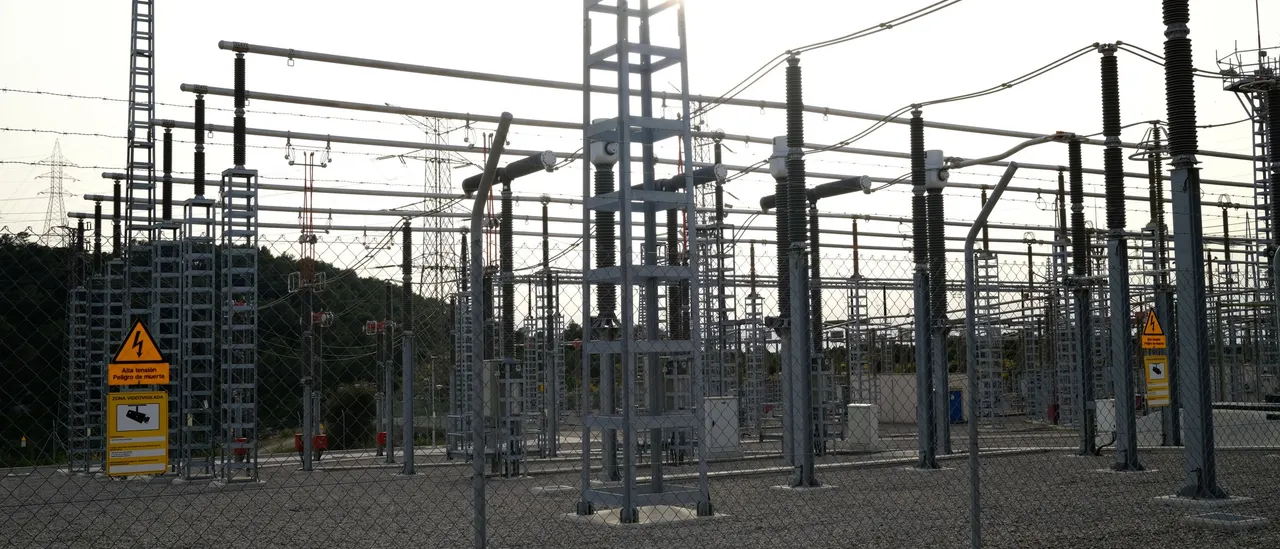
A large campus does not plug into the local distribution grid. It connects to the transmission system through its own substation. POWER magazine’s May 2026 survey of hyperscale interconnection described a 400 MW campus as needing a dedicated high-voltage substation tied to multiple 230 kV or 345 kV transmission feeds, designed so that the loss of any single piece of equipment does not drop the site. At one Kansas City area campus documented by the contractor JE Dunn, each substation takes two 345 kV circuits, steps them down through transformers rated at 120 to 143 MVA to 13.8 kV, and feeds ten to twelve medium-voltage breakers.
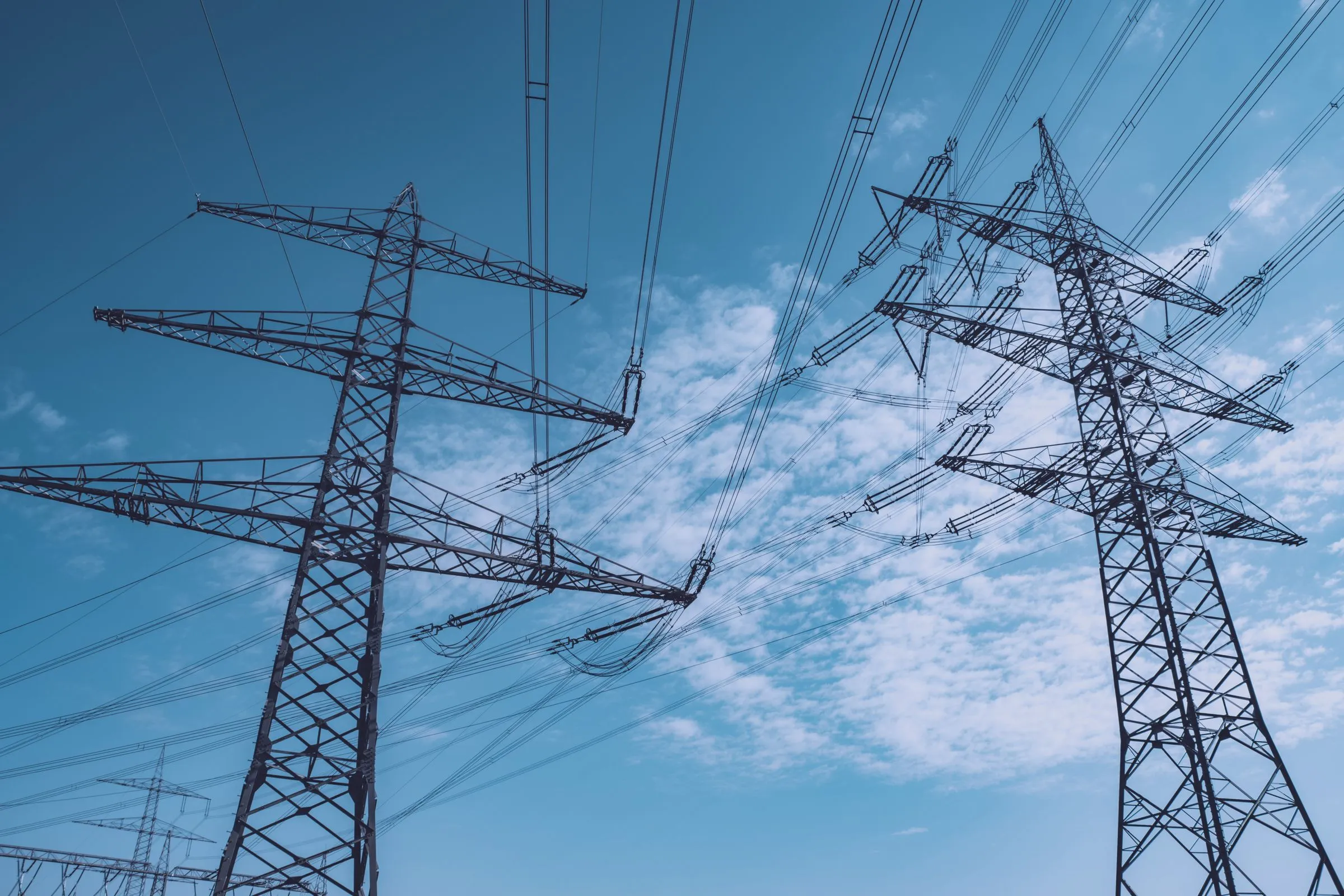
Photo: Ilo Frey / Pexels
From the substation, power passes through medium-voltage switchgear and then through another set of transformers that bring it down to 480 volts, the voltage that runs through most of the building. Every step in that path is a long-lead item. Wood Mackenzie’s 2025 survey put the average wait for a large power transformer at 128 weeks, with prices up 77 percent since 2019, a shortage we covered in The transformer shortage. POWER’s reporting made the mismatch plain: a campus can be built in 18 to 36 months, while the transmission that serves it can take five to ten years to plan, permit, and energize. That gap is why so many developers now bring their own generation, the subject of Bring your own power plant. The chain is also where much of the money goes. Cushman & Wakefield’s 2026 cost guide put greenfield construction at $8.9 million to $23.3 million per megawatt in the United States and Canada and listed power infrastructure as the largest line item at 21 percent of the total.
The UPS: seconds that matter
An uninterruptible power supply sits between the utility and the IT load. Its job is not to run the building for hours. It carries the load for the seconds it takes a generator to start and accept load, and it cleans up the sags, surges, and frequency wobbles that arrive from the grid. Schneider Electric’s reference paper on UPS types says double-conversion units, which rectify incoming AC to DC and invert it back to clean AC, are the most popular design above 10 kVA. That cleanliness costs a few percent in efficiency, so most large units now offer a high-efficiency mode that passes utility power straight through when it is clean. Vertiv’s Trinergy line, built in modules of 1.5 to 2.5 MW, lists efficiency of at least 97 percent in full double conversion and at least 99 percent in that mode.
The battery behind the UPS is sized in minutes, and the number keeps shrinking. A Panduit engineer writing in 2023 put the typical colocation requirement at about five minutes of runtime and said hyperscale sites design for one to two minutes, because the only thing the battery needs to outlast is the generator start. The battery chemistry has changed over the past decade as well. Eaton reported in 2020 that lithium-ion made up nearly a third of the large battery systems it shipped, with a service life of 10 to 15 years against three to five for sealed lead-acid. Lithium-ion batteries also brought new fire rules. NFPA 855 covers battery installations above 70 kW, which includes nearly every data center, and requires UL 9540A fire testing.
Hyperscalers have gone a different direction, and it is the clearest example of how their power chain differs from a colocation building. Google told the Open Compute Project in 2016 that it had run 48 V racks with battery backup units built into the rack since 2010, and in February 2025 it said it had deployed more than 100 million lithium-ion cells that way. Google’s argument is that a rack-level battery reduces the failure domain to a single rack and removes conversion steps, since the batteries sit on the same DC bus as the servers. Microsoft described a similar design in 2011, bringing 480 V power directly to the rack with battery packs in each rack so that no central UPS was needed.
Generators: hours, not seconds
When the UPS has done its job, the generators take over. The National Electrical Code’s Article 700 requires an emergency system to pick up its load within 10 seconds of losing normal supply. Diesel engines meet that number reliably, which is why standby diesel sets of two to 3.5 MW remain the default building block for large campuses, and why a new campus orders them by the dozen. Microsoft’s Quincy, Washington, air permit covered 37 diesel generators plus eight reserve engines in its 2016 revision alone.
The handoff from the UPS to the generators is the step that most often goes wrong. A smaller building uses an automatic transfer switch, a mechanical device that senses the loss of utility power and swings the load to the generator. A large campus uses paralleling switchgear, which starts a group of generators, synchronizes them, and brings them onto a common bus in sequence. Uptime’s 2026 report notes that grid failures should never cause an outage by themselves, but that transfers to generators sometimes fail. Delta Air Lines learned that in August 2016, when a failed automatic transfer switch in its Atlanta data center grounded about 2,000 flights over three days and cost the airline $150 million.
Fuel is the other way a generator fails. Uptime’s Tier standard sets a floor of 12 hours of fuel at full load, and most operators carry far more. A September 2026 trade analysis said Tier III and IV designs commonly specify 96 hours and hyperscalers have settled on 48 to 72 hours backed by 24-hour tanker contracts, and it noted that a 3 MW generator burns roughly 720 to 750 liters of diesel an hour at full load. The engines are exercised monthly under load, with an annual load-bank test on top.
Those test hours are where generators meet the air permit. Under federal rules in 40 CFR 60, an emergency engine may run as long as needed in a real emergency, but testing and maintenance are capped at 100 hours a year, and the engine loses its emergency status if it is used for peak shaving. The same rules let emergency engines meet the older Tier 2 nonroad standards rather than Tier 4, which is why standby sets are allowed to emit more per hour than the engines in a new excavator. State regulators have started to push back on those terms. Oregon’s Department of Environmental Quality told the state’s Data Center Advisory Committee in July 2026 that its 39 permitted campuses held 2,482 large generators with 6,328 MW of capacity. On October 9, 2026, Oregon Governor Tina Kotek paused all air and water permits for new or expanding data centers until July 2027, which we covered in Oregon’s permit pause.
The response from operators has been to change the fuel or the machine. Hydrotreated vegetable oil, a renewable diesel that major engine makers have approved for 100 percent use, cuts carbon dioxide by up to 90 percent, according to Uptime’s review, and Compass, Kao Data, Equinix, and Microsoft’s Sweden region have all adopted it in some form. Microsoft set a goal in 2020 to eliminate diesel from its backup power by 2030. None of these has displaced diesel at scale yet, and the campuses being permitted today still count their generators in the hundreds.
From the electrical room to the rack
After the UPS, 480 V power has to reach thousands of individual servers, and the equipment that does this is where colocation and hyperscale buildings start to look different. The traditional path runs through a floor-standing power distribution unit, a cabinet containing a transformer that steps 480 V down to 208Y/120 V, a main breaker, and panelboards of branch breakers. From there a cable called a whip runs under the raised floor or overhead to a receptacle at the rack.
The alternative, now dominant in hyperscale buildings and common in new colocation halls, is overhead busway. A track busway is a rigid conductor rail hung above the rows, rated anywhere from 100 to 1,250 amps in Legrand’s Starline line, with tap-off boxes that clip on at any point and can be connected or removed without de-energizing the rail. The argument for it is flexibility: a whip is a fixed circuit to a fixed spot, while a busway lets the operator move or upsize a rack’s power without an electrician pulling new cable.
Inside the rack, the last link is the rack PDU, which looks like an industrial power strip and is one of the few pieces of the chain a colocation tenant usually owns. A basic unit just distributes power. A metered unit shows consumption so the tenant can see how close it is to tripping a breaker, and a switched unit adds remote control of individual outlets, so a hung server can be power-cycled without a trip to the cage. The circuit behind the outlets is sized by the code. The National Electrical Code requires a breaker to carry no more than 80 percent of its rating for any load that runs three hours or more, which is every data center load. A three-phase 30 amp circuit at 208 V therefore delivers about 8.6 kW of usable power, and a single 208 V, 30 amp circuit about 5 kW.
Voltage is one of the quieter divides. North American buildings have traditionally run 208 V to the rack, which requires the transformer in the floor PDU. European buildings, and an increasing number of hyperscale halls, distribute 415 V three-phase and deliver 240 V to each server, which eliminates the transformer stage and its two to three percent loss and doubles the power each circuit can carry. Hyperscalers went further and took the AC-to-DC conversion out of the server entirely. The Open Compute Project’s Open Rack v3 feeds a 48 V DC busbar down the back of the rack from a shared power shelf, with the rack-level batteries sitting on the same bus.
The next step is higher voltage DC, driven by GPU racks that draw more than a whole row did five years ago. AFCOM’s 2026 survey of its members put the average at 27 kW, up from 16 kW a year earlier, the largest one-year jump it has recorded. An Nvidia GB200 NVL72 rack draws about 120 kW, and Nvidia has said its Kyber rack for Rubin Ultra, due in 2027, is designed for up to 600 kW, with 1 MW racks on the roadmap. Nvidia’s engineers wrote in May 2025 that 54 V in-rack distribution hits physical limits above about 200 kW, and its answer is 800 V DC distribution at the row, with conversion moved into a sidecar cabinet, which it says cuts row-level copper by 45 percent and begins shipping in 2027 with Eaton, Schneider Electric, and Vertiv among the partners.
A and B: why every server has two cords
Walk behind a rack in any serious data center and you will see two rack PDUs, usually one colored differently from the other, and every server plugged into both. Those are the A and B feeds. Each runs back through its own busway or PDU to its own UPS and, in a fully redundant design, its own switchgear and generators. A server with two power supplies draws from both feeds at once, splitting the load roughly in half, and if one path fails the other picks up the full load without the server noticing.
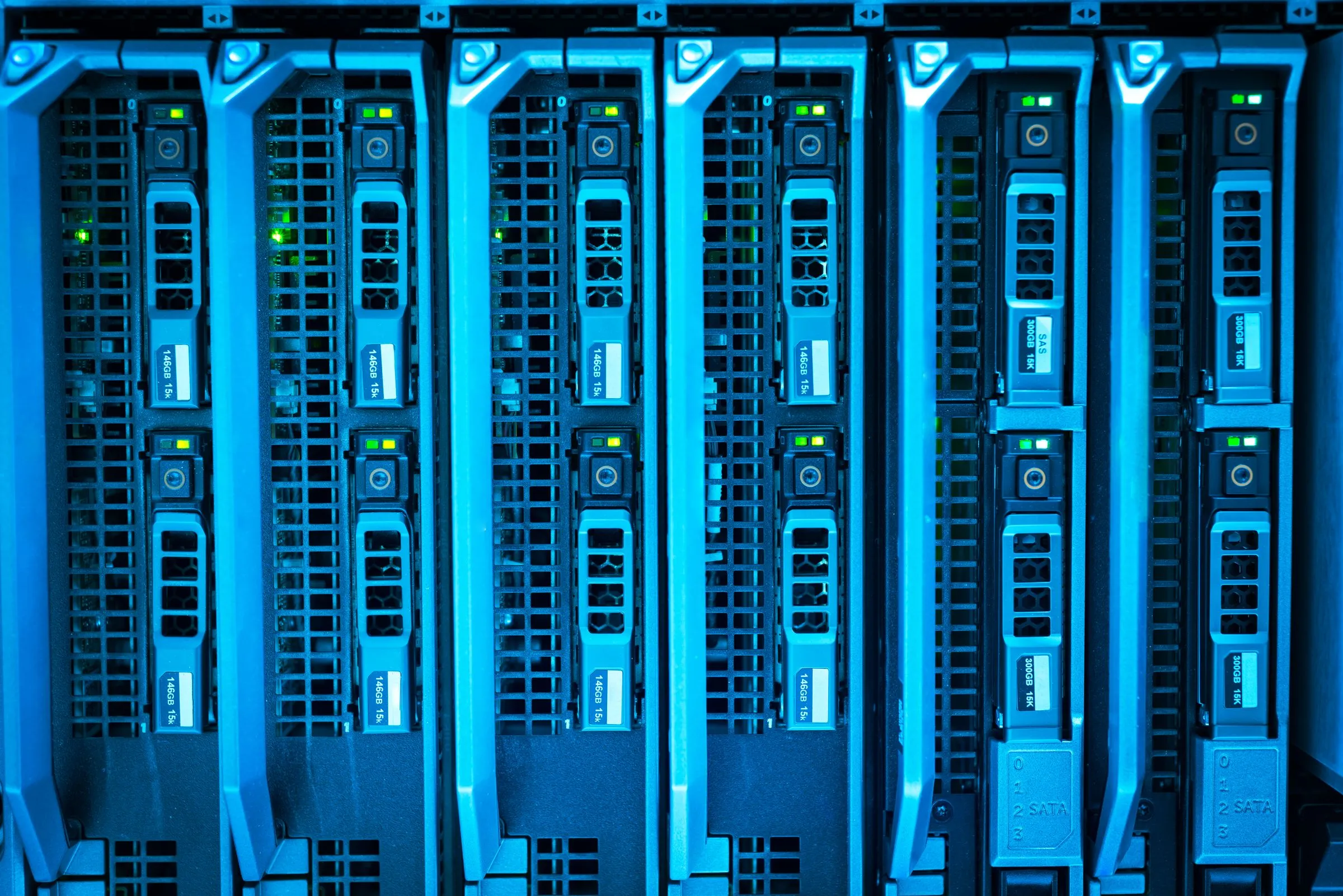
Photo: panumas nikhomkhai / Pexels
That picking up is where tenants get into trouble. If each rack PDU is loaded to 60 percent of its rating and one feed fails, the survivor is suddenly asked for 120 percent and trips its breaker, taking down the rack that the redundancy was supposed to protect. The rule in a dual-corded environment is that nothing in the chain should normally run above 50 percent of its rating, and colocation contracts write that down. Equipment that has only one power cord needs help. A static transfer switch feeds a whole PDU from either path and swaps between them in about four milliseconds, and a rack-mount transfer switch does the same job for a single rack. Schneider Electric’s availability model puts numbers on the difference: a single-corded load at the outlet sees about 99.985 percent availability, a single-corded load behind a rack transfer switch about 99.9999 percent, and a dual-corded load about 99.99999 percent.
Redundancy by the letter
The industry describes how much spare equipment a building has with a shorthand that is easier to read than it looks. N is exactly the equipment required to carry the load. N+1 adds one spare module, so three 1 MW UPS units carrying 2 MW of load. N+2 adds two. 2N is two complete, independent systems, each able to carry the whole load on its own, which is what a true A and B design means. 2(N+1) is two complete systems that each have their own spare. Between these sit designs with their own vocabulary. A distributed redundant system uses three or more UPS modules with independent feeds so that any two can carry the load, and a catcher system keeps one UPS unloaded, standing by to catch the load of any other through a static transfer switch. Schneider calls the 2N family the most reliable and most expensive design in the industry, with support space that can equal or exceed the IT floor.
Those letters feed into the Uptime Institute’s Tier ratings, which are the closest thing the industry has to a grading system. Tier I is basic capacity. Tier II adds redundant components. Tier III is concurrently maintainable, meaning any component can be taken out of service for maintenance without affecting the IT load. Tier IV adds fault tolerance, meaning the facility rides through an unplanned failure of any single component. Uptime has issued more than 4,300 Tier certifications and is the only body that can grant one. It removed any reference to expected downtime per year from the standard in 2009, so a Tier does not equal a number of nines, and there is no such thing as Tier 3.5. Tier III has long been the most common certification awarded, and it is what most colocation marketing means when it promises redundancy.
What a colocation customer actually buys
A colocation customer rents space and power, and power is the part that sets the price. CBRE’s North America report for the second half of 2025 put the average asking rate for a 250 to 500 kW requirement at $195.94 per kilowatt per month, a record, with primary-market vacancy at 1.4 percent. Those rates assume N+1 power and a Tier III design. Uptime’s own guide to colocation pricing draws the line this way: retail sells by the rack or fraction of a rack on a flat fee tied to maximum power, while wholesale sells a dedicated suite of at least a megawatt on negotiated terms, often metered.
What the tenant gets at the rack is a pair of circuits, delivered as whips or busway tap-offs to receptacles. Verizon’s service guide defines the demarcation point for power as the receptacle itself and makes the tenant responsible for the rack PDUs plugged into it, which is the usual arrangement. Equinix’s specification sheet for its LA1 building in Los Angeles shows what a typical mid-size building has upstream: three utility feeders, a distributed redundant UPS at N+1, five 1,500 kW diesel generators at N+1, and a standard cabinet density of 2.4 to 3.0 kVA. The power SLA is written as 100 percent, and the fine print says how that is kept honest. CyrusOne’s standard agreement, filed with the SEC, pays credits of 3 percent of the monthly fee for availability below 99.99 percent, rising to 25 percent below 98.5 percent, and excludes any outage caused by a tenant who did not use both feeds. Density is the newest variable: Digital Realty said in 2024 it could support 30 kW to more than 150 kW per rack with liquid cooling, where most cabinets were sold at 5 to 10 kW a few years earlier.
How hyperscalers do it differently
A hyperscaler owns the building, the servers, and the software that runs on them, and that changes the arithmetic. AWS describes an availability zone as one or more data centers with separate and redundant power, networking, and connectivity, and says that common points of failure such as generators and cooling equipment are never shared across zones, which are designed to be fed from different substations. If a whole building can be lost without the service going down, there is less reason to build every building to 2N. The rack-level battery designs described above are the other side of the same trade. Google’s 48 V racks and Microsoft’s rack battery packs replace a central UPS room with thousands of small backup units, which cost less, lose less in conversion, and fail one rack at a time.
The hyperscalers also design around AI load in ways a colocation operator cannot. A paper from Microsoft, OpenAI, and Nvidia engineers published in August 2025 described GPU training clusters swinging by tens or hundreds of megawatts within seconds as thousands of accelerators start and stop in lockstep, at frequencies that can line up with the grid’s own oscillation modes. Nvidia’s GB300 racks now carry 65 joules of capacitor storage per GPU to smooth those swings, and Nvidia measured up to 30 percent lower peak grid demand during a training run as a result.
The grid has noticed the other direction too. NERC’s review of a July 2024 incident found that a failed lightning arrestor on a 230 kV line in Virginia caused six brief faults in 82 seconds, and roughly 1,500 MW of data center load dropped off the grid in response as UPS systems transferred to generators, pushing frequency and voltage up across the region. On July 22, 2026, another 230 kV fault in Northern Virginia saw data centers transfer about 3,800 MW to backup generation without warning, according to Dominion. A PJM official said afterward that it was a normally cleared fault and that data centers should not disconnect from the grid. That is a problem the UPS created, since its job is to leave the grid at the first sign of trouble, and it is now a live argument over how long a data center should ride through a sag before transferring.
When the chain breaks
“Power remains the leading cause of impactful outages, but risks are evolving. Failures involving UPS systems, transfer switches and generators are dominant; however, worsening grid constraints and high-density workloads are introducing new pressure points.”
Uptime Institute wrote that in its 2026 Annual Outage Analysis, and the case history bears it out at every link in the chain. In August 2020 a faulty UPS at Equinix’s LD8 building in London Docklands, followed by a false fire alarm that powered the facility down, took BT services and about 150 members of the London Internet Exchange offline for several hours. The Delta outage of 2016 was a transfer switch.
The Flexential outage of November 2023 is the most instructive, because Cloudflare published a minute-by-minute account. One of the building’s two utility feeds went down for maintenance, so it ran on generators in parallel with the remaining feed. About three hours later a ground fault on a utility transformer tripped protection that shut down every generator at once. The UPS batteries, designed for ten minutes, started failing after four and were empty by minute eleven. Generators came back online 47 minutes after that, and restoring the circuits one by one exposed faulty breakers. Cloudflare’s control plane was degraded for about 40 hours. Every system in that building existed and had been tested on its own, but nobody had rehearsed them failing in that order.
Where this series goes next
Each section above will get its own deeper article. The next installments in Data Center Basics cover cooling, from air handlers and chilled water to the liquid loops that GPU racks now require, and networking, from the meet-me room to the top-of-rack switch. Single-topic pieces on UPS design, generator sizing and permitting, and the 800 V DC transition will follow. The power chain described here is the one that every data center built in 2026 still relies on, and the next two years of 1 MW racks will test every link of it.
More to read
All Data Center Basics →
Every Data Center in Ohio: Operating, Under Construction, and Proposed
A running directory of every data center campus in Ohio as of October 2026: nine operating hyperscale campuses, thirteen under construction, fifteen proposals led by the 8-gigawatt PORTS-Pike campus at Piketon, ten withdrawn or rejected, and twenty-two colocation operators by metro, plus the AEP Ohio data center tariff, the sales tax exemption fight, and the 138 local moratoriums. Every row is sourced and the list is updated as projects move.

Where the Coal Plant Stood: AWS Files a Ten-Year, 2,200-Acre Data Center Plan at Homer City
Amazon's development arm has filed a master plan for the Homer City Energy Campus in Indiana County, Pennsylvania: dozens of two-story data centers on six sites straddling two townships, built in phases from December 2026 to 2036 and fed by a 4.5 GW gas plant rising where Pennsylvania's largest coal plant stood until 2023. More than 100 residents packed the county courthouse and the planning commission tabled it. On October 14 the county hired engineers to review it. Here is what the filing says, what the site has been through, and what has to happen before the first slab is poured.
Milwaukee Hits Pause: Council Votes 13-0 to Freeze New Data Centers for a Year
Milwaukee's Common Council has halted new data centers and most expansions for up to a year so the city can write zoning rules for them, something its code has never had. The fight started with a 19,000-square-foot server room proposed for an empty Walmart. The rules now being drafted would block anything over 60,000 square feet, in a city that planners say was never going to attract a hyperscale campus anyway.