Where the Coal Plant Stood: AWS Files a Ten-Year, 2,200-Acre Data Center Plan at Homer City
Amazon's development arm has filed a master plan for the Homer City Energy Campus in Indiana County, Pennsylvania: dozens of two-story data centers on six sites straddling two townships, built in phases from December 2026 to 2036 and fed by a 4.5 GW gas plant rising where Pennsylvania's largest coal plant stood until 2023. More than 100 residents packed the county courthouse and the planning commission tabled it. On October 14 the county hired engineers to review it. Here is what the filing says, what the site has been through, and what has to happen before the first slab is poured.
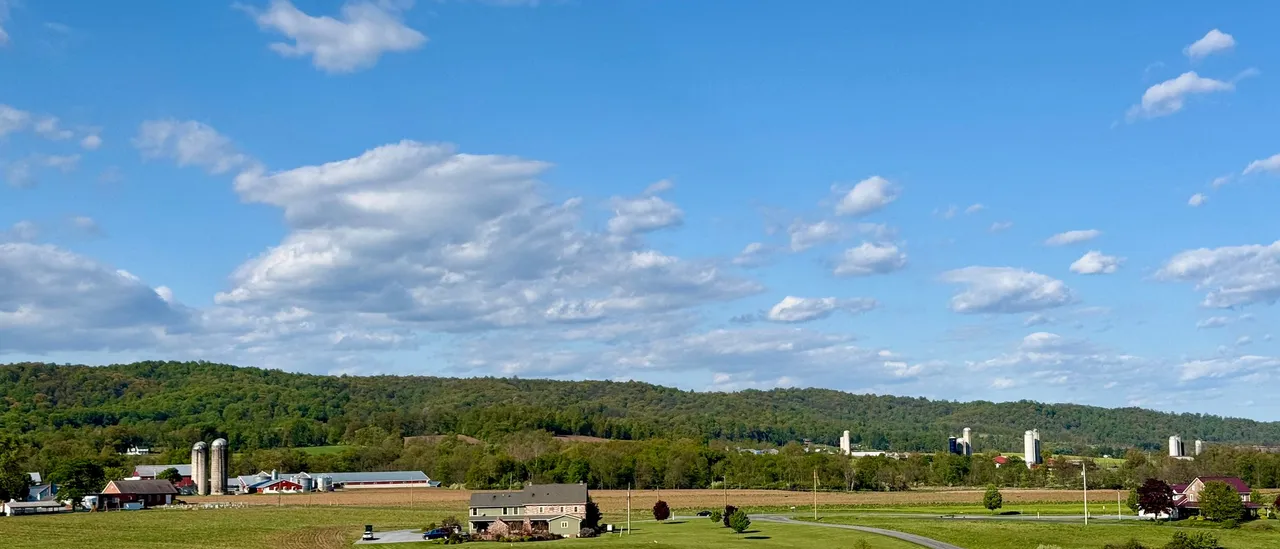
On August 28, Amazon Data Services, Inc. filed a Preliminary Master Land Development Plan with Indiana County, Pennsylvania, under the project name PIT100. The three-page narrative attached to it describes what Amazon Web Services wants to build at the Homer City Energy Campus: roughly 2,200 acres across Center and Blacklick townships, six development sites named Bruner, Helen, Green, West, Harvey/Gaston, and Rura, and a campus of two-story data centers “together with ancillary office and storage space, electrical substation infrastructure, occupied and unoccupied security features, and redundant electrical generation.” Each building would stand about 70 feet tall with a 112,500-square-foot footprint and 225,000 square feet of floor space. The narrative says 39 of them. The plan drawings and the coverage that followed say 36, and the county’s own review will settle the count.
It is the first full campus plan a hyperscaler has filed for the site of Pennsylvania’s largest former coal plant, about 50 miles east of Pittsburgh. The plan went to the county planning commission on September 9, in front of more than 100 residents, and the commission tabled it. On October 14, the county commissioners signed an agreement with the engineering firm Stiffler-McGraw to review it, according to WCCS Radio. Construction, the filing says, is “anticipated to commence in December 2026, subject to receipt of appropriate third-party permit approvals.”
What is in the filing
The schedule runs a decade. The narrative lays out six phases: Rura and West start in December 2026, Harvey/Gaston in December 2027, Bruner and Green in February 2028, and Helen, the last, in January 2032, with completion in June 2036. Each phase gets its own final land development plan and its own recorded approval, and a master development agreement would be signed when the first final plan is approved. The county line between Center and Blacklick bisects four of the six sites, so AWS is asking the commission to waive the rule that a lot sit in one jurisdiction. It also wants sidewalks waived, because “the campus is a secure facility and public ingress/egress will be prohibited.”
AWS expects 1,500 to 2,000 permanent operations staff at full build-out, with average salaries of $80,000 to $100,000, most of them requiring no more than an associate’s degree, and says it will build training pipelines with Indiana County’s colleges and career and technical schools. The company says it has “existing client demand supporting construction of the full campus” and that it “does not anticipate seeking any economic incentives that would reduce real property tax assessments,” so the full assessed value would land on the local tax rolls.
The filing is explicit about where the power and water come from. “Electrical power for the campus will be acquired from FirstEnergy, supported by the 4.5-gigawatt natural gas power generation facility being constructed by HCR as part of the broader Energy Campus,” the narrative says, and AWS “will pay all costs associated with any new electrical infrastructure required to serve the data center campus.” Cooling water would come through the old plant’s existing withdrawal rights and new treatment facilities Homer City Redevelopment is building. Non-contact cooling water would be returned to the station for reuse, and the combined campus is “projected to maintain the historic water withdrawal rate.”
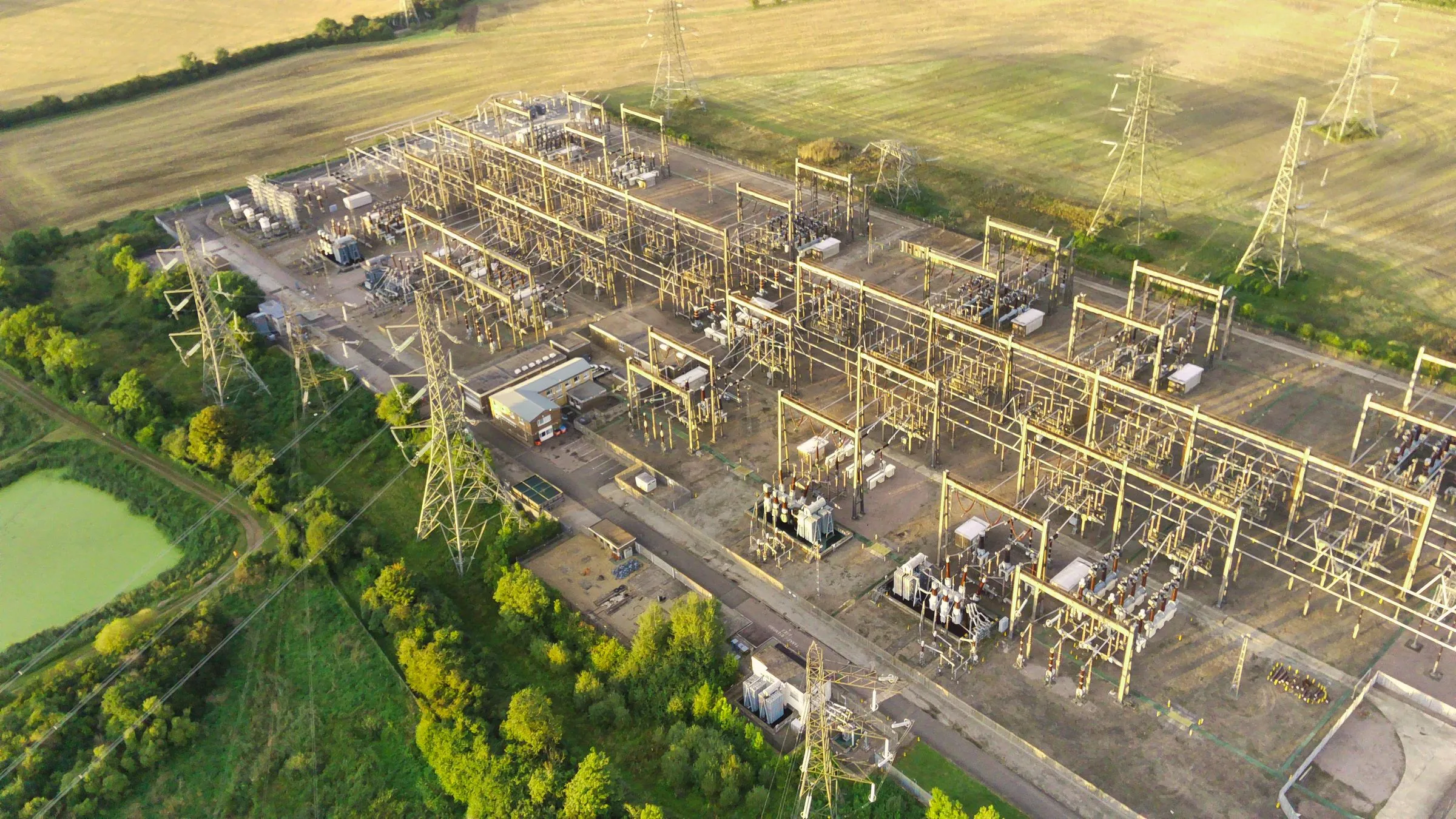
Photo: Altaf Shah / Pexels
That sentence about FirstEnergy matters. The plant’s output reaches the campus through the utility’s wires rather than a private line behind the meter, which is the arrangement described in Bring Your Own Power Plant. The site’s legacy transmission ties to PJM and the New York ISO were part of the pitch from the start, and Baxtel’s project record notes 3,700 MW of the plant’s output has been reserved for data centers.
The plant underneath it
The Homer City Generating Station opened in 1969 and added its third unit in 1977, reaching 1,884 MW at full output, enough to be the largest coal plant in Pennsylvania, according to Utility Dive and TribLive. Its owners went through bankruptcy twice, and the plant shut down on July 1, 2023, running at about a quarter of capacity. On March 22, 2025, crews imploded its four smokestacks and three cooling towers in front of thousands of spectators, per the Indiana Gazette. The Unit 3 chimney, built in 1977, stood 1,217 feet, the tallest of its kind in the United States. “While this ends one chapter, we are eager to start another,” said Robin Gorman, vice president of Homer City Redevelopment, the day it came down.
The next chapter had already been announced. On April 2, 2025, Homer City Redevelopment and Kiewit Power Constructors said they would build up to 4.5 GW of gas-fired generation on the 3,200-acre site, powered by seven GE Vernova 7HA.02 hydrogen-enabled turbines, with an initial capital investment “projected to exceed $10 billion.” Knighthead Capital Management, which had held equity in Homer City for nearly eight years and owned about three-quarters of the holding company per a 2024 FERC filing, leads the financing. The companies promised more than 10,000 construction jobs over five years and about 1,000 permanent positions. EQT agreed in principle to supply Marcellus gas in July 2025, per Rigzone. If it is finished, it would be the largest gas plant in the country, passing the 3,777 MW West County Energy Center in Florida.
The schedule has held so far, with caveats. At a May 2026 site visit by Sen. Dave McCormick, the developer said nearly 1,300 workers were on site, vertical construction had begun with the gas-insulated switchgear building, 14 of 18 material DEP permits had been issued, and the first of the seven turbines was due in 2026. Industrial Info Resources reported the plant could produce its first electricity in the fourth quarter of 2027 but would take years to reach its full 4.5 GW, and Baxtel’s August report put the online date at 2028. AWS’s own filing has two sites under construction a year before any of that power exists.
Pittsburgh, 50 miles west, is a small data center market by any national measure. Baxtel counts 33 facilities totaling 284 MW in the metro, the largest a 120 MW site in Midland. One campus at Homer City would be more than ten times the entire region’s existing capacity.
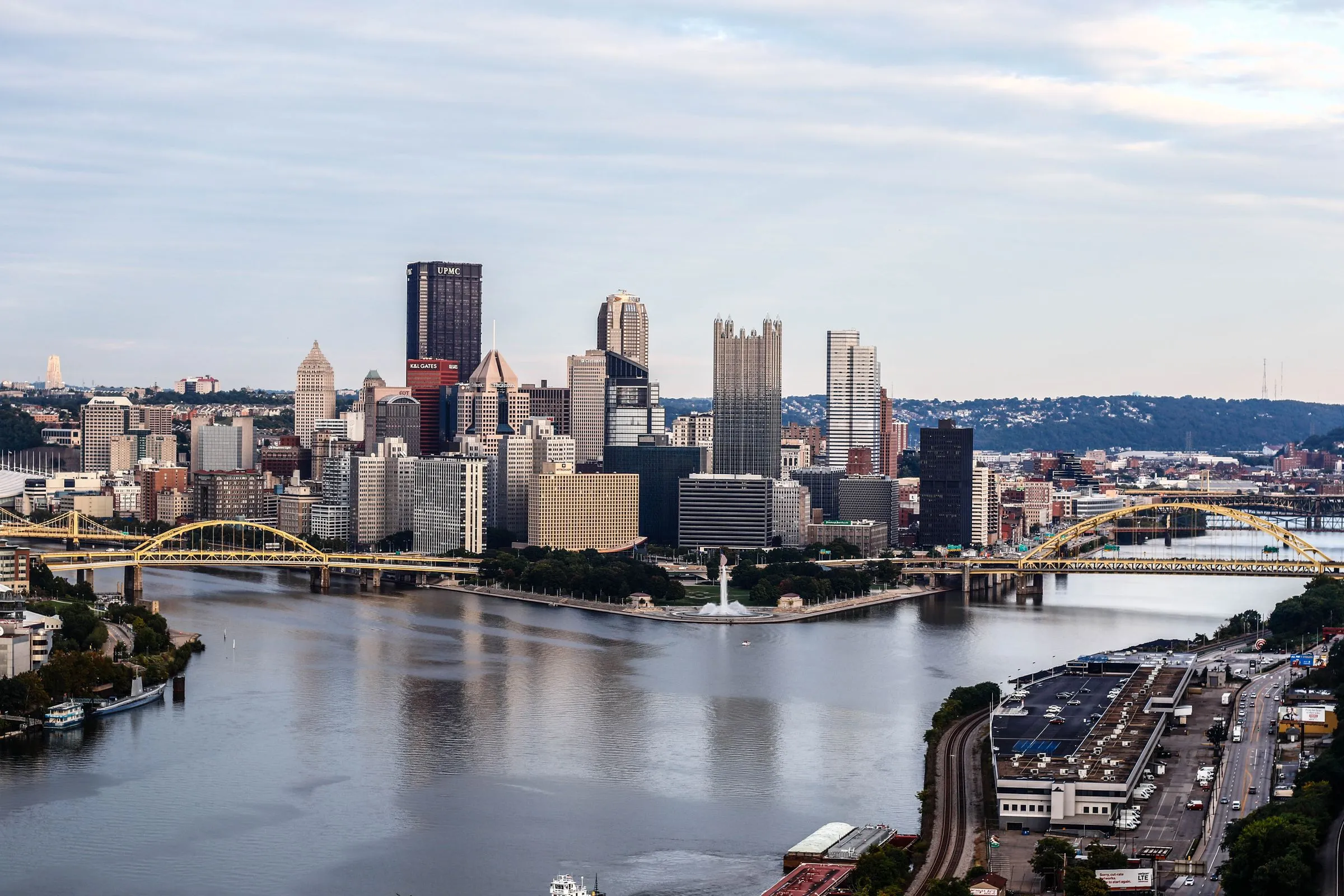
Photo: Nicolas DeSarno / Pexels
The night the courthouse filled
Amazon’s interest was not supposed to be public yet. In early August, TribLive reported the talks after obtaining emails through records requests, including an August 2024 exchange between an AWS economic development manager and Gov. Josh Shapiro’s office, per the Indiana Gazette. Amazon confirmed it was “in discussions with Homer City Redevelopment” and said it was “evaluating multiple sites across the Commonwealth” as part of its $20 billion Pennsylvania commitment. Three weeks later the plan was filed.
The planning commission took it up on September 9 at 5 p.m. in Courtroom No. 1 of the county courthouse in Indiana. More than 100 people came, per WJAC, and most of the ones who spoke were against it. Residents raised noise, air and water pollution, and unanswered questions. One said an AWS map showed dashed lines running across property that nobody had contacted them about.
“We do not want you here and we will fight you until 2100.”
A resident told the company that at the September 9 hearing, according to WJAC. Not everyone agreed. One woman said the jobs could help her son and give local students a reason to stay, while acknowledging she needed to learn more about the environmental effects. AWS representatives repeated the jobs figures, described the FirstEnergy supply and the water plan, and said they would keep answering questions. The commission voted to table the plan and said it might bring in county or outside engineers.
That is what happened on October 14. The commissioners approved the Stiffler-McGraw review agreement, and Josh Krug of the county’s Office of Planning and Development said it would cover “several aspects of the plan,” WCCS reported. Two sub-consultants were proposed for pieces of it: Young and Associates for architecture and building placement, and Navarro and Wright Consulting Engineers for noise and vibration. The full plan set and a public comment portal are on the planning office’s website. No return date to the planning commission has been set.
Shapiro’s conditions
The filing cites “Governor Shapiro’s GRID standards” by name, and the reason is Executive Order 2026-05, signed August 18. It applies to data centers with peak demand above 25 MW, according to the law firm Barley Snyder, and it bans nothing. It changes the order of operations. A developer that wants Commonwealth permits must notify the Department of Environmental Protection, attend a pre-application meeting, and sign a project-specific Consent Order and Agreement adopting the standards: paying the full cost of any new generation, transmission, and distribution the project needs, holding public meetings early enough to shape design, hiring and training local workers under a community benefits agreement, and meeting water conservation requirements. DEP can review the permits of a developer that signs, but will not issue any of them until every local approval is in hand. A developer that refuses to sign waits until local approvals are done and every construction permit is found compliant. The order also barred state agencies from signing NDAs on data center projects.
“They can afford to be good neighbors, follow the rules, and do this right,” Shapiro said. For Homer City, the practical meaning is that Indiana County’s planning commission now controls the state’s clock as well as its own. AWS cannot get a DEP permit until the county approves the plan, and the narrative’s promise of a community benefits agreement is the order’s price of admission.
Amazon’s Pennsylvania ledger
Homer City is the third and largest piece of a commitment Amazon announced on June 9, 2025: at least $20 billion in Pennsylvania, starting with campuses in Salem Township in Luzerne County and Falls Township in Bucks County, and at least 1,250 jobs. The Salem Township campus sits beside Talen Energy’s Susquehanna nuclear plant on 1,200 acres Amazon bought from Talen, with 20 buildings planned, construction under way since October 2025, and about 1,000 permanent jobs, according to Amazon’s project site. Its power comes from a 17-year, roughly $18 billion agreement for up to 1,920 MW from Susquehanna by 2032, POWER reported. That deal began life behind the meter. After FERC rejected a PJM amendment in November 2024 that would have expanded the co-located load, Talen and Amazon rebuilt it as a grid-connected retail contract delivered over PPL’s wires. The Homer City narrative’s FirstEnergy sentence reads like a lesson learned from Luzerne County.
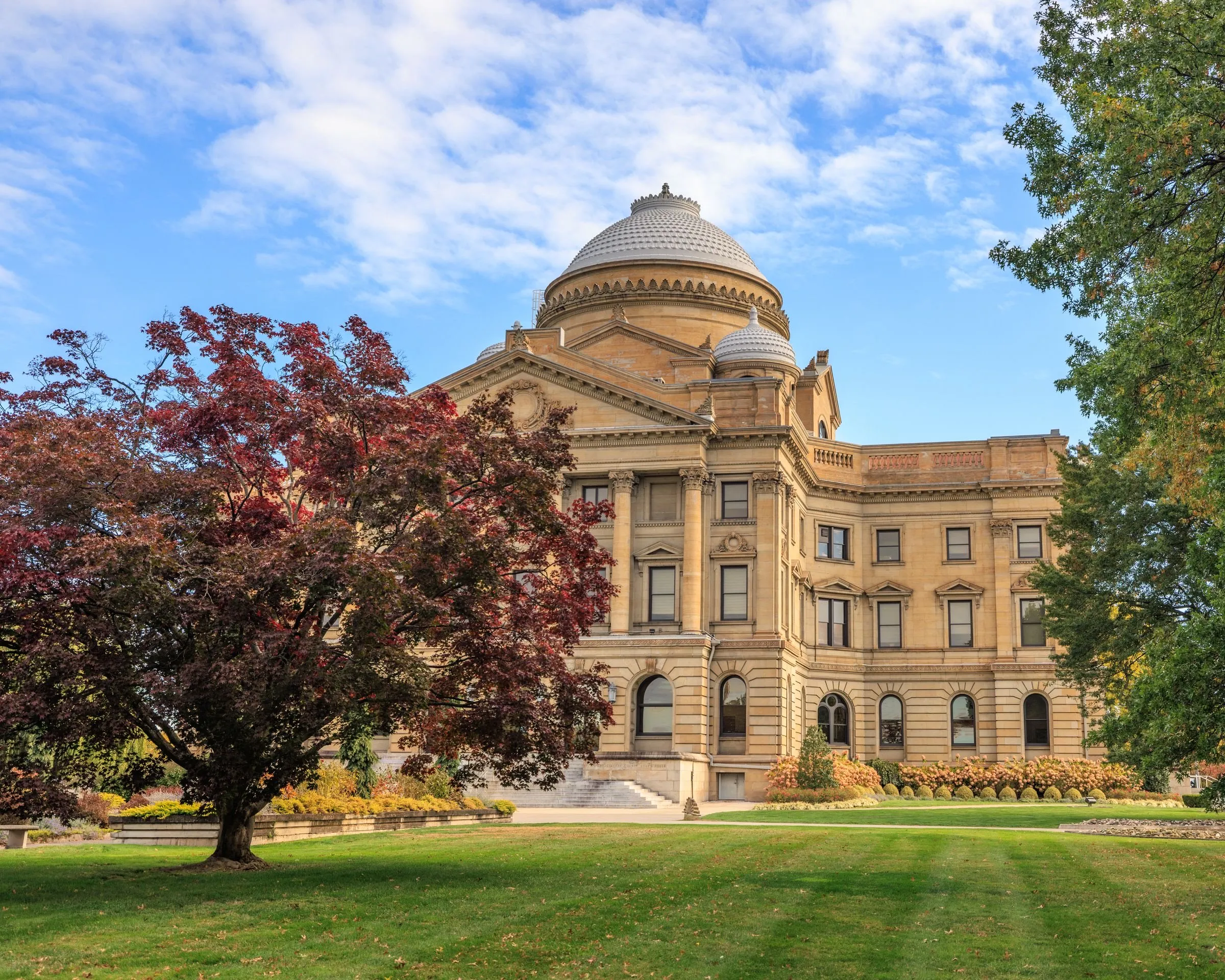
Photo: Phil Evenden / Pexels
The grid Homer City would join is the one every recent article on this site keeps returning to. PJM’s capacity auction for 2028 cleared 6.8 GW short of its reliability target, the backstop procurement meant to fill the gap is suspended until February 2027, and on October 9 FERC rejected PJM’s plan to curtail new large loads that arrive without their own supply, per Utility Dive. The backstop that stalled and the Constellation uprates report cover both. A campus that arrives with 4.5 GW of new gas behind it is the kind of project every one of those rules was written to encourage, and the ten-year schedule in the filing shows how long the encouragement takes to turn into megawatts.
What happens next
The engineering review comes first. Stiffler-McGraw and its sub-consultants will work through the plan set while public comment stays open, and the planning commission will take the plan back up on a date it has not set. If it approves, AWS signs the master development agreement, files a final plan for Rura or West, and goes to DEP with a GRID consent order. Across the fence, Kiewit is waiting on turbine deliveries and 4 remaining DEP permits, with first power somewhere between late 2027 and 2028. The old plant made power here for 54 years, from 1969 to 2023. The filing asks the county for ten more to build what will use the next one’s output.
More in AI Infrastructure
All AI Infrastructure →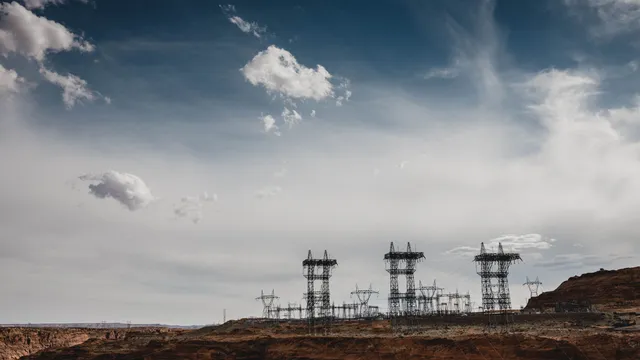
Summer of the Gigawatt: Four Campuses, Twelve Gigawatts, and the New Shape of an AI Data Center
In eight weeks this summer, OpenAI, Google, Amazon, and Brookfield surfaced four US campuses of a gigawatt or more in Georgia, Wyoming, Texas, and Kentucky. Four companies, one template: a code name, a single tenant, power phased in from 2028, closed-loop cooling, and increasingly a gas plant of their own.
Stargate on the Lakefront: Wisconsin's Biggest Power User Rises From Port Washington Farmland
Vantage Data Centers is building a $15 billion, 902 MW campus for OpenAI and Oracle in a small Lake Michigan port town. The buildings are going up fast. The power lines, the politics, and the town itself are having a harder time keeping pace.

Beyond NVIDIA: The Custom Silicon Quietly Filling AI Data Centers
Google, Amazon, Meta, Microsoft, and OpenAI are pouring billions into their own AI accelerators. Custom chips now claim more than a quarter of AI server shipments, even as NVIDIA posts record revenue.