Summer of the Gigawatt: Four Campuses, Twelve Gigawatts, and the New Shape of an AI Data Center
In eight weeks this summer, OpenAI, Google, Amazon, and Brookfield surfaced four US campuses of a gigawatt or more in Georgia, Wyoming, Texas, and Kentucky. Four companies, one template: a code name, a single tenant, power phased in from 2028, closed-loop cooling, and increasingly a gas plant of their own.
Between the first week of July and the second week of August 2026, four data center campuses of a gigawatt or more surfaced in four states, from four different companies. A Laramie County site-plan amendment filed June 30 and reported by Cowboy State Daily on July 8 revealed Google as the customer behind a 2.7 gigawatt campus south of Cheyenne, Wyoming. On July 22, OpenAI announced a $20 billion, 3.2 gigawatt campus in Effingham County, Georgia. A week later, Brookfield and NextEra Energy unveiled a 1.2 gigawatt AI campus on a former uranium enrichment site outside Paducah, Kentucky. And on August 7, Texas construction permits exposed Amazon as the buyer of GW Ranch, a Pecos County site with the largest gas-plant air permit in the country.
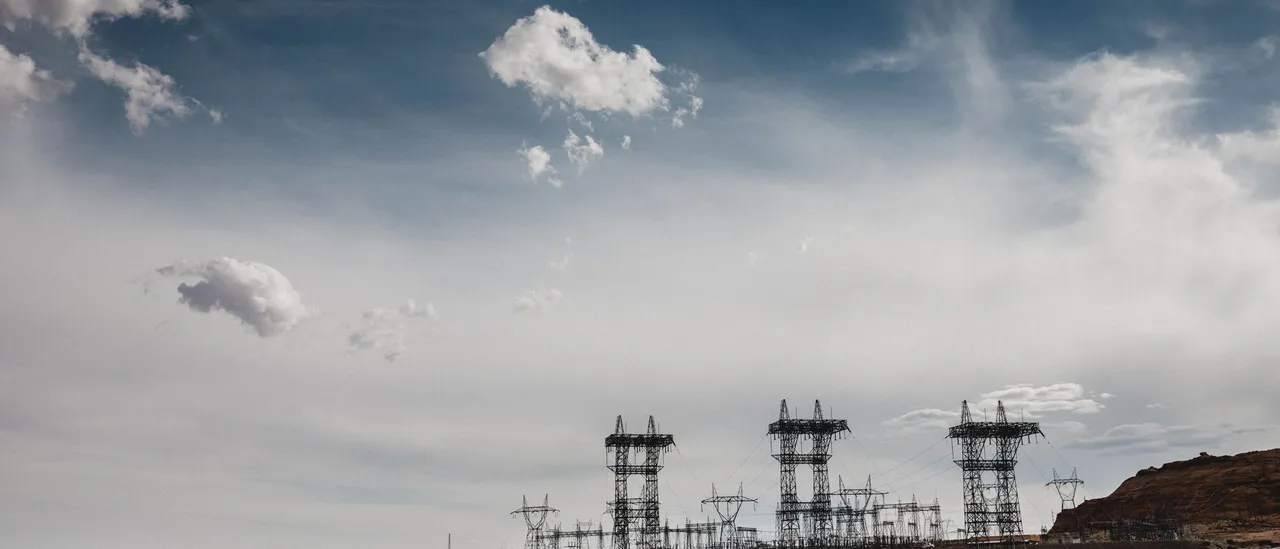
Together that is roughly 12 gigawatts of planned AI capacity, about a tenth of the 118 gigawatts BloombergNEF now expects the entire US data center fleet to reach by 2030. The tally leaves out OpenAI’s separate August 17 deal for about 8 gigawatts at Piketon, Ohio, and treats Meta’s 5 gigawatt Hyperion in Louisiana, covered in our hyperscale buildout piece, as last year’s news. Two of the four will lean on the grid through familiar hardware, the steel high-voltage transmission towers and switchyards that carry utility power onto a site. The other two are building power plants of their own rather than wait for it.
The four share more than size: a code name and non-disclosure agreements, a single AI tenant, power phased in between 2028 and 2032, closed-loop cooling that fills once, and, in three cases, natural gas generation of their own.
Georgia: Camellia and a $20 billion secret
The Savannah Gateway Industrial Hub is a 2,600-acre tract near Rincon, roughly six miles from the Savannah River, the channel that container ships follow under the Talmadge Memorial Bridge to the Port of Savannah’s terminals. On July 22, OpenAI said it would build four data center buildings on 1,400 acres of the hub as Project Camellia, a $20 billion investment that Bloomberg, citing OpenAI compute vice president Sachin Katti, reported will likely exceed $30 billion at full build.
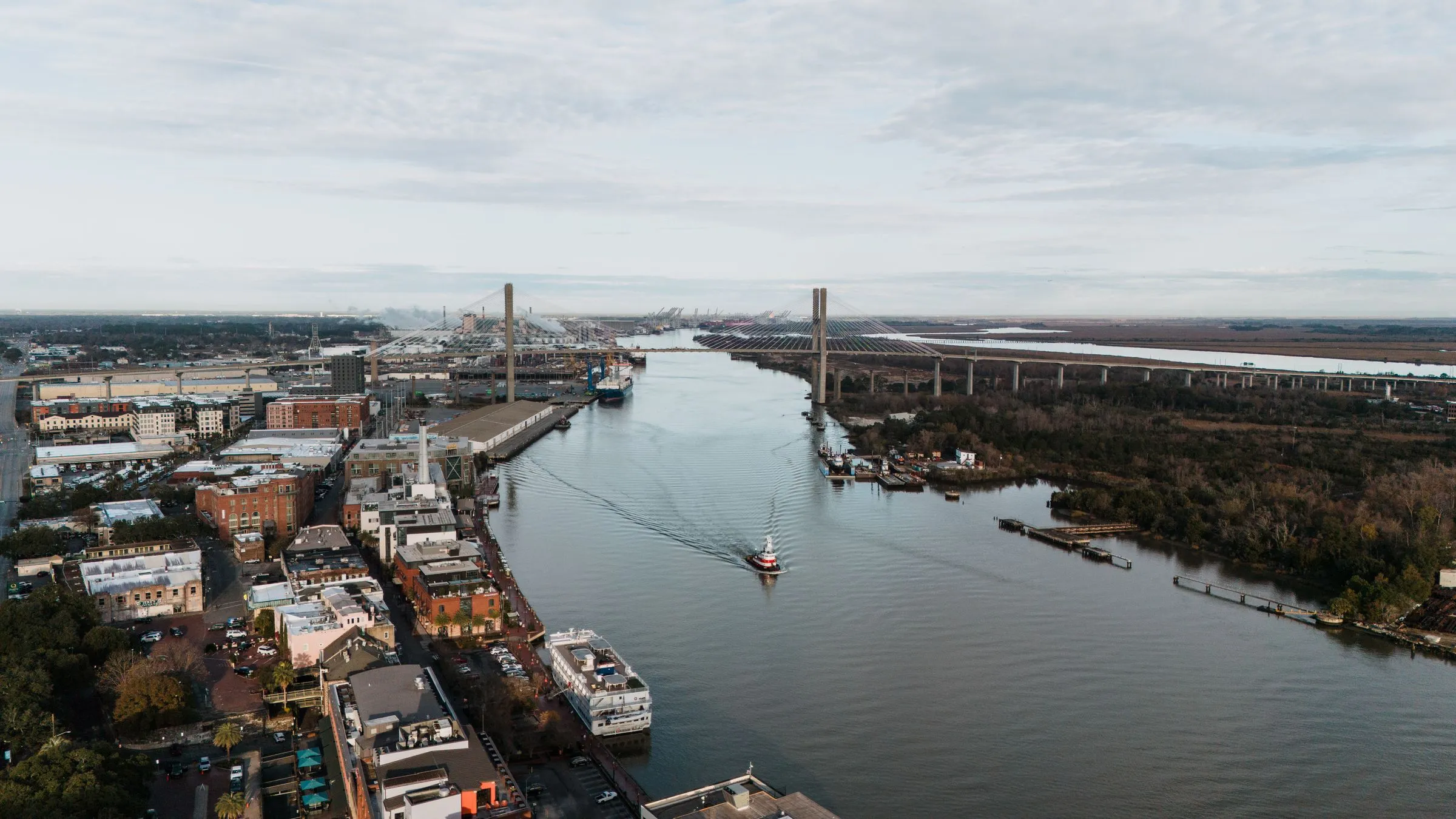
Photo: K / Pexels
Georgia Power has contracted to deliver 3.2 gigawatts in phases between 2028 and 2032 under a 25-year agreement, according to OpenAI and CBS Atlanta. OpenAI says it will pay the full cost of the infrastructure built to serve it and will offer up to 1 gigawatt of demand response when the grid is stressed. It pledged $80 million in community benefits; the county expects 400 long-term jobs at first, rising past 1,000, per the Effingham Herald, in exchange for a 50 percent property tax abatement for 15 years. Cooling is a closed-loop system that, in the county’s words, “fills once and continuously recirculates the same water.”
How the deal was made is what has stuck with residents. The Current’s August 8 reconstruction found that Georgia Power brokered the first meeting between OpenAI and the Effingham County Industrial Development Authority on October 30, 2025. The project was Project Gateway in negotiation and Camellia at signing. ECIDA chief executive Brandt Herndon was bound by a non-disclosure agreement until July 13, eight days before the vote; on April 21 he had told a town hall the agency was “not actively considering a data center project.” The authority posted its meeting notice three business days ahead, not the seven Georgia law requires, and on July 21 approved the package unanimously with three OpenAI representatives present and no members of the public. Data Center Knowledge later noted that Georgia Power had documented a 3,200 megawatt customer commitment months before anyone in Effingham heard the name. “A lot of these details and decisions have already been made, and we’re playing catch up,” Jeff Beauvais of the advocacy group One Hundred Miles told The Current.
Wyoming: Tembo brings its own power plant
Eight miles south of Cheyenne, where US Highway 85 crosses Terry Bison Road, the Switchgrass Industrial Park sits on what POWER Magazine describes as mostly pasture land: the open, short-grass cattle country of Wyoming’s eastern high plains, where cottonwoods gather along the creeks. The 716-acre campus there was announced in August 2025 as Project Jade, a 1.8 gigawatt Crusoe development; by January 2026, when Laramie County approved it, the figure was 2.7 gigawatts, per Cowboy State Daily.
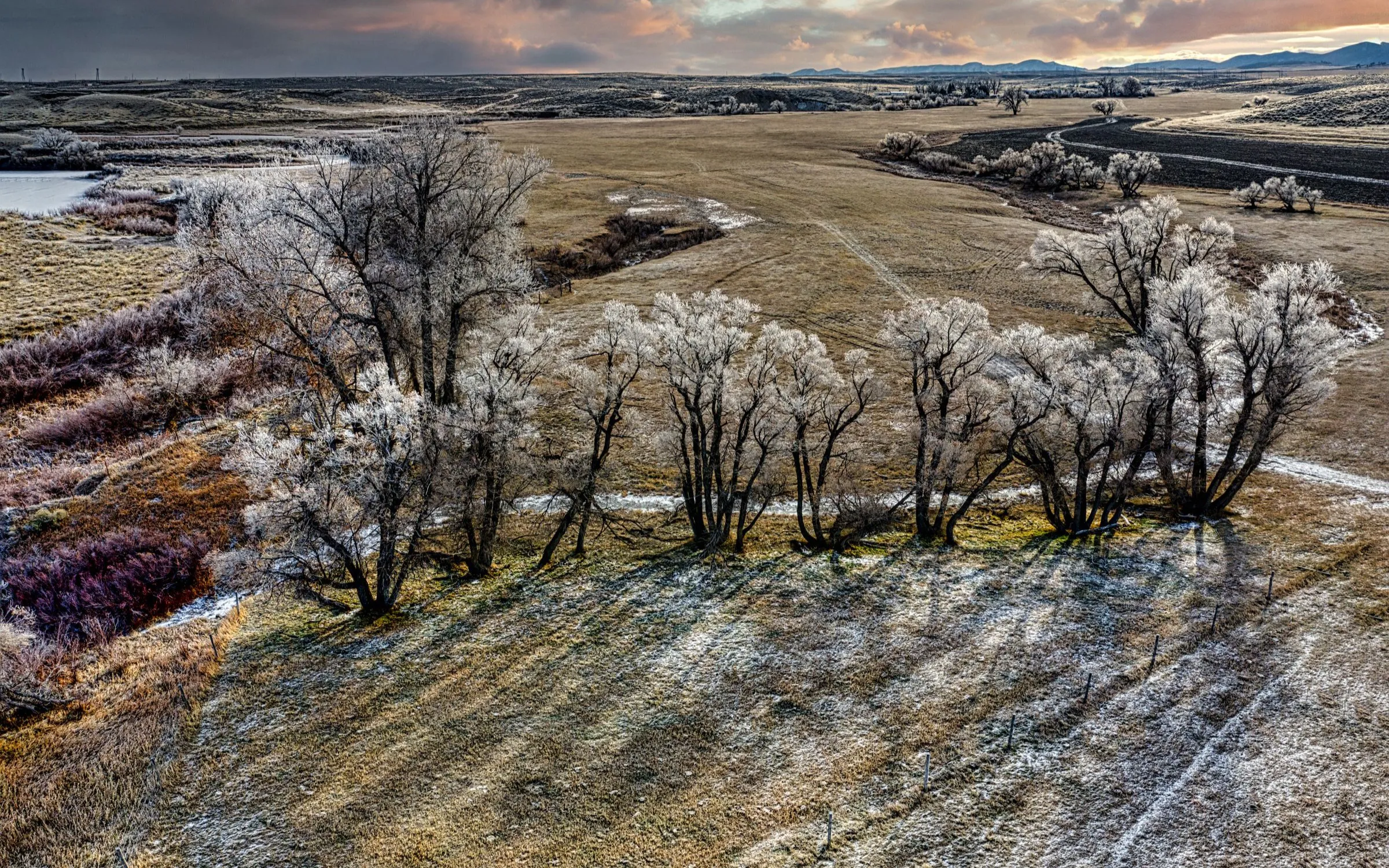
Photo: Tom Fisk / Pexels
Crusoe left in June, saying it had paused work at the request of its customer; Tallgrass said construction “never stopped, not even for a minute.” On June 30 a county site-plan amendment named a new construction manager, Jupiter Star Holdings LLC, a Google subsidiary, and Data Center Dynamics reported that Google confirmed it. The project became Tembo: four data halls, completion targeted for 2031, and a footprint cleared to scale to 10 gigawatts.
The power plan is the notable part. Tallgrass is building a dedicated Cheyenne Power Hub on 659 adjoining acres, 2.7 gigawatts of gas-fired generation in two plants paired with Bloom Energy fuel cells, at a cost above $7 billion, per POWER Magazine. Black Hills Energy will add grid service from early 2028, and the customer has already paid it more than $200 million in refundable contributions toward that connection, according to Cowboy State Daily. Water follows the same logic: an initial fill equal to about 20 households, then roughly three households’ worth a year from deep wells.
At 2.7 gigawatts the campus would draw nearly three times what all of Wyoming uses today, roughly 0.9 gigawatts. “It’s like comparing the Earth to Jupiter,” state Senator Cale Case told Cowboy State Daily in June. “It’s taken us over 100 years to grow the electric grid to where we are today.”
Texas: GW Ranch and 35 gas turbines
Highway 18 runs north out of Fort Stockton as a two-lane road across flat West Texas ranch country, dry grass and mesquite scrub with mesas on the horizon, at the southern edge of the Permian Basin. About 17 miles up that road, on more than 8,000 acres of ranch land, Pacifico Energy has been permitting GW Ranch, which the Texas Commission on Environmental Quality approved in early 2026 as, in the company’s words, “the largest permitted data center campus in the United States,” per KCBD.
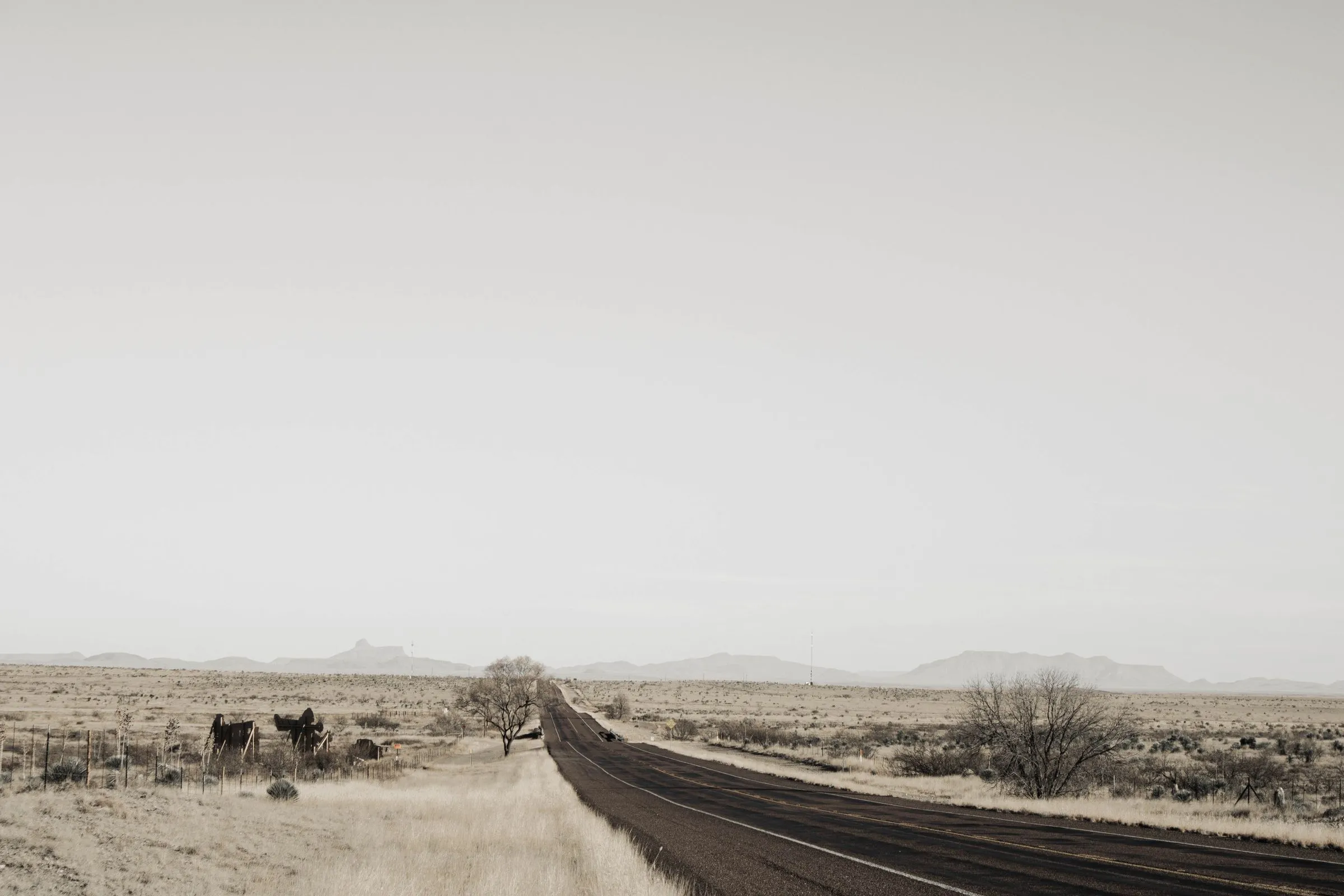
Photo: Mizzu Cho / Pexels
The permit covers 7.65 gigawatts of gas-fired generation from 35 turbines, plus 750 megawatts of solar and 1.8 gigawatts of batteries, on a private grid with no connection to ERCOT. Pacifico’s schedule calls for first power in early 2027, 1 gigawatt in 2028, and more than 5 gigawatts by 2031. Water will come from brackish groundwater unfit for drinking. “We know in Texas, and especially in West Texas, water is worth fighting for,” Pacifico vice president Constantyn Gieskes told the Big Bend Sentinel.
The buyer stayed hidden until August. Distilled, the newsletter of the research firm Cleanview, reported on August 7 that three permits filed with the Texas Department of Licensing and Regulation showed Amazon as the owner of three data center buildings, and that satellite imagery showed land clearing under way on July 24. Amazon confirmed it, saying the campus “is powered by new on-site generation that won’t raise electricity costs for Texas families and designed to transition to grid-connected service as interconnection timelines allow.”
Kentucky: Paducah’s second act
The Paducah Gaseous Diffusion Plant was built in 1952 to enrich uranium and stopped in 2013, when its facilities were returned to the Department of Energy for cleanup. DOE sought offers on the site in November 2025 and on July 29 named the winners: Brookfield will develop what the department calls a 1.8 gigawatt AI campus, and NextEra Energy will build up to 2 gigawatts of gas generation and 2.6 gigawatts of battery storage for it. Data Center Knowledge puts the compute load at 1.2 gigawatts; DOE expects construction to finish in 2031, with about $100 billion of investment, 8,000 construction jobs, and 600 permanent ones.
Paducah has a twin. Piketon, Ohio, holds DOE’s other former gaseous diffusion plant, and on August 17 OpenAI signed a 20-year lease with SB Energy for about 8 gigawatts of IT capacity there, per Data Center Frontier and the Dayton Daily News, backed by roughly 10 gigawatts of new generation, 9.2 of it gas, with a first 800 megawatts in 2028.
The template
Set the four side by side and a design emerges that no committee wrote.
It begins with a code name. Camellia was Gateway; Tembo was Jade; GW Ranch went by its developer’s name for a year while the buyer stayed hidden. The secrecy is not incidental. As The Current showed in Georgia, it lets a utility line up gigawatts of supply, a land deal, and a tax abatement before the first public meeting, so the vote is a formality by the time residents hear the name.
It has one tenant, which explains the 2028 to 2032 schedules: nobody needs 3 gigawatts on day one, and nobody can get it. Georgia Power’s first several hundred megawatts arrive in 2028, per Bloomberg; Black Hills targets early 2028; Pacifico promises a gigawatt in 2028; Piketon’s first 800 megawatts land the same year.
It brings its own power. Three of the four pair with dedicated gas: Tallgrass’s 2.7 gigawatts, NextEra’s 2, Pacifico’s 7.65. The exception, Camellia, still commits OpenAI to paying every dollar of the infrastructure Georgia Power builds for it and to shedding a full gigawatt on command. The logic of the behind-the-meter model is the same everywhere: interconnection queues run years, turbines can be bought, and a private plant that later ties into the grid hedges both.
It is dry, on paper. All four lead with a closed-loop claim: fill once, recirculate, ongoing draw like an office building. As our water explainer notes, closed loops move consumption to the power plant rather than eliminating it; a campus with its own gas plant has simply moved that water behind its own fence. And it pays for the privilege: $80 million community funds at Camellia and Piketon, abatements, and ratepayer pledges are now standard terms, negotiated before the announcement rather than demanded after it.
What twelve gigawatts actually means
Wyoming is the cleanest yardstick: Tembo alone is three Wyomings, and the summer’s four campuses are roughly thirteen. Nationally, BNEF’s July outlook raised its 2030 forecast for installed US capacity by 52 percent, to 118 gigawatts, after the announced pipeline grew by 101 gigawatts in seven months. The same report counts 124 gigawatts of announced on-site gas plants, only 56 percent of them with a commissioning date.
“It’s like comparing the Earth to Jupiter. It’s taken us over 100 years to grow the electric grid to where we are today.”
That is the catch. The template assumes turbines, and turbines are the scarcest thing in it. GE Vernova entered 2026 with 100 gigawatts of gas equipment under contract or reserved, and by April had roughly 10 gigawatts of production slots left across 2029 and 2030 combined, with lead times for new heavy-duty orders near three years, per Power Engineering. Large power transformers, as our supply-chain piece details, take 128 to 160 weeks.
The four campuses of summer 2026 are one story told in four accents: an AI company that needs a power plant’s worth of electricity, a county that learns about it last, and a schedule that runs to 2032 because the machines to make it happen are sold out until then.
More in AI Infrastructure
All AI Infrastructure →
Stargate on the Lakefront: Wisconsin's Biggest Power User Rises From Port Washington Farmland
Vantage Data Centers is building a $15 billion, 902 MW campus for OpenAI and Oracle in a small Lake Michigan port town. The buildings are going up fast. The power lines, the politics, and the town itself are having a harder time keeping pace.
Beyond NVIDIA: The Custom Silicon Quietly Filling AI Data Centers
Google, Amazon, Meta, Microsoft, and OpenAI are pouring billions into their own AI accelerators. Custom chips now claim more than a quarter of AI server shipments, even as NVIDIA posts record revenue.
The GPU-for-Rent Economy: Inside the Neocloud Gold Rush
Specialist GPU clouds like CoreWeave, Nebius, and Nscale are growing 200 percent a year on hyperscaler mega-deals and chip-backed debt. The open question is what the collateral will be worth when the loans come due.