The Judge, the Desert and the 330-Megawatt Data Center: California's Environmental Law Catches Up With AI
A tentative ruling in Imperial County would push the largest data center ever proposed in California through a full environmental impact report, a year or more of delay for a project that would draw more electricity than the entire county. It also explains why the AI buildout has mostly skipped the state.

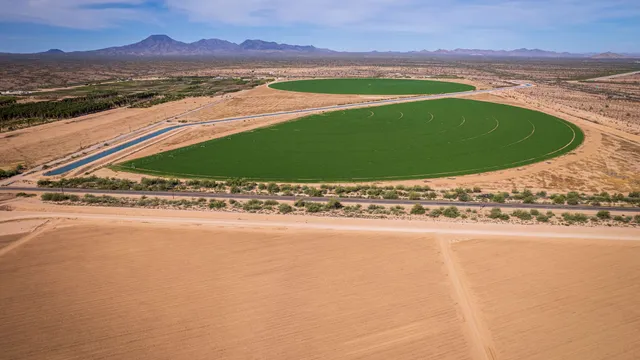
The Imperial Valley is the lowest, hottest and driest farm country in the United States. El Centro, the county seat, sits 50 feet below sea level, summer highs run well past 100 degrees, and the valley averages under three inches of rain a year. Its half a million acres of winter vegetables and hay exist only because the Colorado River is carried more than 80 miles across the desert to them. The valley is boxed in by the Salton Sea on one side and, to the east, the Imperial Sand Dunes, a 40-mile belt of bare sand running up against rocky desert mountains. On August 31, Imperial County Superior Court Judge L. Brooks Anderholt issued a tentative decision saying that before anyone plugs a 950,000-square-foot computing warehouse into it, the county must study what that would mean.
The decision, reported by KPBS on September 1, would set aside Imperial County’s approvals for the data center proposed by Imperial Valley Computer Manufacturing, a limited liability company run by Huntington Beach lawyer and developer Sebastian Rucci, and require a full environmental impact report under the California Environmental Quality Act. If it becomes final, what CalMatters calls the largest data center in California will have to go through the state’s most demanding review, and the decision lands in the same week that Sacramento sent the governor a bill to make that review mandatory statewide.
What the county approved, and how
The legal fight turns on a document from 2017. That year Imperial County amended its zoning code to make data centers a permitted use in its industrial zones, and adopted a negative declaration, the CEQA finding that a project will have no significant effect on the environment. According to Data Center Knowledge, that 2017 review never analyzed a data center, a battery storage system, a 330-megawatt substation, large-scale gas generation, high-capacity transmission interconnections, cooling plant or water treatment. Eight years later the county leaned on it anyway. In November 2025 the county determined that the grading permit for Rucci’s 75-acre site at Aten and Clark roads, just outside the city of Imperial, was ministerial and exempt from CEQA, Beyond Borders News reports. In April 2026 it did the same for a lot merger and the vacation of Leimgruber Road.
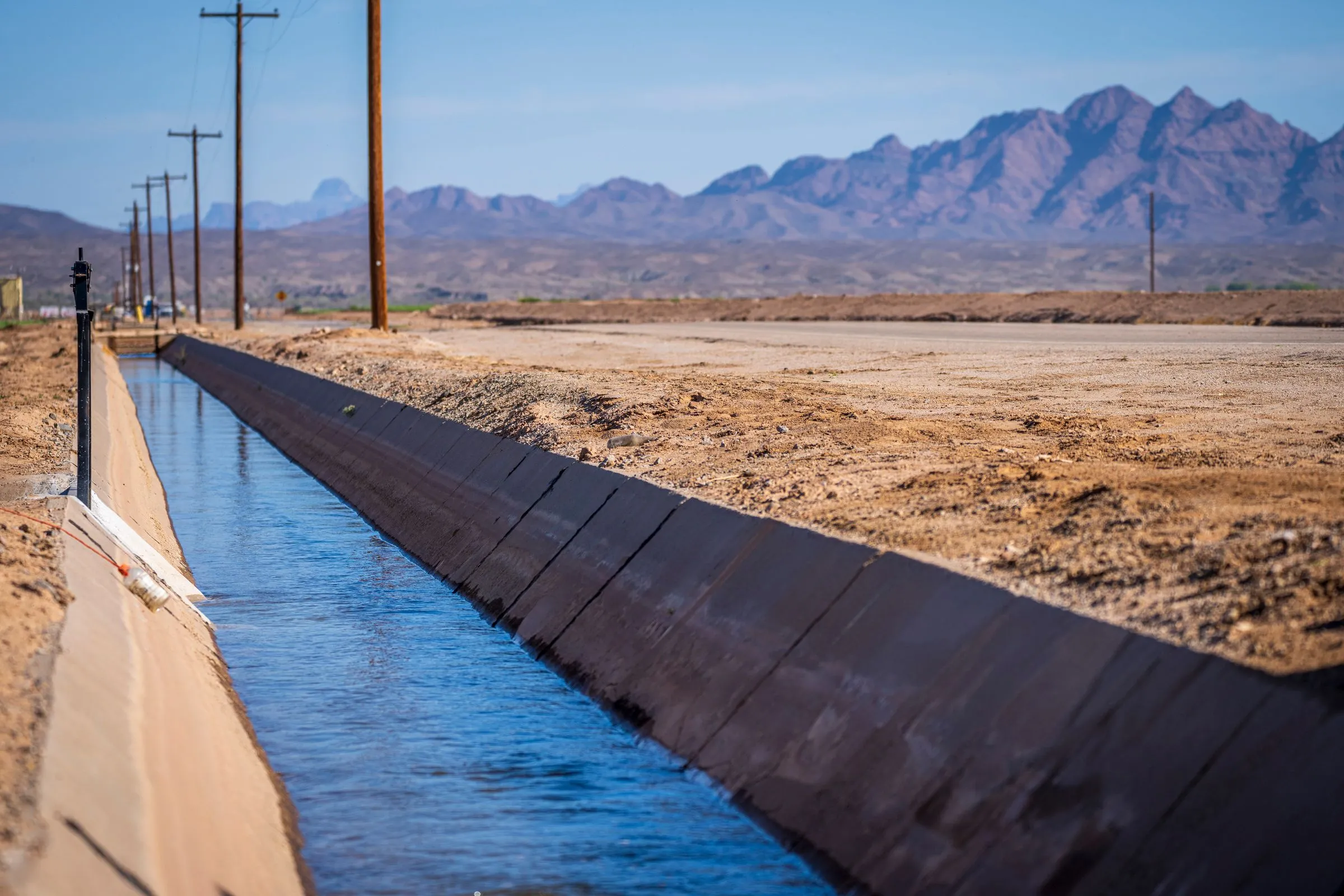
Photo: Mark Stebnicki / Pexels
Water was the first thing to go wrong. Every drop the valley uses comes from the Colorado, diverted at Imperial Dam, 18 miles northeast of Yuma, Arizona, where the river is split between the All-American Canal heading west into California and the Gila Project canals that water Yuma’s own fields on the Arizona side. The Imperial Irrigation District delivers about 3.1 million acre-feet a year through the All-American and its laterals, the largest single share of the river anywhere in the basin. Rucci’s original plan avoided the river entirely by buying recycled wastewater from the cities of Imperial and El Centro; in a February blog post he wrote that the project “does not touch a single drop of the Colorado River.” Both cities backed out in late 2025, Western Water reports. In April IVCM applied to the district for 880 acre-feet a year, about 750,000 gallons a day, offering to fallow a 160-acre farm it controls to offset the draw. IID denied the application on May 1, citing a rule against new hookups within 300 feet of a city’s water supply, and IVCM sued the district on June 5. KPBS put the request at 260 million gallons a year, roughly the annual needs of 7,300 county residents.
The City of Imperial had been in court since the grading permit. Its bid for a restraining order against the April 7 lot-merger vote failed, and the city, joined by the Sierra Club, pressed the CEQA case that Anderholt heard on July 29. Their argument, in the words of the city’s lawyer, Alene Taber, was that “the county divided up the project into smaller pieces” and reviewed each as if it were routine. Anderholt agreed. “The grading, lot merger, road vacation, electrical facilities, water systems, and related infrastructure serve one objective: construction and operation of the data center campus,” he wrote. The county “prejudicially abused its discretion by approving the lot merger without first completing the CEQA review required.”
Power, water and 132 generators
The project the judge described is not a warehouse with servers in it. According to the county documents summarized by Data Center Knowledge, it is a 330-megawatt load with its own 330-megawatt substation, an 862-megawatt-hour battery energy storage system, cooling and water treatment plants, four 500,000-gallon water tanks, a six-acre retention basin, and a 330-megawatt emergency generation facility built from 132 natural gas generators. The developer’s own project site describes the battery as 220 Tesla Megapacks. The generators would sit inside weatherproof steel enclosures like those on any large backup installation, but 132 of them add up to a 330-megawatt gas plant beside the fields.
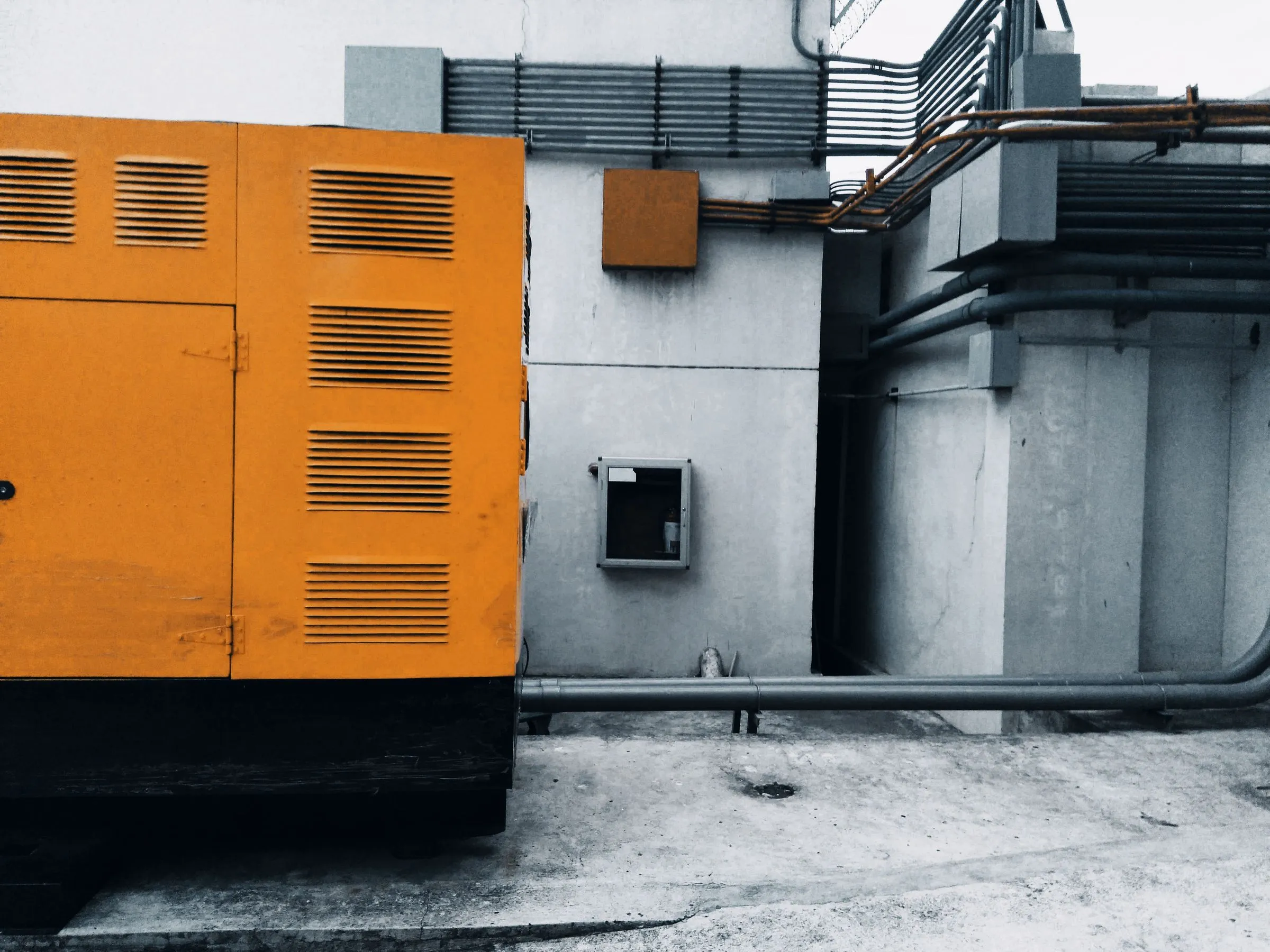
Photo: ezrah lane / Pexels
The scale is easiest to grasp against the county itself. Imperial County had 179,702 residents in 2020. A 330-megawatt load running around the clock consumes roughly 2.9 million megawatt-hours a year, and KPBS reports that the complex would use more electricity than the entire county did in 2024. The judge listed what the county never examined: energy supply, water and wastewater, air quality and greenhouse gases, hazardous materials and fire safety, traffic, land use, and induced growth. He singled out the bank of gas generators for their potential to pollute the air, in a region where a 2019 survey cited by the Water Education Foundation found 22 percent of children have asthma, nearly three times the national rate.
Taber put it plainly. “It’s not just a building that has data processing equipment in it,” she told KPBS. “Along with these hyperscale data centers come these battery energy storage systems.” Those are the water and air arguments now made against desert campuses across the Southwest, and Anderholt’s decision says a county must answer them in writing before it hands out permits.
Why California has sat out the boom
The Imperial ruling matters beyond one county because California has largely watched the AI buildout from the sidelines. The California Energy Commission puts data center load in early 2026 at about 1,000 megawatts, 2 percent of the state grid’s peak, rising to 4,500 megawatts by 2040. A San Francisco Chronicle analysis found the state holds 5 percent of national data center capacity today and would fall to 1 percent if every project announced elsewhere is built. Across the Colorado, DC Map counted 12.7 gigawatts of tracked Arizona capacity in August, 2.3 gigawatts operating and 9.4 gigawatts planned. The Desert Research Institute’s January report put Nevada at 713 megawatts operating with 5,900 megawatts planned. Rucci’s project alone is a third of everything California has.
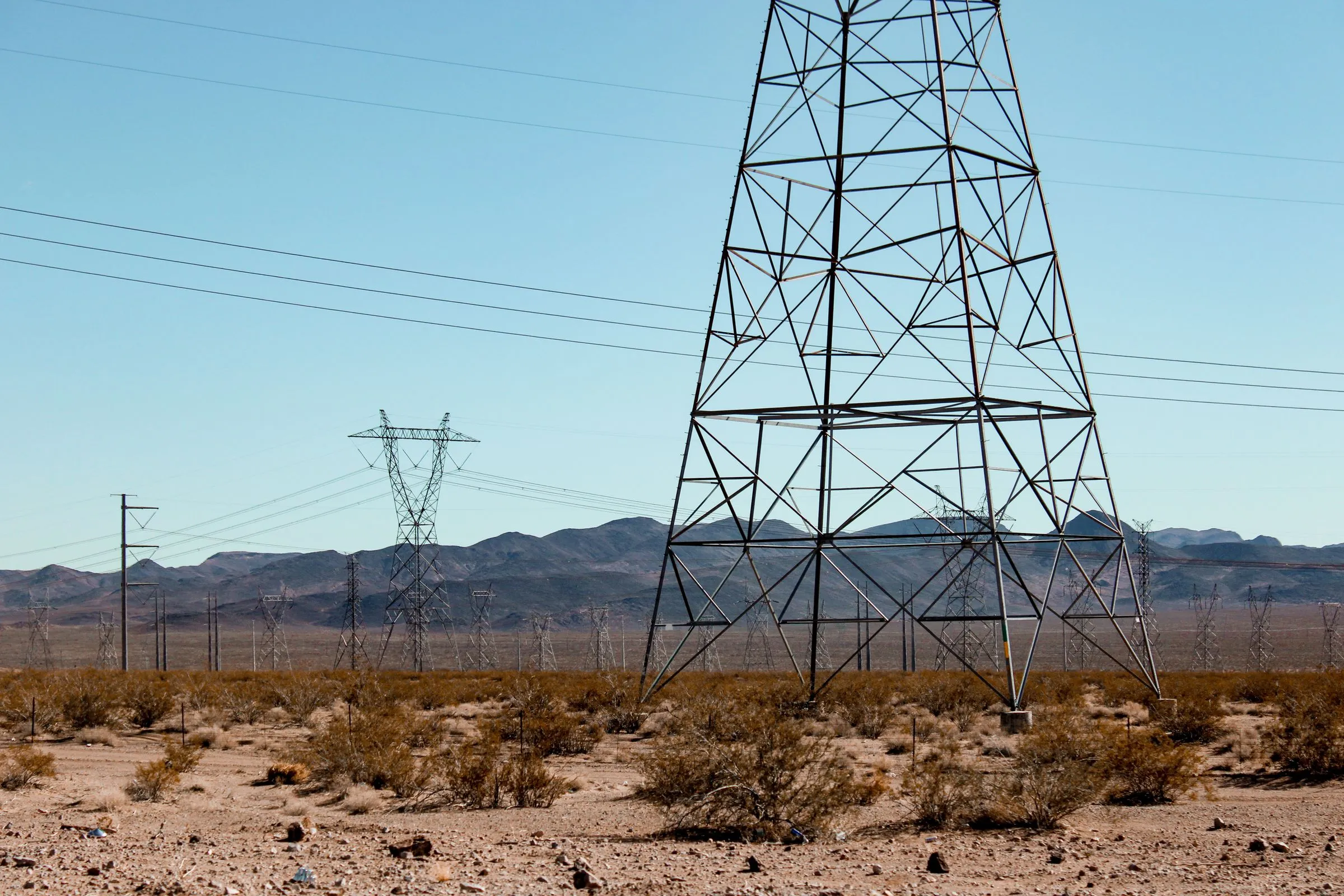
Photo: Luana Scorsoni / Pexels
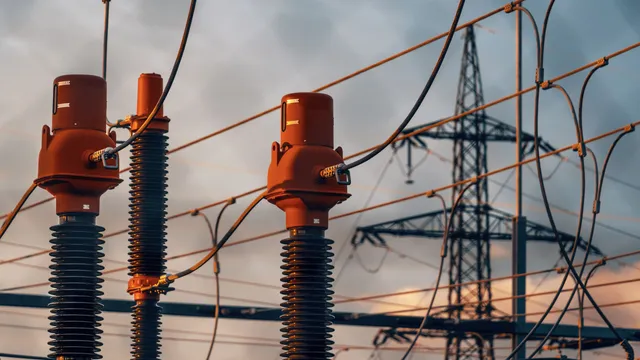
The capacity followed the transmission lines strung across the Nevada desert, and the price of what runs through them. The Energy Information Administration’s June 2026 figures put California’s average industrial electricity price at 20.74 cents per kilowatt-hour, against 7.73 cents in Arizona, 10.16 in Nevada, 9.31 in Virginia and 6.58 in Texas; the national average was 9.17. Interconnection is the second obstacle: Canary Media reports that PG&E alone has 10 gigawatts of data center demand in its pipeline over ten years, and Hoodline cites California ISO projections that serving it could trigger $1.8 billion in transmission upgrades in PG&E territory.
CEQA is the third, and it is the one Sacramento just tightened rather than loosened. Senate Bill 887, from State Senator Steve Padilla of San Diego, eliminates categorical CEQA exemptions for data centers, the very theory Imperial County used, and offers expedited judicial review only to projects that run on carbon-free power, use recycled water, replace diesel backup with zero-carbon alternatives and pay their interconnection costs up front. It passed alongside SB 886 and AB 2383, which order the Public Utilities Commission to write separate tariffs for large new loads. Governor Gavin Newsom has until September 30 to act and, Hoodline reports, has not said how. The Data Center Coalition’s Khara Boender told Canary Media the standards “are not attainable.”
Local voters have gone further than the state. In Monterey Park, in the San Gabriel Valley east of downtown Los Angeles, a proposal by the Australian firm StratCap to convert an office property at 1977 Saturn Street into a 218,400-square-foot, 50-megawatt data center drew petition drives at city hall. The council voted unanimously on March 4 to put a permanent ban before voters, and on June 2 Measure NDC passed 10,321 to 1,362, 88 percent, according to the certified Los Angeles County tally. Monterey Park became the first U.S. city to lock a data center ban in by ballot, a milestone in the national backlash that had until then run through councils and county boards.
What happens next
The decision is tentative. Data Center Knowledge reports the parties have 20 days after notice to meet and confer, and KESQ says the county is barred from issuing further approvals in the meantime. Rucci told KPBS he respected the judge but would seek a hearing to contest the findings. If Anderholt finalizes the ruling, the county cannot process permits until it certifies an environmental impact report. The consultancy Calichi puts a typical EIR at 12 to 24 months from scoping to certification, with a mandatory 45-day public comment period on the draft, and 36 months or more for contested projects like this one.
“The county’s economic study found $100 million a year in county-directed public benefits. Each year the project is delayed costs the local economy.”
That was Rucci’s response, in an email to KPBS. His project site promises a $10 billion investment, 1,688 union construction jobs, $28.7 million a year in property tax and a one-time $72.5 million in sales tax. Francisco Leal, an Imperial resident who helped organize the opposition group Not in My Backyard Imperial, read the same ruling differently. “We kept pushing because we knew that that wasn’t right,” he told KPBS. “This court ruling just proves that all of our claims were correct.”
Meanwhile the county’s other line of defense is collapsing. In June the supervisors reversed themselves and imposed a moratorium on new data centers, since extended to June 2027. Rucci sued, and in a tentative ruling issued August 21 and reported by KPBS a week later, Judge Jeffrey Jones moved to strike it down because the county “failed to identify a current and immediate threat to public health, safety or welfare.” KPBS reports the county intends to introduce a new version, Calexico is weighing a citywide ban, and residents are pursuing recalls of supervisors Peggy Price and Ryan Kelley, who voted for the project’s approvals. The county that waved the project through in November may end up with no moratorium, no approvals, and a two-year study to write.
For other California counties the lesson is durable. A negative declaration from before the AI era does not cover a gigawatt-scale campus, and splitting a project into a grading permit, a lot merger and a road vacation does not make any of them ministerial. SB 887 would write that rule into statute; Anderholt has already found it in the existing one. Developers who want to build in California now know the price of entry is an EIR, on top of electricity at more than twice the Arizona rate. Most had already done that arithmetic, which is why the dunes east of Brawley are still the loudest thing on the horizon.
More in Industry Growth
All Industry Growth →
Seven Signatures in Sacramento: What California's New Data Center Laws Actually Require
Governor Newsom signed a package of seven data center bills on September 21 that ends CEQA exemptions, orders the CPUC to write large-load tariffs, and makes water and energy disclosure a condition of permits. Here is what each law says, who fought it, and what it means for the projects already in the queue.
The Year the Neighbors Said No: Inside America's Data Center Backlash
In 2026, local opposition blocked or delayed $130 billion of data centers in a single quarter, three-quarters of Americans now oppose one nearby, and governors in both parties are pausing permits. A scoreboard of what the revolt has actually changed, and what it has not.
The Three-Year Wait for a Transformer: The Supply Chain Choking the Data Center Buildout
Large power transformers now take 128 to 160 weeks to arrive, gas turbine slots are booked into 2031, and a single Pennsylvania mill makes all of America's transformer steel. Inside the equipment bottleneck behind the AI buildout, and the tricks developers use to jump the line.