Seven Signatures in Sacramento: What California's New Data Center Laws Actually Require
Governor Newsom signed a package of seven data center bills on September 21 that ends CEQA exemptions, orders the CPUC to write large-load tariffs, and makes water and energy disclosure a condition of permits. Here is what each law says, who fought it, and what it means for the projects already in the queue.
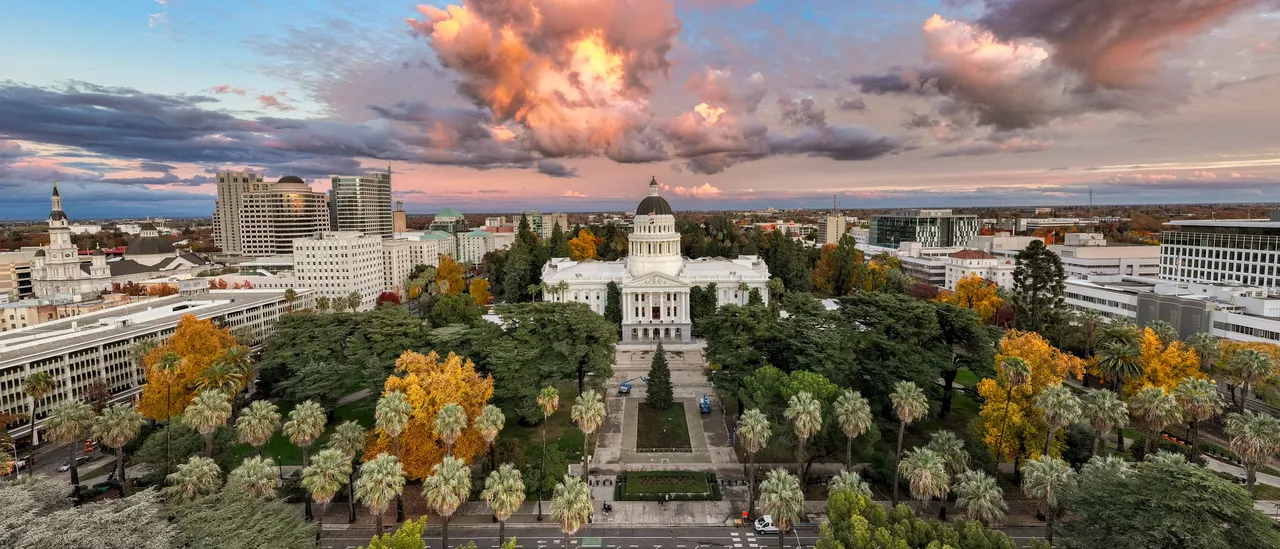
On Monday, September 21, Governor Gavin Newsom signed seven data center bills and called them “the most comprehensive data center protections in America.” The package takes effect January 1, 2027. No other state has combined its three moves: no more categorical exemptions under the California Environmental Quality Act, CPUC tariffs that make large loads pay for the grid they use, and water and energy disclosure as a condition of permits. “With these laws, we are ensuring that Californians remain in the driver’s seat,” the governor’s office said.
It is also a reversal. Eleven months earlier Newsom had vetoed a narrower water-reporting bill, writing that he was “reluctant to impose rigid reporting requirements about operational details on this sector without understanding the full impact on businesses.” What changed was the Imperial County ruling, the voter-approved ban in Monterey Park, and polling: a July Public Policy Institute of California survey found 73 percent of Californians opposed to a data center nearby, KQED reports. Assemblymember Diane Papan, author of the vetoed bill and two of the seven signed, told CalMatters the outcry meant “the atmosphere has changed.”
SB 887: CEQA applies, with a narrow fast lane
Senate Bill 887, by State Senator Steve Padilla of San Diego, reaches every project. Its Legislative Counsel’s digest says the bill “would define ‘data center’ for the purposes of CEQA and prohibit the application of categorical exemption to a project for the development and operation of a data center.” A new code section adds that CEQA “shall apply to the issuance of entitlements related to the development and operation of a data center,” closing the ministerial pathway that lets a project matching existing zoning skip review. That was Imperial County’s theory for a 330-megawatt campus, and the one behind Gilroy’s 2025 approval of Amazon’s data center, which KPBS says would no longer be possible.
The fast lane is certification by the governor as an “environmental leadership development project,” which carries a 270-day judicial timeline. A data center must meet eleven conditions: it “pays in advance the full cost of interconnection,” “does not increase fossil fuel consumption within the state,” commits to pay all grid investments with an early termination fee, “uses recycled water and water-efficient technology or waterless cooling systems,” signs a binding community benefits agreement, and meets prevailing-wage rules.
The condition the industry calls impossible is the eighth: the project “will rely on 100 percent zero-carbon electricity resources to serve hourly energy needs within five years of initial operations, of which 75 percent shall be newly developed.” The Assembly Utilities and Energy Committee’s analysis conceded the standard runs “well-ahead of the state’s clean energy goals, at least until 2045.” In practice it means underwriting new desert generation on the scale of the Ivanpah Solar Electric Generating System, the three-tower heliostat plant in the Mojave near the Nevada line, whose own future is contested: the CPUC refused to let PG&E walk away from two of its three units, citing grid reliability and the demand expected from data centers, Hoodline reported in May.
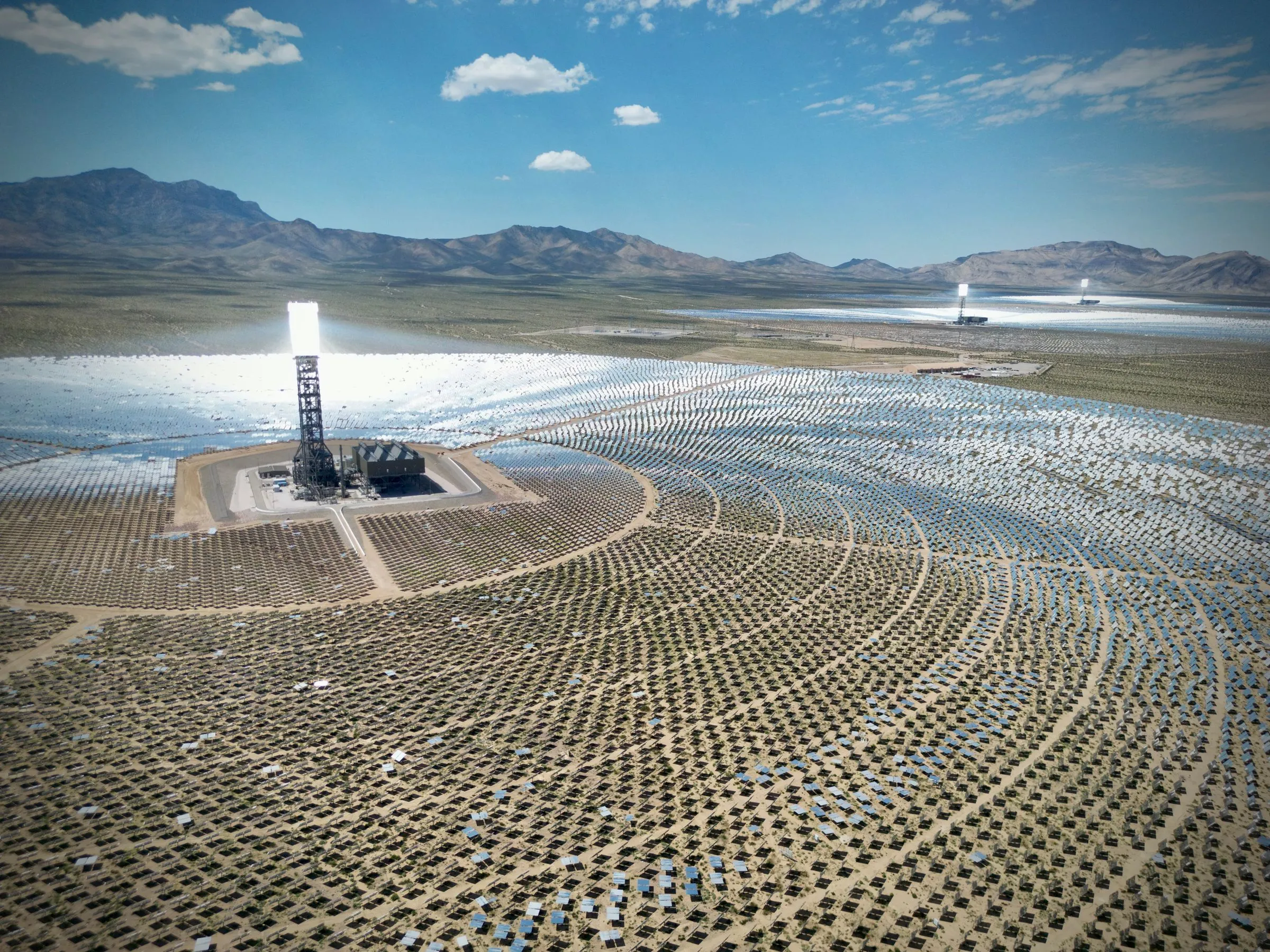
Photo: James Guetschow / Pexels
The bill never names diesel. Since 2011 the Energy Commission has granted 36 small power plant exemptions for 50-to-100-megawatt thermal facilities, 17 of them for data center backup, and 16 of those 17 were diesel, the Assembly analysis found. A new project adding diesel or gas backup “would necessarily increase fossil fuel consumption in California,” the Senate energy committee wrote, and “would disqualify the facility.”
The tariff trio
SB 886, the California Technology Innovation and Ratepayer Protection Act, gives the CPUC until January 1, 2028 to “establish new tariffs or update existing electric rules” that “prevent the creation of stranded costs for, or cost shifts to, nonparticipating customers.” An applicant must disclose whether “an application for the same data center has been submitted in other electrical corporation service territories or other jurisdictions.” The customer takes “cost responsibility for all transmission facility upgrades and usage.” Refunds of its up-front contribution are capped at “75 percent of the annual net transmission revenue.” A customer that “departs the electrical system within 10 years of the initial interconnection of the facility or fails to achieve adequate load ramp up” owes a termination fee of at least the revenue gap over those 10 years. It covers data centers signing new interconnection agreements on or after January 1, 2027.
AB 2383, by Assemblymember Rick Chavez Zbur, requires separate transmission-and-distribution and generation tariffs “to ensure that incremental costs for serving this class are not borne by other electrical rate classes,” with termination fees and a cost-recovery term of at least 10 years. Foley & Lardner reads the text to cap the generation tariff’s eligibility threshold at 25 megawatts of peak demand. SB 1168, from Senator Jerry McNerney, orders a broader rate-structure review. What the trio lacks is numbers. As mgrid put it on signing day, none of the megawatt triggers or enforcement mechanics are in the statutes; “until completed, duties exist without quantified costs.”
Disclosure: water, energy, noise, jobs
AB 1577, by Assemblymember Rebecca Bauer-Kahan, applies to data centers of 10 megawatts or more: monthly operating data to the Energy Commission each year, including “the quantity of fuel consumed by onsite generators or other fuel-based energy systems, separated by fuel type.” At permitting, local agencies collect expected consumption and “average and maximum sound levels attributable to the operation of the data center, expressed in A-weighted decibels” at the property line.
Papan’s bills handle water. AB 2469 bars a city or county from approving any permit, discretionary or ministerial, for a new data center or a water-intensifying expansion unless the applicant supplies a water supply assessment, projected use and efficiency measures, and, from January 1, 2028, a water scarcity plan with staged drought cutbacks. The applicant assumes “the full cost of water conveyance, treatment, storage, or distribution upgrades” and discloses its projected workforce and wages. AB 2619 is the resurrected veto: before a business license issues, an operator gives its water supplier “a good faith estimate of the expected water use, the anticipated source of water, and the data center’s projected water use volume for the maximum day, maximum month, and average year,” and reports actual use at each renewal. “Every drop counts,” Papan said in a statement reported by Facilities Dive. “We cannot manage what we do not measure.”
Who fought it
The registered opposition on SB 887’s final committee analysis reads like a directory of the business lobby: the California Chamber of Commerce and the Bay Area Council outright, and the CalAsian, African American and Hispanic chambers, the California Manufacturers and Technology Association, TechNet, the Silicon Valley Leadership Group and the Data Center Coalition “unless amended.” PG&E and the generator maker Enchanted Rock joined the opposition to SB 886. Khara Boender, the coalition’s western government affairs director, told Canary Media the leadership standards “are not attainable.”
Support was broader than the environmental groups. The Utility Reform Network and Net-Zero California co-sponsored both Padilla bills; IBEW Local 569, the California State Association of Electrical Workers, the Brawley Chamber of Commerce and the cities of Imperial and Monterey Park registered in favor. SB 886 passed the Senate 28 to 10 and the Assembly 62 to 7; SB 887 passed 30 to 8 and 59 to 11, votes that ran largely along party lines under the rotunda beneath the Capitol dome.

Photo: alex ohan / Pexels
“Big Tech keeps promising to be good neighbors and these laws now make those promises legally enforceable. No more saying one thing in the White House and doing the opposite in our local communities.”
That was Padilla, in his statement on the signing, referring to the ratepayer pledge technology companies signed at the White House in March.
What it means for the pipeline
Padilla’s district includes Imperial County, where on September 28 the new Data Center Advisory Committee met in El Centro to hear that a court had set aside the June moratorium and a replacement goes to the supervisors on October 6, the Calexico Chronicle reports. The state law now does what the moratorium could not: any future approval for the Imperial Valley Computer Manufacturing campus starts with a CEQA document and a water supply assessment.
Los Angeles County went further than the state four days before the signing. On September 17 its planning director imposed an immediate moratorium on hyperscale AI data centers in unincorporated areas, and Supervisor Hilda Solis has a permanent ban on the October 6 agenda, Hoodline reports; the county, seated in downtown Los Angeles, already hosts about 74 data centers. Gilroy, Richmond and Oakley have moratoria of their own.
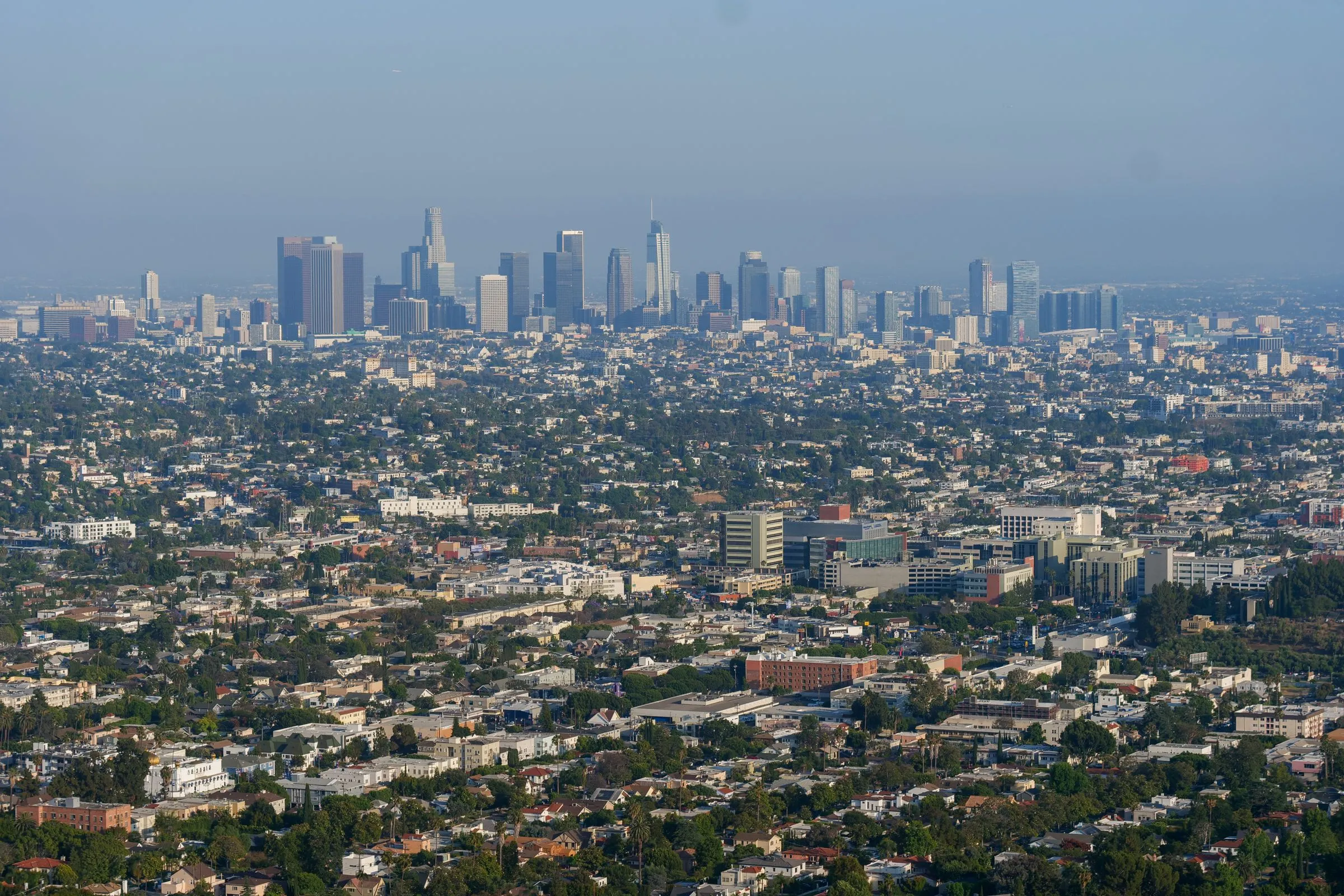
Photo: Mark Direen / Pexels
For PG&E the laws land on a queue it has been advertising: a 10-gigawatt data center pipeline, with 17 projects totaling 1.5 gigawatts in final engineering and due online between 2026 and 2030, most in San Jose and the Bay Area. The tariffs bite at the next interconnection agreement, so the question for those 1.5 gigawatts is whether contracts close before the tariff does.
Santa Clara shows the package’s limits. Silicon Valley Power, the city’s municipal utility, serves the core of a market where DC Map counts 924 megawatts operating and 1.1 gigawatts planned; the Center for Biological Diversity’s April petition to the Bay Area air district counted 73 data centers in nine square miles of Santa Clara and up to 50 diesel generators at one site. The CPUC does not regulate municipal utilities, so the tariffs do not reach SVP’s rates; CEQA, the CEC reporting and both water bills do. Nor are the neighbors soft landings: in May Oregon regulators ordered Portland General Electric, which spent $210 million on data center growth in Hillsboro in a year, to charge 16 data center customers more under the state’s POWER Act, OPB reported.
How Texas, Virginia and Ohio compare
SB 886’s duplicate-application disclosure echoes Texas Senate Bill 6, signed in June 2025, which set a 75-megawatt large-load threshold in ERCOT and gave the grid operator curtailment authority. On August 3 Governor Greg Abbott ordered an audit of every data center in the queue before any more connect: “Any project that fails to comply with the requirements set forth by the PUCT and ERCOT, and by state law, must be denied connection to the Texas grid.” ERCOT’s queue held 474.7 gigawatts of large-load requests in June, 420.8 gigawatts of it data centers, POWER reported. Texas is verifying that its projects are real. California is deciding what they must pay and prove.
Virginia’s 2026 session passed bills to shift PJM capacity costs onto Dominion’s new GS-5 large-load class until Governor Abigail Spanberger struck the mechanism for language directing regulators to avoid “passing down costs from high-load customers onto the rest of the customer base,” Route Fifty reported. On September 19 she proposed the piece Virginia lacks and California just enacted: eliminating by-right local approvals for data centers over 25 megawatts, limiting on-site gas generators and banning nondisclosure agreements with state agencies.
Ohio tested the tariff first. In July 2025 regulators approved AEP Ohio’s tariff: customers above 25 megawatts pay for at least 85 percent of subscribed capacity for up to 12 years, with exit fees. AEP Ohio said in February that a 30,000-megawatt pipeline of inquiries had produced 5,642 megawatts of signed agreements. California arrives with the same tools but leaves the percentages to the CPUC. None of the three has touched environmental review or water. Against the FERC large-load orders in June, California’s package looks less like an outlier than an early full draft.
The calendar
The laws take effect January 1, 2027. The CPUC’s tariffs and the water scarcity plans are due a year later, and the CEC’s first load assessment lands in 2029. Arnab Pal of Deploy Action, which backed the bills, told CalMatters: “I don’t think these bills are the end of this fight; I think we’re gonna have to do a lot of implementation on the back end.” Both sides agree on where that fight is: not in the Capitol, but in the dockets.
More in Industry Growth
All Industry Growth →
The Judge, the Desert and the 330-Megawatt Data Center: California's Environmental Law Catches Up With AI
A tentative ruling in Imperial County would push the largest data center ever proposed in California through a full environmental impact report, a year or more of delay for a project that would draw more electricity than the entire county. It also explains why the AI buildout has mostly skipped the state.
The Year the Neighbors Said No: Inside America's Data Center Backlash
In 2026, local opposition blocked or delayed $130 billion of data centers in a single quarter, three-quarters of Americans now oppose one nearby, and governors in both parties are pausing permits. A scoreboard of what the revolt has actually changed, and what it has not.
The Three-Year Wait for a Transformer: The Supply Chain Choking the Data Center Buildout
Large power transformers now take 128 to 160 weeks to arrive, gas turbine slots are booked into 2031, and a single Pennsylvania mill makes all of America's transformer steel. Inside the equipment bottleneck behind the AI buildout, and the tricks developers use to jump the line.