The Three-Year Wait for a Transformer: The Supply Chain Choking the Data Center Buildout
Large power transformers now take 128 to 160 weeks to arrive, gas turbine slots are booked into 2031, and a single Pennsylvania mill makes all of America's transformer steel. Inside the equipment bottleneck behind the AI buildout, and the tricks developers use to jump the line.
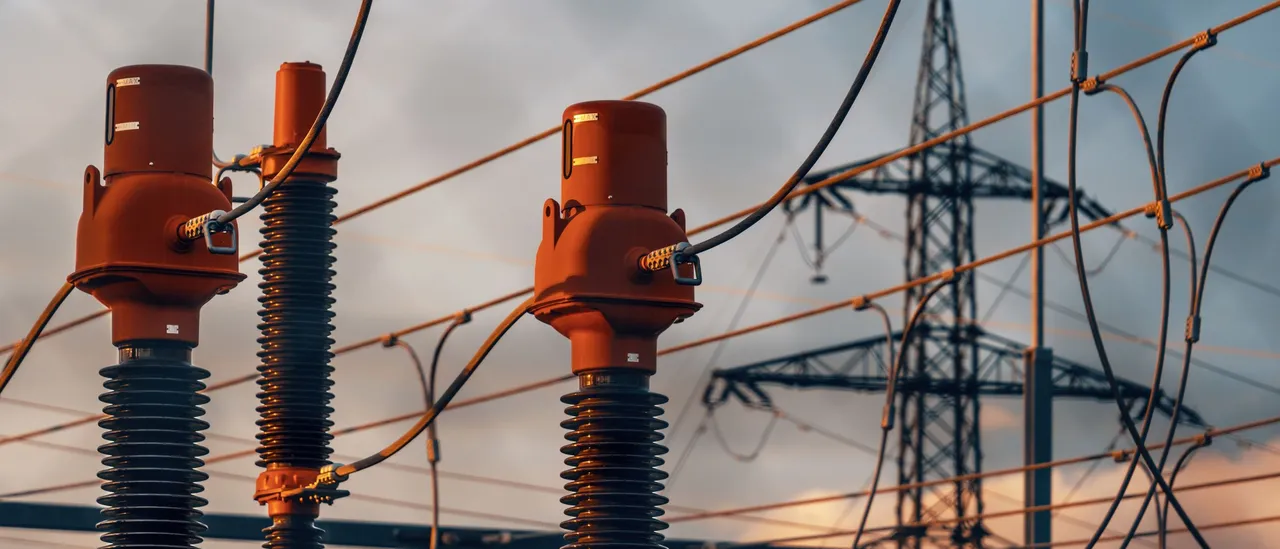
Every gigawatt of AI capacity rests on a few hundred tons of steel, copper, and mineral oil sitting in a fenced yard: the transformers that step grid voltage down to something servers can use. In 2021 you could order one and have it in about a year. Today the wait is closer to three, and for the largest units it can stretch to four. The $700 billion buildout has run headlong into an industry that spent two decades not expanding, and the queue is now as binding a constraint as the interconnection line itself.
The three-year queue
Wood Mackenzie put average US delivery at about 50 weeks in 2021 and 120 weeks by 2024. Its mid-2025 survey found power transformers averaging 128 weeks and generator step-up units 144 weeks, with a 30 percent supply deficit, according to POWER Magazine. Data Center Knowledge reported in May 2026 that substation-class lead times had crept past 160 weeks, and Wood Mackenzie analyst Ben Boucher told AGBI in August that “the US is at the epicentre of this shortage.” Prices have moved with the queue: up 77 percent for power transformers since 2019 by Wood Mackenzie’s count, and roughly 20 percent higher on 2026 contracts than on those signed a year earlier.
The cause is arithmetic. Demand for generator step-up transformers rose 274 percent between 2019 and 2025, and substation transformer demand rose 116 percent, per Wood Mackenzie, while manufacturers, burned by decades of flat orders, hesitated to add capacity that takes years to pay back. Every unit is custom (the National Renewable Energy Laboratory counts more than 80,000 distinct designs on the US system), and roughly 80 percent of US power transformers are imported, so the American queue is really a global one: AGBI notes that Gulf developers with more than 170 planned projects are waiting on the same Hitachi, Siemens, GE Vernova, Hyundai, and Hyosung factories. Not everyone accepts the framing: contractor Patrick Tarver of Bolt Electrical told POWER that “there is not a shortage,” only utility vendor lists that ignore smaller shops quoting 12 to 14 months.
A steel problem
Inside every transformer core is grain-oriented electrical steel, or GOES, a specialty alloy rolled so its crystal grains line up with the magnetic field. Wood Mackenzie says its price doubled between 2020 and 2024. In the United States it is made in exactly one place: Cleveland-Cliffs’ Butler Works in Pennsylvania, where more than 1,000 UAW members turn out the entire domestic supply. Cliffs is spending $195 million, including a $75 million Department of Energy grant, to expand the mill by 2028, the Butler Eagle reported in August 2026, and CEO Lourenco Goncalves calls the material “strategic and a matter of national security.”
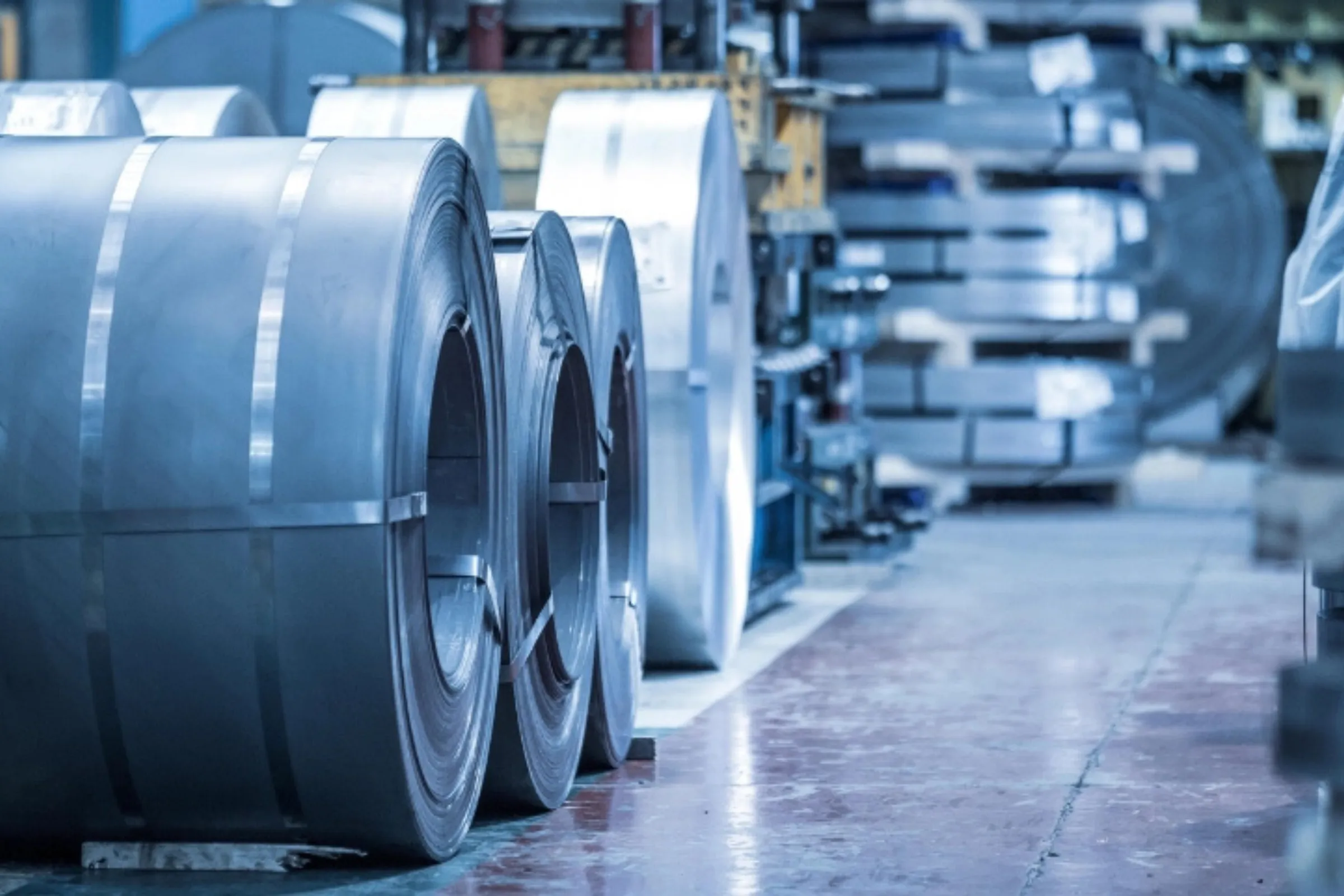
Photo: Nithina Palanisamy / Pexels
The steel story has a policy tail. A 2024 DOE efficiency rule would push about a quarter of new distribution transformers toward amorphous-steel cores by 2029, and in June 2026 the department asked whether to revise it. Cliffs, which once backed the rule, now argues it “will weaken domestic supply chains,” while utilities, co-ops, and the manufacturers’ association all urged DOE to leave it alone, according to Utility Dive. Cliffs itself cancelled a planned $150 million transformer plant in Weirton, West Virginia in May 2025. On April 20, 2026, a Defense Production Act determination declared US capacity to produce transformers, substations, and high-voltage components “dangerously limited” and authorized DOE to make purchase commitments and loans.
Turbines sold out
When the grid cannot deliver, developers build their own power plants, which only moves the bottleneck upstream to three companies that make heavy-duty gas turbines. GE Vernova ended the second quarter of 2026 with 116 gigawatts of gas equipment in backlog and slot reservations, up from 100 GW a quarter earlier, and expects at least 125 GW under contract by year-end. The company is producing about 20 GW a year, aims for 24 GW in 2028 and 30 GW in 2030, and is now taking reservations for 2031 delivery; CEO Scott Strazik told analysts he expects to be “more than halfway contracted” for that year by December. About 20 percent of the backlog is tied to data centers.
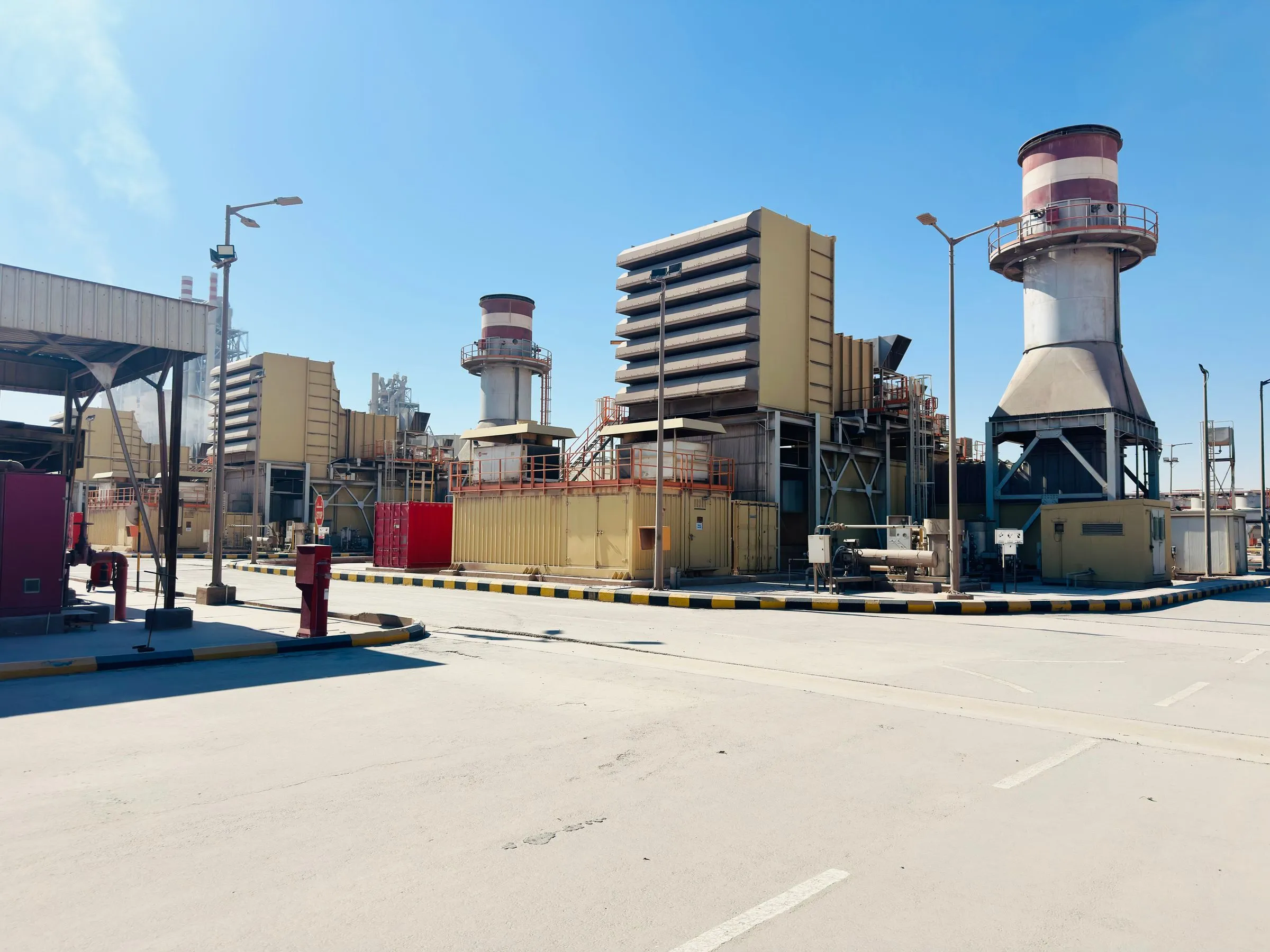
Photo: Mumtaz Niazi / Pexels
The competition is no looser. Siemens Energy reported a 69 GW gas turbine backlog in August 2026 after booking 15 GW and shipping 6 GW in one quarter, with lead times of three years or more. Mitsubishi Heavy Industries’ large-frame backlog hit 35 GW, with new orders slotted for 2028 to 2030 according to its CFO, though the company’s EMEA chief told Platts it is signing contracts for 2031 to 2034 deliveries. Getting a slot requires cash up front: GE Vernova’s reservation deposits helped drive a $6.4 billion working-capital swing in one quarter. Backup power is tightening too: Caterpillar’s backlog hit a record $72 billion as power generation sales rose 72 percent, and it is restarting a 10 MW gas engine line it shut in 2022.
Tariffs raise the bill further. Since April 6, 2026, Section 232 duties on steel, aluminum, and copper have applied to the full customs value of derivative goods, at 25 percent for most transformers and switchgear and 50 percent for copper articles; a temporary 15 percent band for transformers above 10,000 kVA runs only through 2027. Then, on August 26, President Trump declared a national emergency and signed Executive Order 14420, directing DOE to write rules within 120 days that could bar transformers, inverters, and batteries from Chinese-linked suppliers at 69 kV and above. Wood Mackenzie estimates $22 billion of imports since 2025 could be affected.
The factory response
Manufacturers have announced roughly $1.8 billion in US transformer capacity since 2023, according to Wood Mackenzie, and the groundbreakings are finally happening. Hitachi Energy broke ground on June 29, 2026 on a $457 million South Boston, Virginia plant billed as the nation’s largest, part of a $1 billion-plus US program. HD Hyundai Electric is adding 50 percent to its Montgomery, Alabama capacity with a $200 million second plant due in 2027 that will build 765 kV units. Siemens Energy’s Charlotte investment has grown to $421 million, Eaton is spending $340 million in South Carolina, and GE Vernova bought out the other half of Prolec GE for $5.275 billion in February 2026, taking full control of seven transformer plants. The catch is timing: most of this capacity arrives in 2027 to 2029, roughly when the current order book clears anyway.
Jumping the line
Developers who cannot wait have started to route around the queue. Crusoe, which builds for OpenAI’s Stargate campus in Abilene, simply became a switchgear manufacturer.
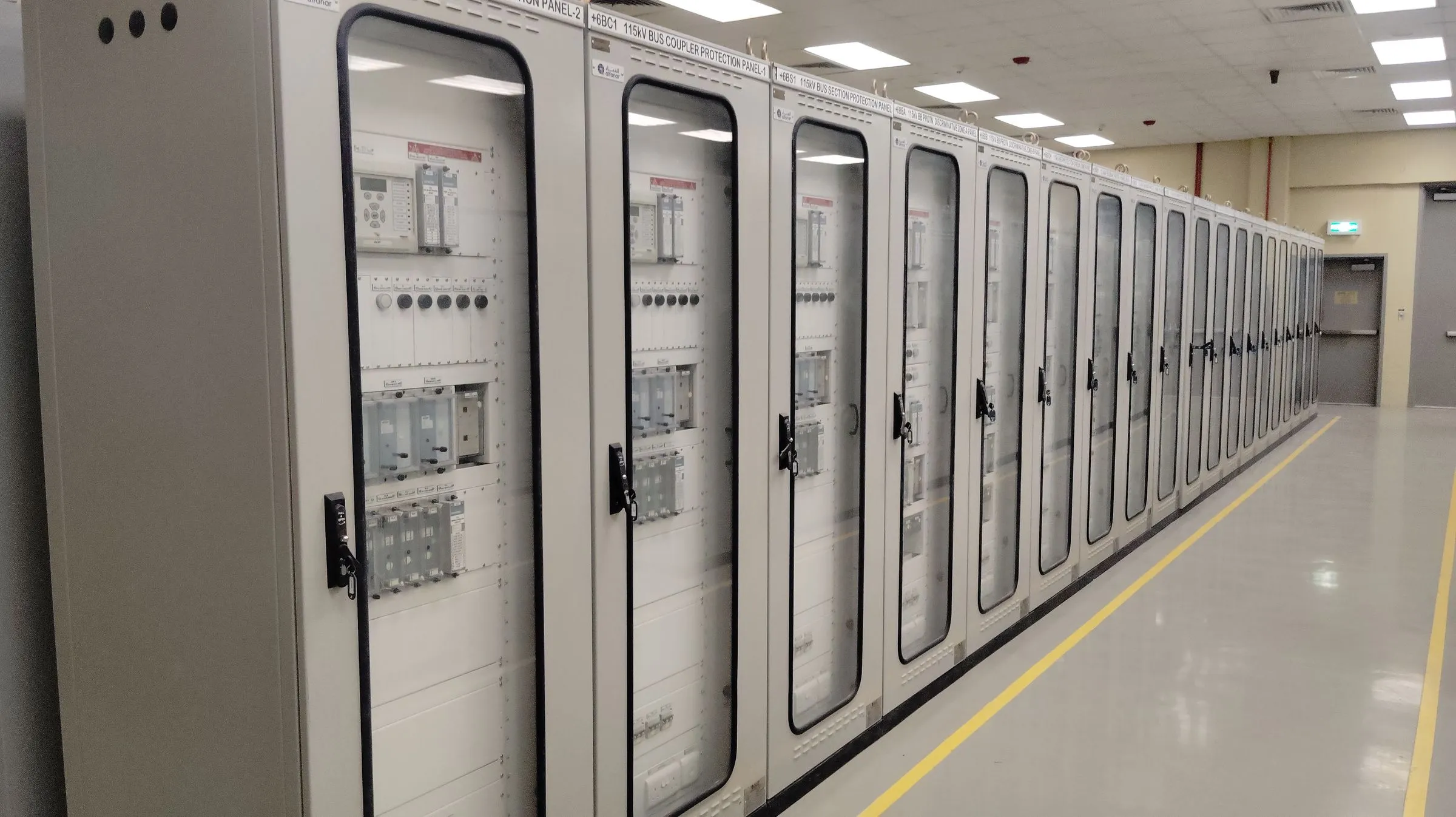
Photo: Shameer Vayalakkad Hydrose / Pexels
“We got quotes for low voltage switch gear. These quotes were up to 100 weeks. So we stood up a factory and started making switch gear ourselves, now it takes us 22 weeks,” CEO Chase Lochmiller has said, according to Contrary Research.
Others buy the factory’s calendar instead of the factory. Digital Realty’s $373 million supply capacity agreement with Schneider Electric, signed in November 2025, reserves UPS, low-voltage switchgear, and prefabricated power skids, including a production line dedicated to the landlord. Hyperscalers now order transformers three to four years ahead of need, Schneider says demand is shifting toward prefabricated electrical rooms and modular substations, and fuel cells and batteries are winning bids partly because they ship in months. Every one of these is a workaround, not a fix. The fix is a thousand more people winding coils in Pennsylvania, Virginia, and Alabama, and that clock, unlike the one on a depreciating GPU, runs in years.
More in Industry Growth
All Industry Growth →
Seven Signatures in Sacramento: What California's New Data Center Laws Actually Require
Governor Newsom signed a package of seven data center bills on September 21 that ends CEQA exemptions, orders the CPUC to write large-load tariffs, and makes water and energy disclosure a condition of permits. Here is what each law says, who fought it, and what it means for the projects already in the queue.

The Judge, the Desert and the 330-Megawatt Data Center: California's Environmental Law Catches Up With AI
A tentative ruling in Imperial County would push the largest data center ever proposed in California through a full environmental impact report, a year or more of delay for a project that would draw more electricity than the entire county. It also explains why the AI buildout has mostly skipped the state.
The Year the Neighbors Said No: Inside America's Data Center Backlash
In 2026, local opposition blocked or delayed $130 billion of data centers in a single quarter, three-quarters of Americans now oppose one nearby, and governors in both parties are pausing permits. A scoreboard of what the revolt has actually changed, and what it has not.