Stargate on the Lakefront: Wisconsin's Biggest Power User Rises From Port Washington Farmland
Vantage Data Centers is building a $15 billion, 902 MW campus for OpenAI and Oracle in a small Lake Michigan port town. The buildings are going up fast. The power lines, the politics, and the town itself are having a harder time keeping pace.

Port Washington, Wisconsin is known for a lighthouse, a marina, and charter fishing on Lake Michigan. As of this year it is also known for something else: the cornfields west of Interstate 43 are becoming what the Badger Institute projects will be the largest single electricity user in state history, a $15 billion AI campus that Vantage Data Centers is building for OpenAI and Oracle under the Stargate banner.
The project, which Vantage calls Lighthouse, was announced as a Stargate site on October 22, 2025: four data centers on 672 acres delivering nearly a gigawatt of AI capacity, part of OpenAI and Oracle’s plan to develop up to 4.5 gigawatts of additional Stargate capacity across the country. Nine months into construction, the buildings are on schedule. Nearly everything around them, from transmission lines to town politics, is proving harder.
From farmland to Stargate
The land came first, and quietly. Through 2025, a Vantage affiliate assembled nearly 1,000 acres of mostly agricultural land north and west of I-43, spending $50.6 million by late June of that year, according to BizTimes, which reported that Vantage took over the project from Houston-based developer Cloverleaf Infrastructure. Farmers were paid well above assessed value: one vacant 20-acre parcel assessed at $8,000 sold for more than $217,000, per Ozaukee County records cited by BizTimes.
The full vision is bigger than the first phase. BizTimes reported a concept plan covering as much as 1,900 acres with up to 11 data center buildings, five substations, and 3.5 gigawatts of eventual electricity use. To make it buildable, the City of Port Washington has been annexing land from the surrounding Town of Port Washington in phases, reaching 1,315 acres by late 2025, according to an analysis by title research firm Capitol Lien. Vantage has committed at least $175 million for local infrastructure upgrades, including roads, water, sewer, and a new water tower, per the Badger Institute and the company’s announcement.
Four buildings, all at once
The ceremonial groundbreaking came on December 18, 2025, with state building trades leaders, WEC Energy Group board chair Gale Klappa, and Mayor Ted Neitzke IV on hand, according to The Daily Reporter. The first phase is four single-story data centers totaling 2.5 million square feet and 902 megawatts, targeted for completion in 2028 and built by Turner, McCarthy, Whiting-Turner, and Weitz under a union labor agreement with the Wisconsin Building Trades Council.
By late February 2026, TMJ4 counted roughly 700 workers on site, with steel arriving and all four buildings rising simultaneously on a site working nearly around the clock. Vantage expects a peak workforce of more than 4,000 construction workers and over 1,000 long-term jobs once the campus opens, and the company says the first capacity could be serving OpenAI workloads as soon as late 2027. “I use the word unprecedented because this is one of the biggest sites I’ve worked on so far,” Vantage construction chief Edwin Van Velzen told TMJ4.
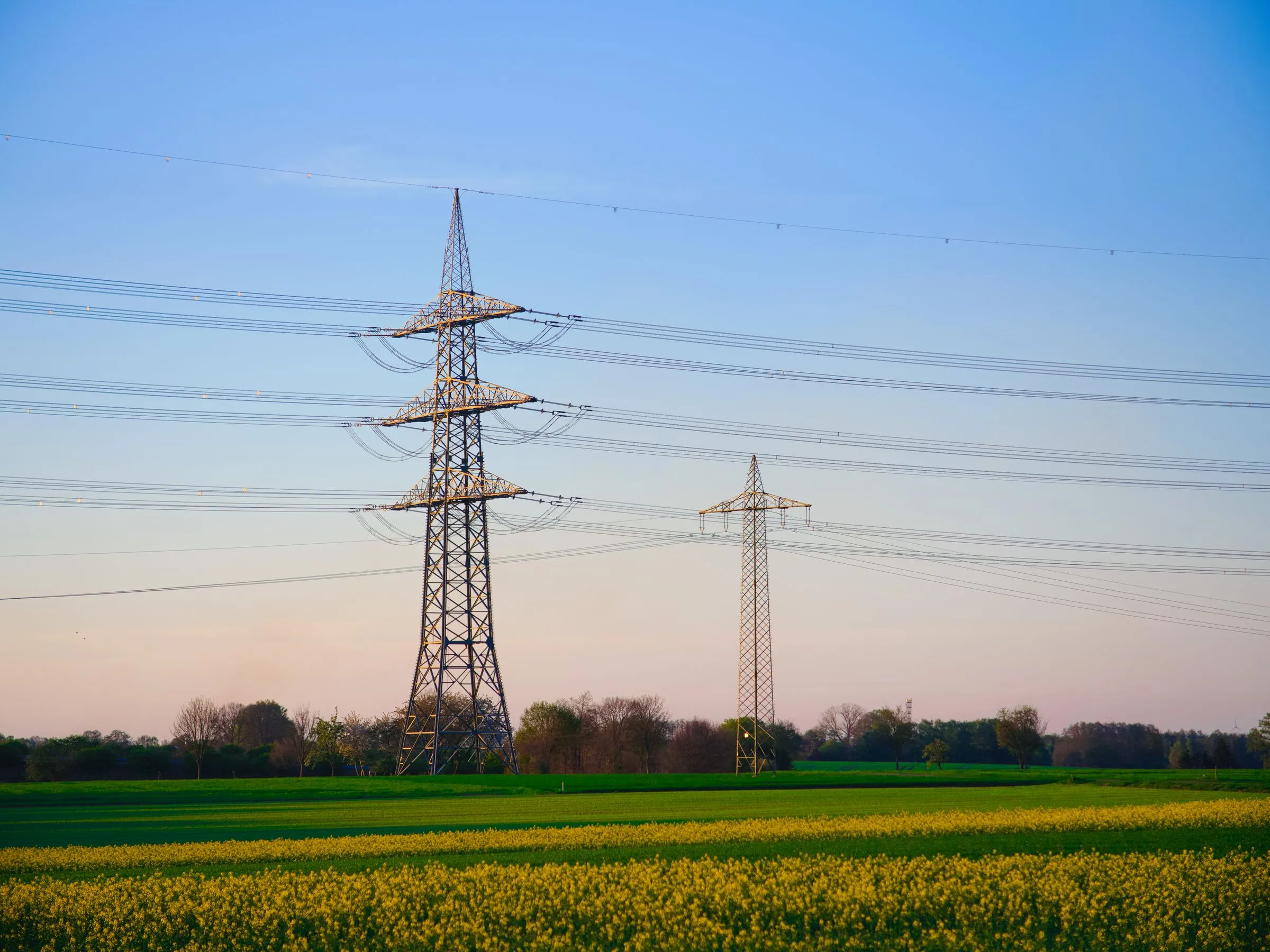
Photo: Calvin Seng / Pexels
The grid is the hard part
Vantage has asked We Energies for 1.3 gigawatts of power by 2027, roughly triple the 450 megawatts Microsoft’s Mount Pleasant campus was projected to need, previously the state’s largest ask, according to the Badger Institute. To serve it, We Energies plans a buildout of about 2 gigawatts of natural gas and 4.3 gigawatts of renewable generation over five years. Work has already started on three renewable projects tied to the campus: a 150 MW solar plus 50 MWh battery project in Rock County, a 110 MW wind farm spanning Iowa and Grant counties, and a 75 MW battery in Walworth County, all due by the end of 2027, with about half of each allocated to the Port Washington campus, per Data Center Dynamics.
| First phase | Long-range plan | |
|---|---|---|
| Land | 672 acres | Up to about 1,900 acres |
| Buildings | 4 data centers, 2.5M sq ft | Concept for up to 11 |
| Power | 902 MW capacity, 1.3 GW demand by 2027 | 3.5 GW demand |
Then came the setback. American Transmission Co. proposed a grid connection package, pegged at more than $1.3 billion by Wisconsin Watch and as high as $1.7 billion by Urban Milwaukee, including a new high-voltage line and five substations across four counties. On August 7, 2026, the Public Service Commission of Wisconsin voted unanimously to revoke the application’s completeness determination after ATC filed hundreds of amendments, route changes, and revised cost estimates during review. The rare do-over forces ATC to restart its application and resets the 180-day review clock, putting the December 2027 energization target in doubt. PSC chair Summer Strand called it “a cautionary tale of when unrealistic and unreasonable speed-to-power expectations collide with a deliberative regulatory process,” per Wisconsin Watch.
Who pays if the music stops
Wisconsin regulators have also drawn a hard line on financial risk. In April 2026 the PSC approved a “very large customer” rate for We Energies requiring data center customers to pay for the new generation built to serve them, and to hold an A- credit rating from S&P (or A3 from Moody’s) or post substantial collateral. Oracle, whose heavy AI borrowing left it rated BBB and then, after a July 9 downgrade, BBB-, argued the rules could cost it more than $100 million a year and sued the commission in June in Ozaukee County Circuit Court, according to Wisconsin Watch.
The fight ended quickly. Regulators refused to loosen the rules in July, and on August 17, 2026, Oracle dropped the lawsuit. Consumer advocates cheered: the Citizens Utility Board’s Tom Content said the safeguards protect customers “from the risks of tech companies overextending their borrowing,” and Clean Wisconsin called the framework a potential blueprint for the rest of the state. Through it all, WEC Energy Group CEO Scott Lauber insisted the dispute would not derail the project, telling investors the site remains on track for late 2027 and that “there are a lot of opportunities for that site” even in the unlikely event Oracle walked, per Wisconsin Watch.
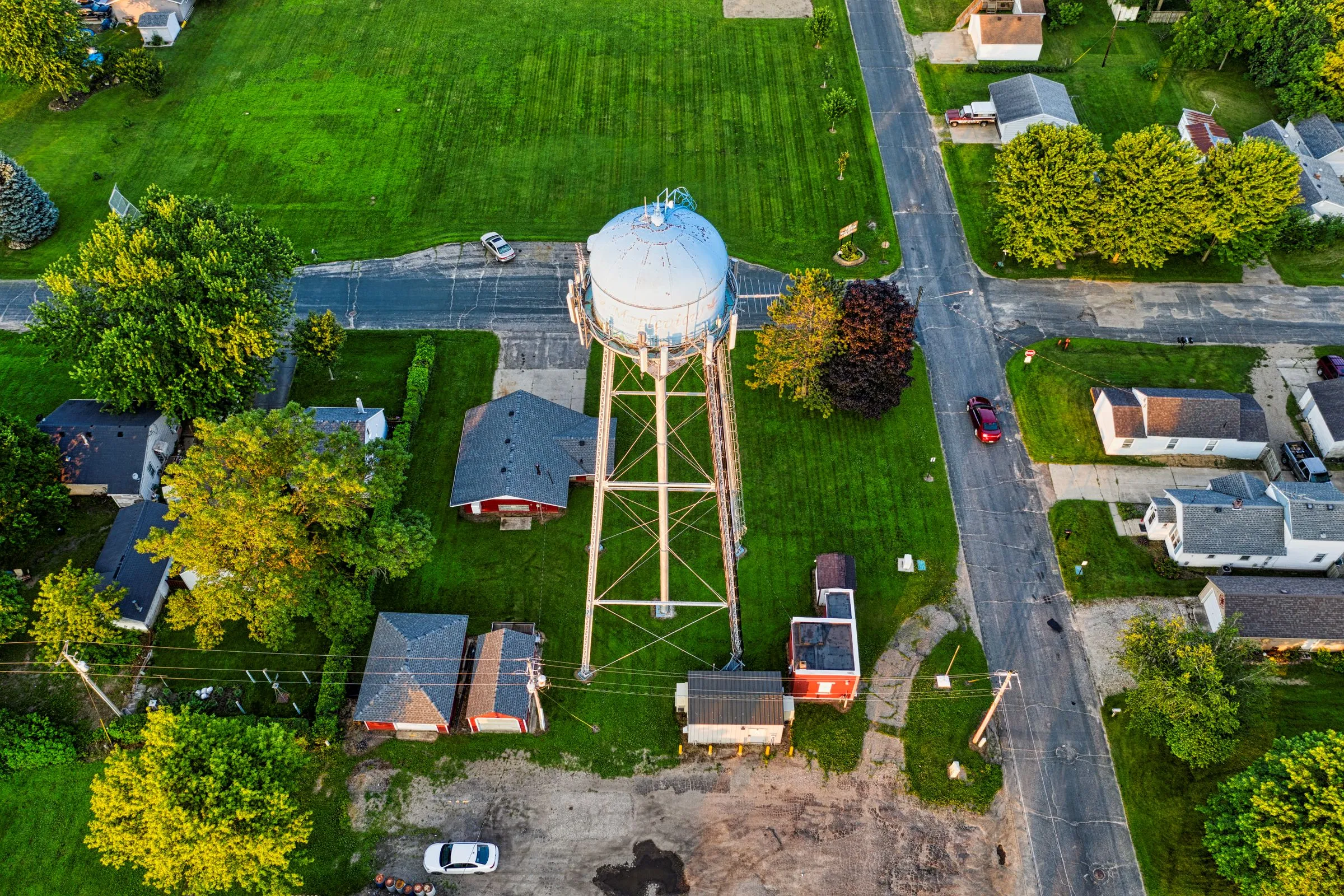
Photo: Tom Fisk / Pexels
A town divided
In Port Washington itself, the argument is less about credit ratings than about what the town is becoming. Opponents organized as Great Lakes Neighbors United in December 2025, citing worries about water use for cooling, the effect of a 1.3 gigawatt load on utility rates, and what they saw as a rushed, opaque approval process, according to Wisconsin Public Radio. After tensions at a Common Council meeting that ended in arrests, the group launched a recall campaign against Mayor Neitzke. It gathered roughly 1,200 signatures by the February 16, 2026 deadline, several hundred short of forcing an election, per FOX6 Milwaukee. Organizers said afterward that “this isn’t over.”
Vantage is running a visible good-neighbor campaign in response: local hires, daily reviews with adjacent residents, a pledge that 70 percent of the campus’s power will come from zero-emission resources with the rest matched by renewable purchases, closed-loop liquid cooling to minimize water draw, and 172 acres preserved for biodiversity, according to the company and The Daily Reporter.
The steel is up either way. Port Washington is now the proving ground for a question the whole industry is circling in 2026: not whether a gigawatt-scale AI campus can be built in three years, but whether the grid, the regulators, and a lakefront town of fishing charters can absorb one that fast.
More in AI Infrastructure
All AI Infrastructure →
Summer of the Gigawatt: Four Campuses, Twelve Gigawatts, and the New Shape of an AI Data Center
In eight weeks this summer, OpenAI, Google, Amazon, and Brookfield surfaced four US campuses of a gigawatt or more in Georgia, Wyoming, Texas, and Kentucky. Four companies, one template: a code name, a single tenant, power phased in from 2028, closed-loop cooling, and increasingly a gas plant of their own.

Beyond NVIDIA: The Custom Silicon Quietly Filling AI Data Centers
Google, Amazon, Meta, Microsoft, and OpenAI are pouring billions into their own AI accelerators. Custom chips now claim more than a quarter of AI server shipments, even as NVIDIA posts record revenue.
The GPU-for-Rent Economy: Inside the Neocloud Gold Rush
Specialist GPU clouds like CoreWeave, Nebius, and Nscale are growing 200 percent a year on hyperscaler mega-deals and chip-backed debt. The open question is what the collateral will be worth when the loans come due.