The Life and Death of a Server
Servers used to be written off after three years. Now hyperscalers stretch them to six while AI chips age out in two. What actually happens when a machine leaves the rack, and where millions of tonnes of hardware go next.
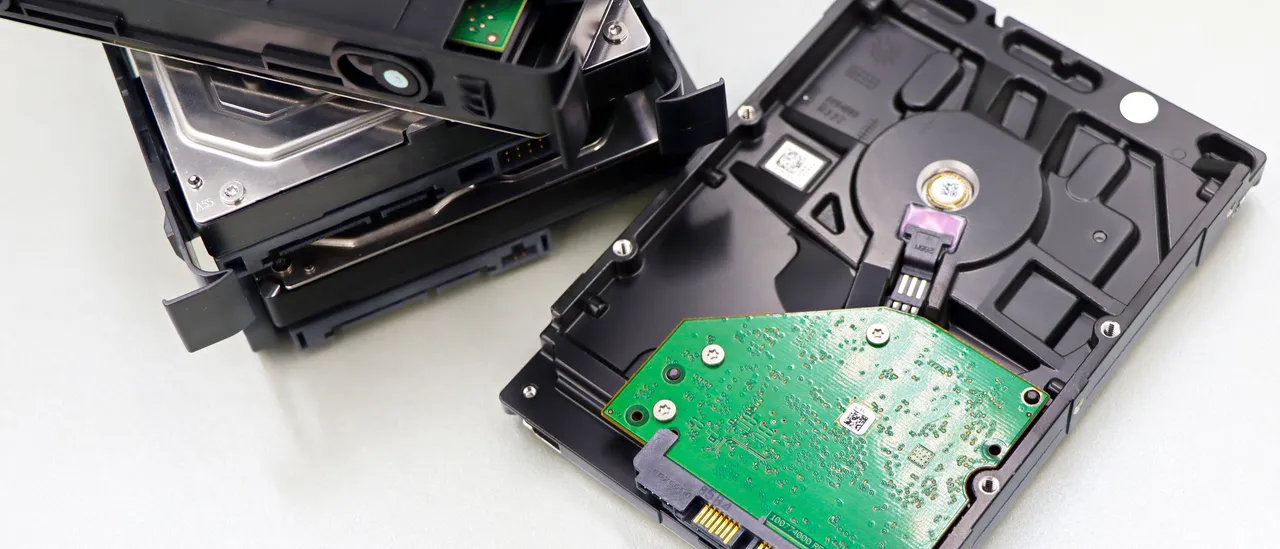
A server is born in a factory in Taiwan or Texas, works for a few years in a windowless building, and then one day a technician slides it out of the rack for the last time. What happens next is one of the least discussed and most consequential parts of the data center story: a supply chain in reverse, complete with certified data destruction, a multibillion-dollar resale industry, and a growing mountain of electronic waste that AI is about to make much taller.
How long does a server live?
For most of cloud computing’s history, the answer was three to four years. That was the standard depreciation schedule, the accounting assumption for how long a machine remains useful before it is written down to zero. Then, starting around 2020, the giants quietly changed their minds. According to the companies’ own securities filings, widely dissected in coverage by CNBC and others, Microsoft stretched its server depreciation from three years to six by 2022, Google reached six years in 2023, Amazon followed in 2024, and Meta now assumes five and a half.
| Company | Circa 2019 | Today |
|---|---|---|
| Microsoft | 3 years | 6 years |
| 3 years | 6 years | |
| Amazon | 3 years | 6 years (some AI servers back to 5) |
| Meta | 3 years | 5.5 years |
Part of this is genuine engineering. CPUs stopped improving so fast that a four-year-old machine looked embarrassing, and hyperscalers got better at squeezing life from old fleets by demoting them to lighter work. Part of it is accounting: longer lives mean lower annual depreciation and higher reported profits, which is why investor Michael Burry made headlines in November 2025 by claiming, in analysis reported by CNBC, that the big five cloud builders would understate depreciation by roughly 176 billion dollars between 2026 and 2028. The companies note that auditors have repeatedly signed off on the schedules. Both things can be true: servers really do last longer, and it is also convenient that they do.
Photo: Anete Lusina / Pexels
The GPU counter-current
AI hardware runs on the opposite clock. NVIDIA now ships a new flagship data center GPU roughly every year, and each generation delivers such a leap in performance per watt that the previous one loses its front-line job almost immediately. An H100 that trained frontier models in 2024 is a mid-tier inference workhorse in 2026. Amazon even reversed course in early 2025 and shortened the assumed life of a subset of its servers and networking gear back to five years, per its filings.
Prices tell the story bluntly. Compute Exchange, a marketplace for data center hardware, lists new H100s at roughly 25,000 to 40,000 dollars in 2026, with used units at about 15,000 to 28,000, down from peak-scarcity resale prices near 50,000. Older A100s that launched above 25,000 dollars now trade used for a few thousand, according to pricing trackers like Hashrate Index. Whether a GPU is economically alive in year five is now one of the most contested accounting questions in tech.
Death row: wiping versus shredding
Before any server leaves the building, its data has to die first. The reference text is NIST Special Publication 800-88, the U.S. government’s media sanitization guideline, which defines three escalating options: clear (overwrite the data), purge (render it unrecoverable by lab techniques, including cryptographic erase, which destroys the encryption keys rather than the data), and destroy. A newer companion standard, IEEE 2883-2022, updates the technical details for modern SSDs and NVMe drives, as data-erasure firms like Blancco have documented.
The industry’s dirty secret is that many operators skip the elegant options and simply shred everything, feeding drives into industrial grinders because physical destruction is easy to verify and audit. Security researchers point out the irony: modern SSDs pack data so densely that ordinary shredders can leave chips with recoverable data intact, while a properly executed cryptographic erase is both more secure and infinitely more recyclable. Google says it took the second path at scale: in 2024 it securely wiped and then reused or resold more than 3 million hard drives, according to its own sustainability reporting.
The afterlife economy
Enter ITAD, short for IT asset disposition, the industry that collects, wipes, tests, refurbishes, and resells corporate hardware. Market estimates diverge widely depending on scope: Global Market Insights put the sector at about 17.5 billion dollars in 2025, while Polaris Market Research counted closer to 29 billion, and most analysts project it roughly doubling within a decade. Whatever the exact figure, the driver is the same: a hyperscaler refresh cycle throws off millions of components, and a six-year-old cloud server is still a perfectly good machine for a university lab, a startup, or a homelab hobbyist.
The hyperscalers now run this loop themselves. Microsoft’s Circular Centers, on-site facilities that triage decommissioned hardware, helped the company hit a 90.9 percent reuse and recycling rate for servers and components in 2024, beating its 2025 target a year early, according to Microsoft’s cloud blog. Google reports that it has resold more than 44 million components into the secondary market since 2015, harvesting 8.8 million parts from decommissioned machines in 2024 alone.
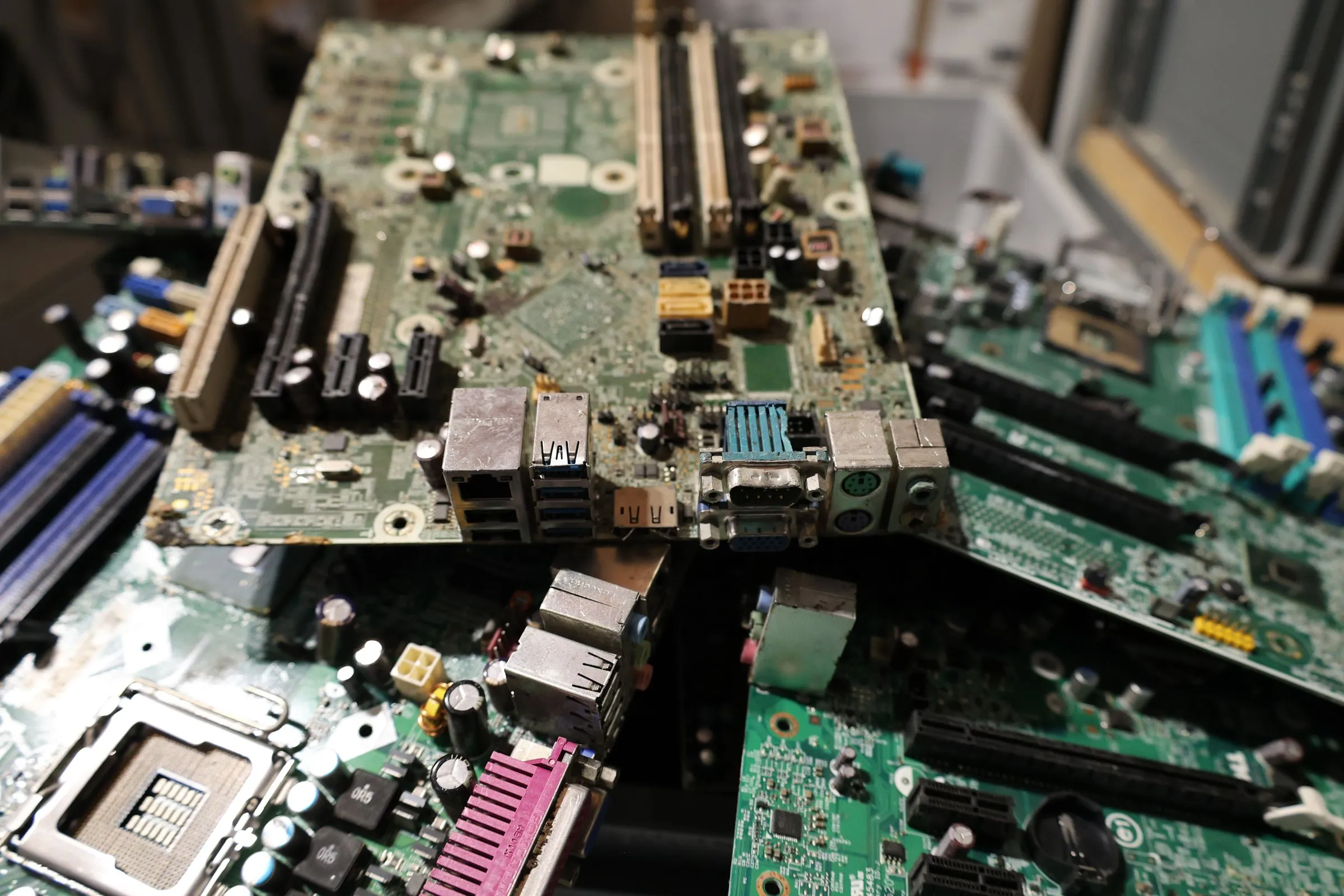
Photo: RETURN E-Waste / Pexels
The e-waste ledger
Zoom out and the picture darkens. The UN’s Global E-waste Monitor 2024 counted 62 million tonnes of electronic waste generated worldwide in 2022, of which only 22.3 percent was formally collected and recycled, and it projects 82 million tonnes by 2030. Servers are a small slice of that stream, but the fastest-growing one may be AI.
A 2024 study in Nature Computational Science estimated that generative AI alone could produce 1.2 to 5 million tonnes of e-waste cumulatively by 2030, up from about 2,600 tonnes in 2023, a roughly thousandfold increase.
The same study offered the hopeful counterpoint: extending server lifespans and reusing components could cut that AI e-waste burden by up to 86 percent, the authors calculated. In other words, the difference between the good scenario and the bad one is not some exotic technology. It is the unglamorous machinery described above: honest lifespan math, careful data sanitization instead of reflexive shredding, and a healthy resale market that keeps a dying server’s organs in circulation. Every server dies. Whether it gets an afterlife is a choice.
More in Explainers
All Explainers →
Who Gets to Plug In: FERC's Rewrite of the Rules for Connecting Data Centers to the Grid
A power plant has had a federal interconnection process for two decades. A gigawatt data center never did. In 2026 FERC ordered all six regional grid operators to invent one, and their answers, from MISO's non-firm service to PJM's curtail-first rule, will decide which campuses get power in 2027.
PUE, WUE, CUE: Decoding the Alphabet of Data Center Efficiency
Every data center brags about its PUE, but the industry average hasn't budged in six years. Here's how the big efficiency metrics actually work, how they get gamed, and what to look for in a company's claims.
What's Actually Inside a Data Center: A Guided Tour
Server halls, diesel farms, mantraps, and rooms where the internet physically connects to itself: a plain-English walk through the buildings behind the cloud.