What's Actually Inside a Data Center: A Guided Tour
Server halls, diesel farms, mantraps, and rooms where the internet physically connects to itself: a plain-English walk through the buildings behind the cloud.
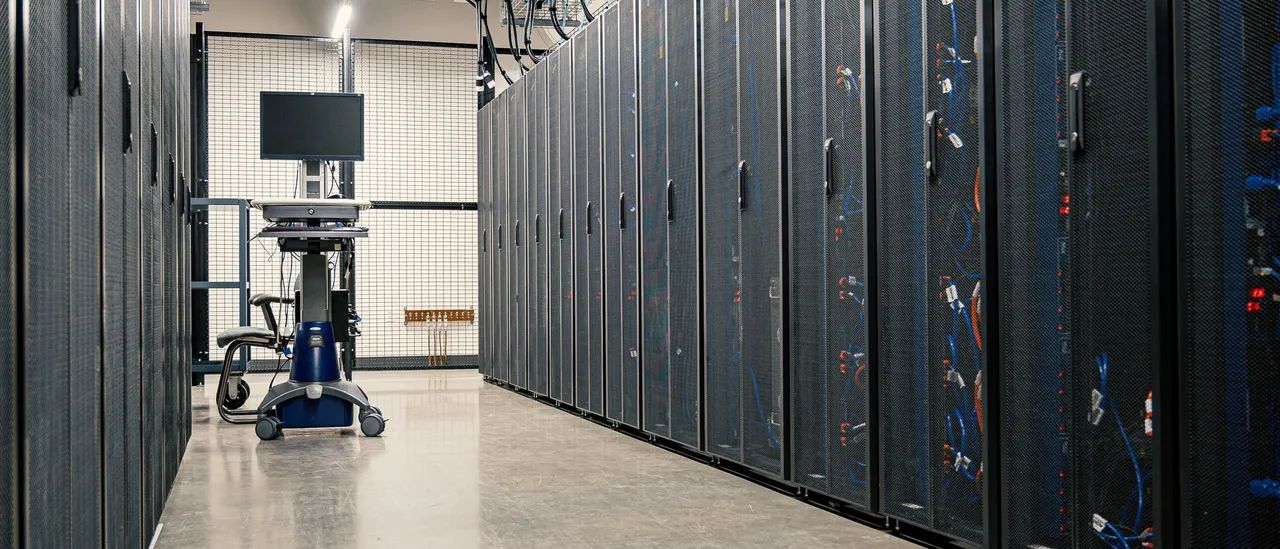
“The cloud” is a marvelous piece of branding for what is, physically, a windowless warehouse full of computers in a field near a substation. There were about 1,360 hyperscale data centers on Earth at the end of 2025, with hundreds more coming, and nearly everything you do, this page included, passes through several of them. Here’s what you’d actually see inside.
The server halls
The heart of the building is the data hall: long rows of steel cabinets called racks, each about the size of a refrigerator and holding dozens of pizza-box-shaped servers. The rows are arranged in alternating pairs so that every server’s cooling intake faces a cold aisle and its exhaust faces a hot aisle, often with doors and roofs enclosing an aisle so the hot and cold air never mix. Older facilities blow chilled air up through perforated tiles in a raised floor; newer ones run power and cooling overhead on a bare slab.
What surprises first-time visitors most is the sound, a constant jet-engine wash of fans, and then the emptiness. A building the size of several football fields might have a few dozen people in it, most of them in the loading dock or the control room. The industry rule of thumb is one to two staff per megawatt; highly automated campuses run leaner still.
Follow the power
A data center is best understood as a machine for converting electricity into computation, and its power chain is where most of the money goes. Electricity arrives from a dedicated substation, passes through switchgear and transformers, and flows through UPS systems, rooms of batteries that carry the entire building instantly when the grid blips, on its way to the racks. Outside sit rows of diesel generators, typically holding 48 to 72 hours of fuel, which start and take over the full load within about ten seconds of an outage.
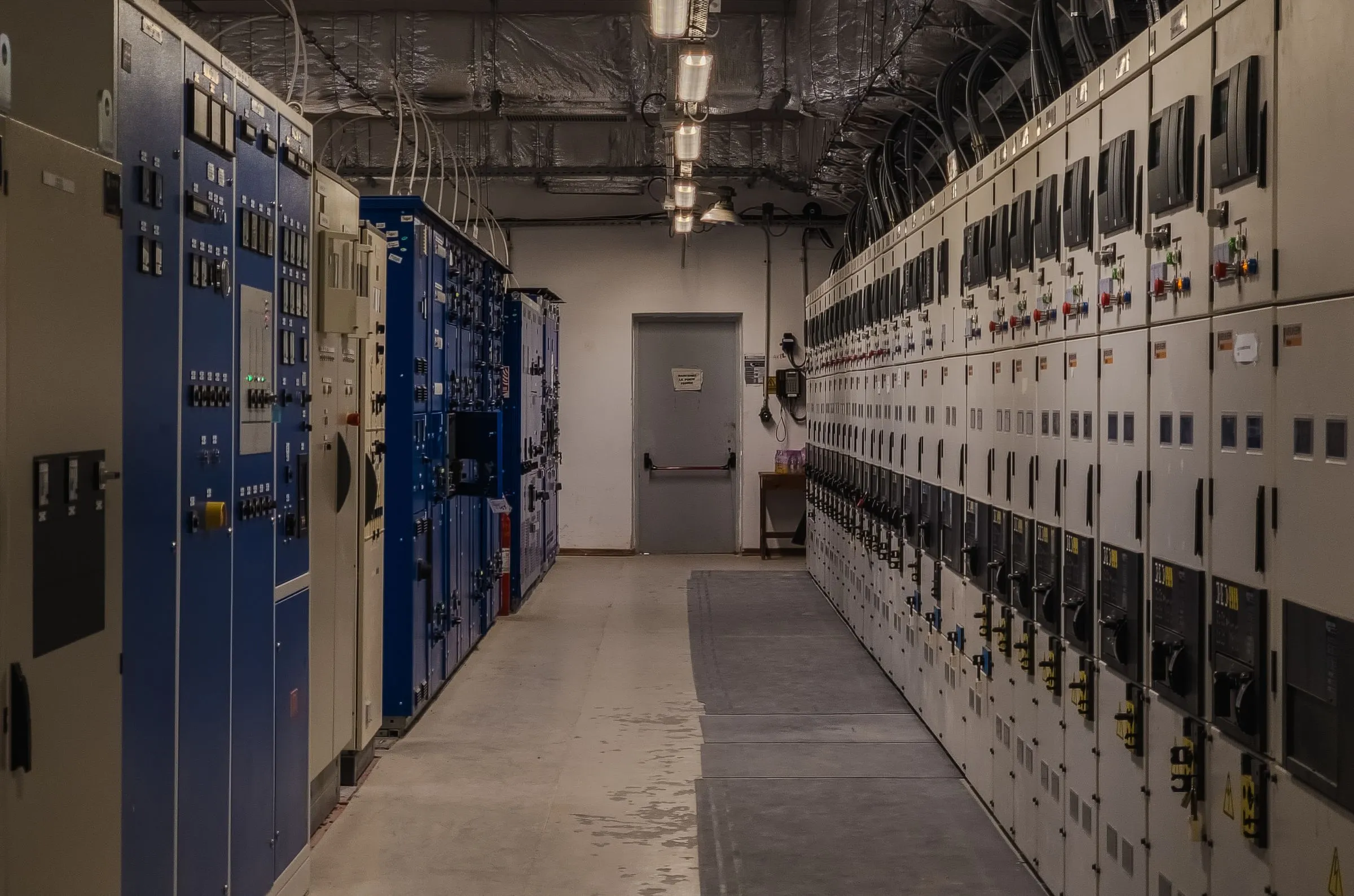
Photo: Vjanodic WERSOV / Pexels
Engineers describe redundancy in shorthand: N means exactly the equipment you need; N+1 means one spare of everything, like carrying a spare tire; 2N means two complete, independent copies of the entire system. The more nines of uptime a facility promises, the more duplicated hardware it’s hiding.
“Five nines,” or 99.999 percent availability, allows for about five minutes of downtime per year. Total.
Facility sizes span three orders of magnitude: an enterprise data center might draw 1–10 megawatts, “hyperscale” conventionally starts above 20 MW, and the new AI campuses plan for hundreds. A single 100 MW facility uses roughly as much electricity as 80,000–100,000 US homes, and Meta’s Hyperion campus in Louisiana is designed for fifty times that.
Keeping it cool
Every watt that enters a server leaves as heat, so half the building is plumbing. Air handlers (called CRACs and CRAHs, essentially industrial air conditioners) cool the halls; chillers and cooling towers on the roof or the yard reject the heat outdoors; and in mild weather, economizers simply use outside air for free cooling. The industry measures efficiency as PUE: total power divided by computing power. The global average has been stuck around 1.54 for six years; Google’s fleet runs about 1.09, meaning just 9 percent overhead. As AI racks grow too hot for air, liquid cooling loops are moving in, a shift big enough that we cover it as its own beat.
A few operators have even turned the waste heat into a product: server exhaust warms hundreds of Helsinki homes through district heating, and one UK leisure center cut its pool-heating gas bill 62 percent with a data-center-in-a-box next to the pump room.
The room where the internet happens
Tucked inside carrier hotels and colocation buildings is the meet-me room: a caged, badge-controlled space where different networks physically connect. When your ISP “peers” with a streaming service or a cloud provider, that relationship is ultimately a yellow fiber jumper between two cages in a room like this. It’s as close as the internet gets to having an address.
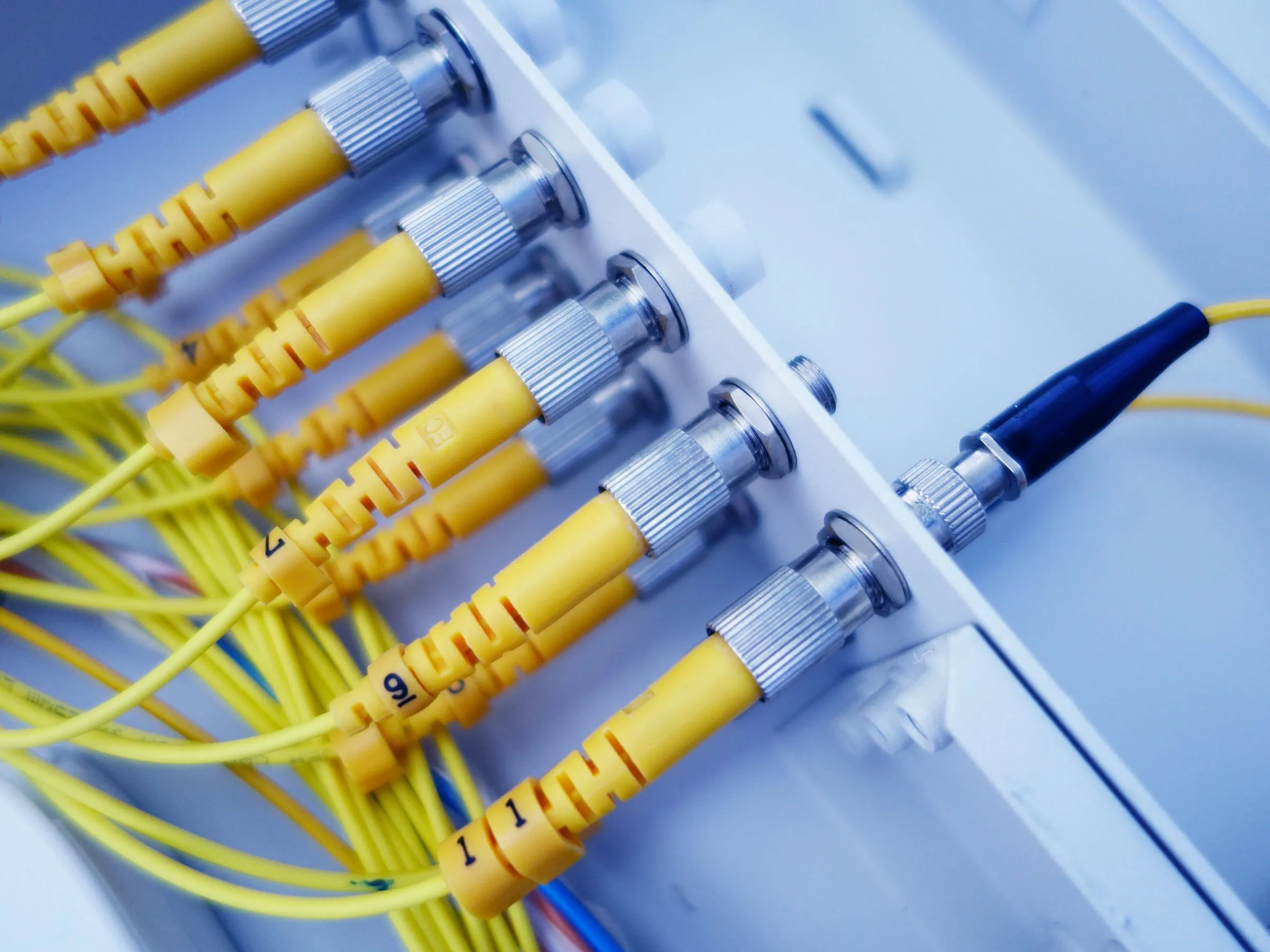
Photo: panumas nikhomkhai / Pexels
Getting in (you won’t)
Physical security runs in layers: perimeter fencing and vehicle barriers, a guarded lobby, badge-plus-biometric doors, and mantraps: interlocking double doors where the second won’t open until the first has closed and your identity is verified again. Inside, tenants’ equipment sits in locked cages and cabinets. Ironically, the biggest threat was never burglars: Uptime Institute’s 2025 outage analysis found power failures cause 45 percent of serious incidents, and among human-error outages, 58 percent trace to staff simply not following procedure.
Why it matters
Data centers consumed about 415 TWh of electricity in 2024, around 1.5 percent of the global total, and the IEA projects that more than doubles by 2030. The buildings themselves are getting bigger, hotter, and more contested, which is precisely why this site exists. Once you can picture the diesel farm, the battery rooms, and the yellow fiber in the meet-me room, every story about “the cloud” reads differently: it’s all real estate, electricity, and plumbing, operated remarkably well, most of the time, by remarkably few people.
More in Explainers
All Explainers →
Who Gets to Plug In: FERC's Rewrite of the Rules for Connecting Data Centers to the Grid
A power plant has had a federal interconnection process for two decades. A gigawatt data center never did. In 2026 FERC ordered all six regional grid operators to invent one, and their answers, from MISO's non-firm service to PJM's curtail-first rule, will decide which campuses get power in 2027.
The Life and Death of a Server
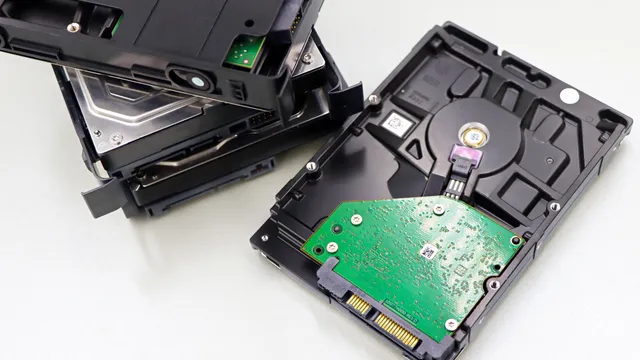
Servers used to be written off after three years. Now hyperscalers stretch them to six while AI chips age out in two. What actually happens when a machine leaves the rack, and where millions of tonnes of hardware go next.
PUE, WUE, CUE: Decoding the Alphabet of Data Center Efficiency
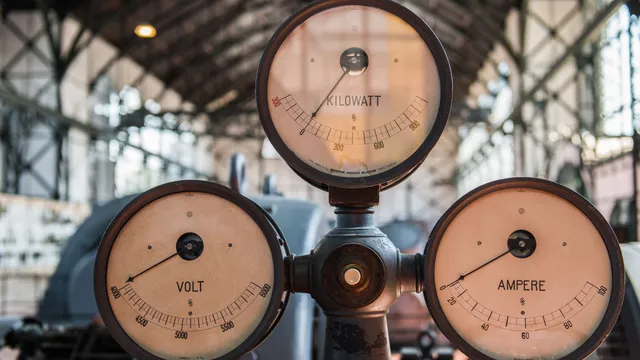
Every data center brags about its PUE, but the industry average hasn't budged in six years. Here's how the big efficiency metrics actually work, how they get gamed, and what to look for in a company's claims.