The Buildout Goes Global: Data Center Growth Beyond America
From Johor's gigawatt pipeline to Stargate UAE and Europe's AI gigafactories, the data center boom has gone worldwide. The new capacity is landing wherever power and policy line up.

For most of the AI era, the data center story has been told in American place names: Northern Virginia, Abilene, Memphis, Phoenix. That framing is now out of date. The capital, the cranes, and increasingly the chips are going global, and the new geography of compute is being drawn by two forces that trump everything else: who has spare power, and whose policies let you use it.
The scale is no longer a rounding error. Asia-Pacific data center investment alone hit a record 11.6 billion dollars in 2025, according to CBRE, which notes that growth is shifting away from traditional hubs toward “power-advantaged” markets like Malaysia, India, and Australia. Demand is outstripping supply on every continent CBRE tracks.
Johor: Singapore’s overflow becomes a giant
Nowhere illustrates the power-and-policy rule better than Johor, the Malaysian state across the causeway from Singapore. Singapore throttled new data center construction in 2019 over land and energy limits, and it still has the lowest colocation vacancy in Asia-Pacific at about 2 percent, according to CBRE. The demand did not disappear. It moved 20 kilometers north, where land, power, and permits were available, a shift Fitch Ratings says is now structural, reinforced by the new Johor-Singapore Special Economic Zone.
The result is one of the fastest market creations in the industry’s history. Malaysia’s live capacity is set to more than double to 2,055 MW by the end of 2026, according to JLL, with Johor Bahru alone accounting for roughly 850 MW completed, 1,800 MW under construction, and another 2,700 MW in the pipeline. Knight Frank’s mid-2026 tally puts Johor’s live IT capacity at 1,110 MW, already third in Asia-Pacific behind Tokyo (1,473 MW) and Singapore (1,118 MW), with an incoming pipeline of 8,542 MW, the largest in the region.
Johor’s colocation vacancy rate sits at just 0.7 percent, according to TechRepublic’s reading of regional market data, even with more than 8.5 GW of announced pipeline behind it.
| Market (mid-2026) | Live IT capacity | Incoming pipeline |
|---|---|---|
| Tokyo | 1,473 MW | Osaka-bound expansion |
| Singapore | 1,118 MW | Tightly capped |
| Johor | 1,110 MW | 8,542 MW |
Live capacity and Johor pipeline per Knight Frank, via The Edge Malaysia.
India: Mumbai anchors a 2 GW market
India is running the same play at subcontinental scale. National capacity is on track to reach roughly 2 GW in 2026, backed by close to 30 billion dollars in investment, according to industry estimates reported by Business Today. CBRE expects total stock across major cities to jump about 30 percent this year on roughly 500 MW of new supply. Estimates of the longer pipeline diverge widely, from 30 billion dollars committed to announced projects worth 60 to 70 billion dollars over five years, so treat the upper figures as intent rather than steel in the ground.
What is not in dispute is where the market sits: Mumbai holds roughly half of India’s operational capacity, according to CBRE, thanks to its subsea cable landings and financial-sector demand, with Chennai, Delhi-NCR, and Bengaluru making up most of the rest. Cheap power, a billion-user domestic internet market, and data-localization rules that keep workloads onshore give India something Johor lacks: demand that is homegrown rather than imported.
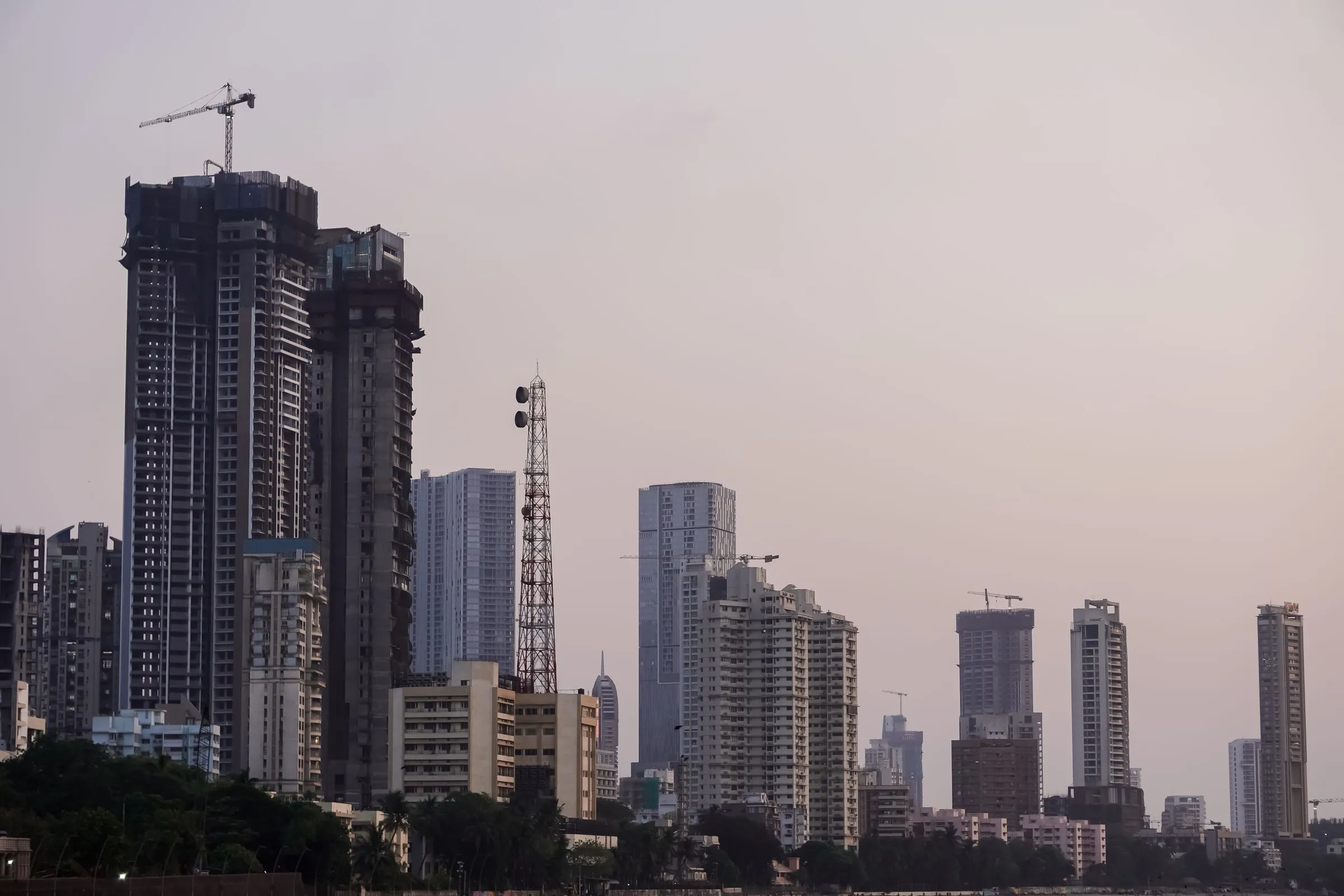
Photo: Vitthal Dikonda / Pexels
The Gulf: gigawatts as statecraft
In the Gulf, the buildout is explicitly a national project. Stargate UAE, announced in May 2025, will put a 1 GW OpenAI and Oracle compute cluster inside a planned 5 GW US-UAE AI campus in Abu Dhabi, built by Emirati firm G42, according to Data Center Dynamics. The first 200 MW phase is targeted to go live in the third quarter of 2026, per Gulf News. Saudi Arabia’s answer is HUMAIN, the Public Investment Fund’s AI vehicle, which is developing sites in Riyadh and Dammam launching at 100 MW each and targeting up to 1 GW through a joint venture with STC’s center3, with first capacity due in 2026.
The Gulf has always had the two raw inputs, cheap energy and patient sovereign capital. What it lacked until recently was permission to buy the chips.
Europe: building against its own grid
Europe’s story is the inverse: plenty of demand, not enough electrons. Data centers consumed 23 percent of Ireland’s metered electricity in 2025, according to the Irish Examiner, and Dublin has been under an effective connection moratorium since 2021. Regulators lifted it in December 2025, but the new regime, per Energy Connects and Ireland’s CRU, requires new facilities to bring their own generation or storage and to source 80 percent of demand from new renewable projects. Amsterdam still restricts new builds, which is why Oaktree-backed Pure Data Centres’ planned 1.2 billion euro Amsterdam campus, reported by MarketScreener, comes with its own private substation.
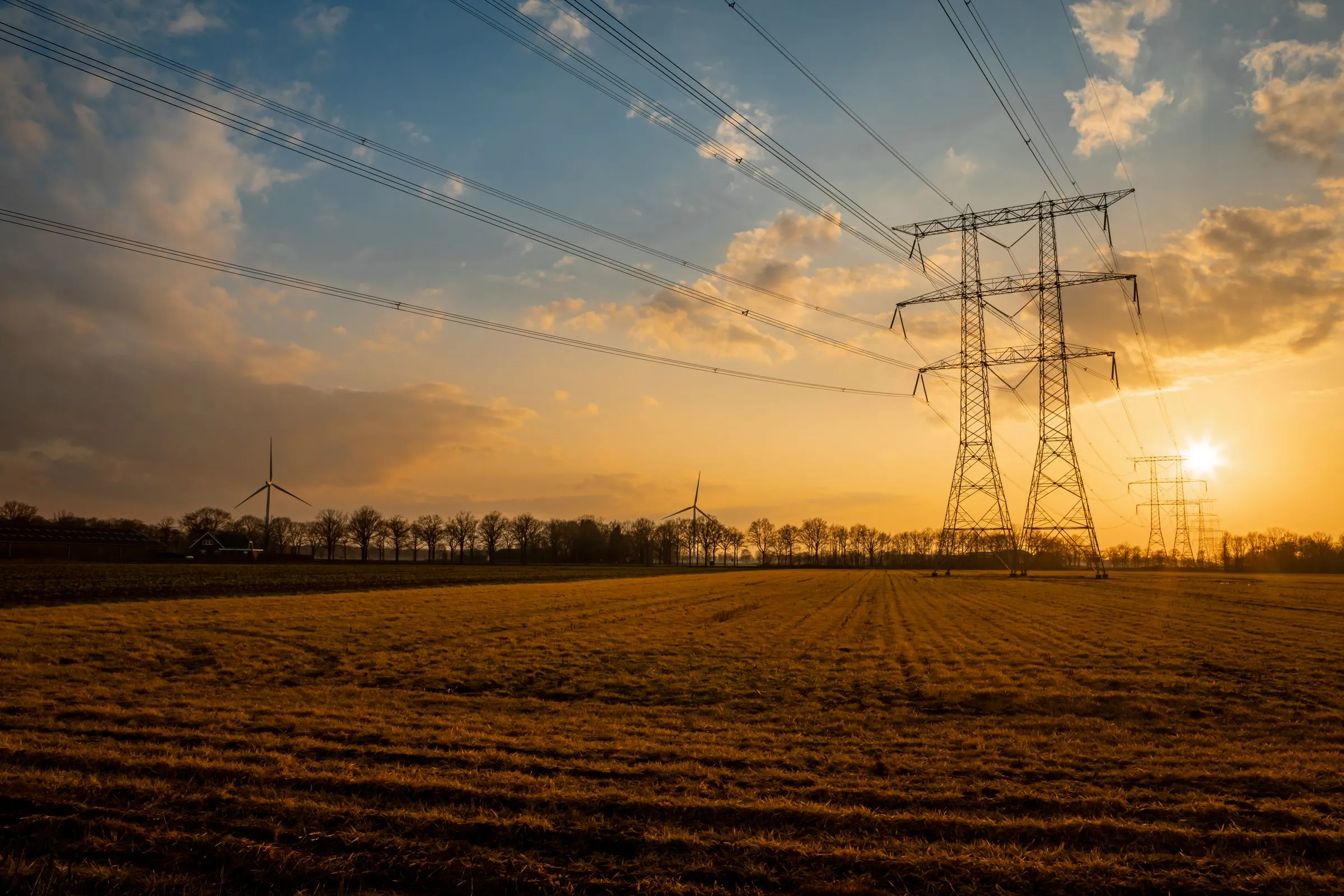
Photo: Andre van Lieshout / Pexels
Brussels, meanwhile, is trying to buy its way back into the compute race. The European Commission’s InvestAI program aims to mobilize 200 billion euros, and in July 2026 it opened bidding for up to seven “AI gigafactories,” four sites with at least 75,000 advanced accelerators and three with at least 100,000, backed by roughly 30 billion euros in combined public and private funding, according to STL Partners. Awards are expected in early 2027. Sovereign ambition is racing sovereign grid constraints, and the grid is currently winning.
Northeast Asia, quietly enormous
Tokyo remains Asia’s largest live market and Japan’s data center sector is projected by Arizton to grow from about 12.8 billion dollars in 2025 to nearly 39 billion by 2031, with power-constrained Tokyo pushing new investment toward Osaka, Hokkaido, and Kyushu. SoftBank’s sovereign cloud venture with Oracle, announced in October 2025, is a signal that Japan wants AI capacity on Japanese soil. South Korea is on a similar trajectory, with hyperscale projects clustering where grid headroom exists outside Seoul.
Silicon passports
The final variable is Washington. The Biden-era AI Diffusion Rule, which would have capped Gulf states at trivial chip volumes, was rescinded in May 2025 and replaced with country-by-country deals. In November 2025, the Commerce Department authorized Saudi Arabia’s HUMAIN and the UAE’s G42 to buy up to 35,000 Nvidia Blackwell chips, according to CNBC, on the logic, as the Middle East Institute puts it, that the region should build on an American tech stack rather than a Chinese one. Southeast Asia has felt the other edge of that sword: reports of draft restrictions on Malaysia and Thailand surfaced in mid-2025 over chip-diversion concerns.
That is the pattern worth remembering. Concrete and cooling towers are the easy part. GPU capacity lands where megawatts are available, where regulators say yes, and where US export policy allows the silicon to follow. Power, permits, and passports for chips: the whole global map reduces to those three.
More in Industry Growth
All Industry Growth →
Milwaukee Hits Pause: Council Votes 13-0 to Freeze New Data Centers for a Year
Milwaukee's Common Council has halted new data centers and most expansions for up to a year so the city can write zoning rules for them, something its code has never had. The fight started with a 19,000-square-foot server room proposed for an empty Walmart. The rules now being drafted would block anything over 60,000 square feet, in a city that planners say was never going to attract a hyperscale campus anyway.

Oregon Pulls the Permits: Kotek Orders a Nine-Month Freeze on Air and Water Approvals for New Data Centers
In a letter nobody announced, Gov. Tina Kotek told Oregon's environmental regulator to stop processing air and water pollution permits for new or expanded data centers until July 1, 2027. Without those permits, no hyperscale campus can be built on public or private land, which makes the order the closest thing to a statewide moratorium any governor has signed. Amazon, which runs more than a dozen hyperscale sites in Morrow and Umatilla counties, says it will cost thousands of jobs. The Legislature gets the problem in January.
Seven Signatures in Sacramento: What California's New Data Center Laws Actually Require
Governor Newsom signed a package of seven data center bills on September 21 that ends CEQA exemptions, orders the CPUC to write large-load tariffs, and makes water and energy disclosure a condition of permits. Here is what each law says, who fought it, and what it means for the projects already in the queue.