Same Reactors, More Megawatts: Google and Amazon Pay Constellation to Squeeze 1.1 GW Out of PJM's Nuclear Fleet
In six days, Amazon and Google signed 20-year contracts that fund roughly 1,080 MW of nuclear uprates at seven Constellation sites in Maryland, Illinois, Pennsylvania and New Jersey, backed by more than $7.3 billion of plant investment. Unlike most hyperscaler nuclear deals, these add electrons that do not exist today, arriving between 2028 and 2032 against a PJM shortfall of 6.8 GW that lands in 2028. Three days after the Google announcement, FERC threw out the PJM rule the deal was written to satisfy.
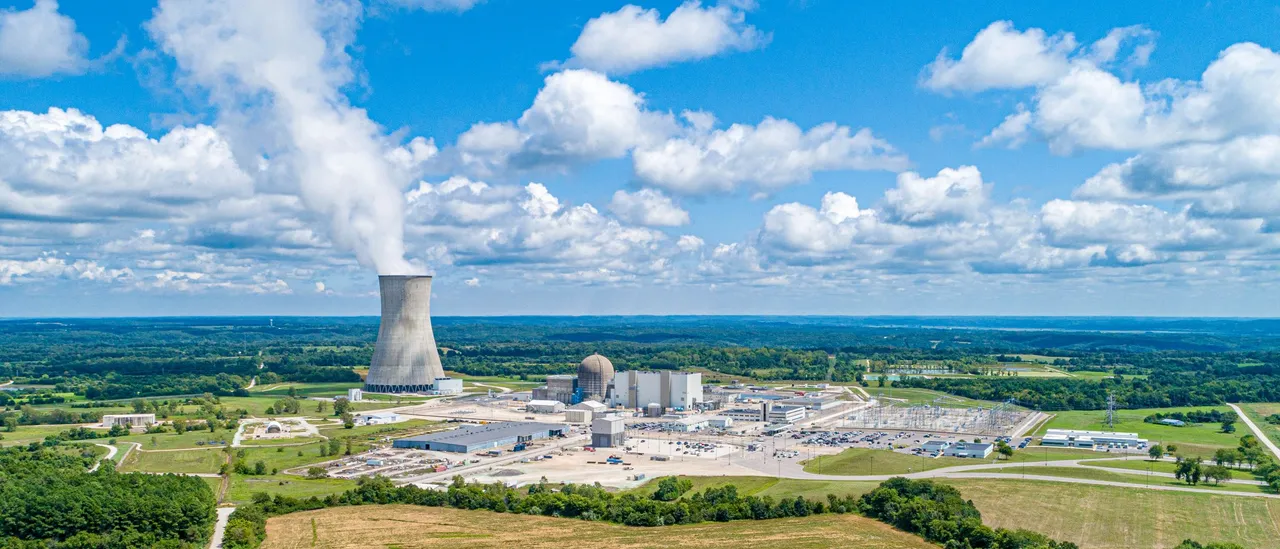
On September 30, Constellation Energy and Amazon announced a 20-year power purchase agreement at Calvert Cliffs in Lusby, Maryland. The deal pays for roughly 190 MW of additional output from two reactors that first connected to the grid in 1975 and 1976. Six days later, on October 6, Constellation and Google announced a 20-year agreement to fund 890 MW of uprates at 11 reactors across six sites in Illinois, Pennsylvania and New Jersey. Together the two contracts underwrite about 1,080 MW of capacity that does not exist today, per POWER, and more than $7.3 billion of plant investment, with the first new output due in 2028.
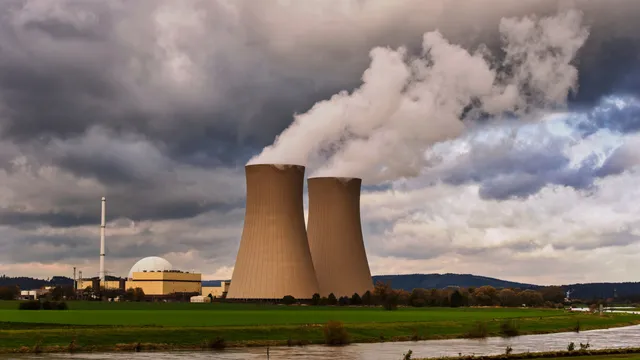
That is what sets these deals apart. As the deals-versus-electrons ledger found in September, most hyperscaler nuclear contracts simply re-label the output of reactors that were already running. Uprates add new output. They replace turbines, instruments and control systems so that a licensed reactor produces more than it did, while the containment dome and cooling tower along the fence line look the same as before. Constellation’s shares rose almost 14 percent on the morning of the Google announcement, per Utility Dive.
What an uprate actually is
The Nuclear Regulatory Commission sorts uprates into three categories. A measurement uncertainty recapture raises the licensed power level by less than 2 percent, mostly by installing instruments that measure feedwater flow precisely enough to run closer to the limit. A stretch uprate, typically 2 to 7 percent, changes instrumentation settings without major modifications. An extended power uprate has been approved for increases as high as 20 percent, according to the NRC’s backgrounder.
The extended power uprate is the expensive kind. The NRC says it usually requires significant modifications to major pieces of non-nuclear equipment, including high-pressure turbines, condensate pumps and motors, main generators and transformers. Constellation describes its own program as modernized turbines, steam generators and digital control systems.
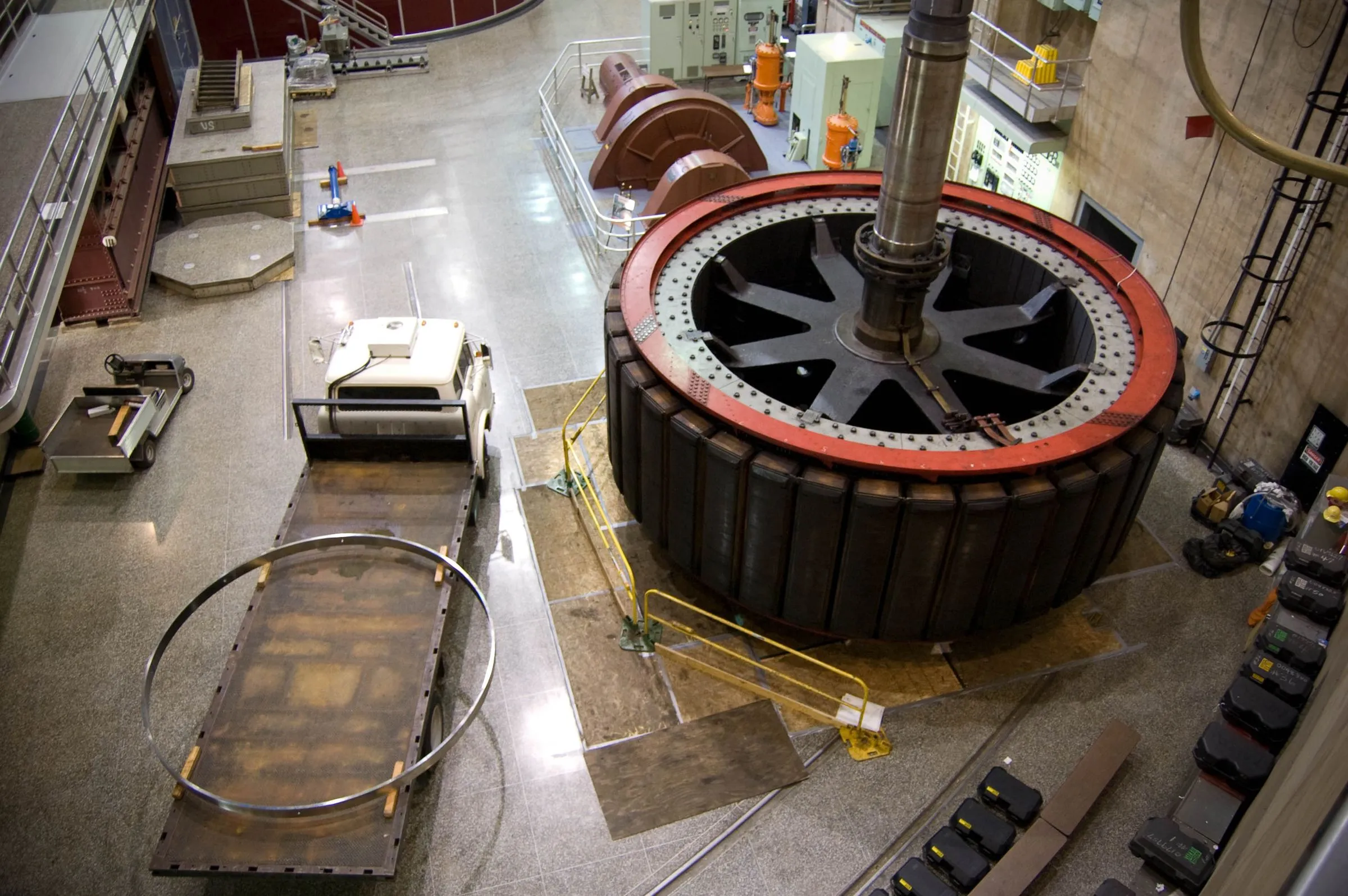
Photo: Rommel Ortiz / Pexels
The NRC’s review targets are six months for a recapture, nine months for a stretch and twelve months for an extended uprate, per POWER. Its list of expected applications shows Constellation planning 12 uprate filings from the fourth quarter of 2026 through 2030, five of them extended and seven recaptures, POWER reported. PSEG plans to file stretch uprate applications for both Salem units in the second quarter of 2027.
Twelve reactors, eleven uprates
Spokesman Paul Dempsey named the likely plants to ANS Nuclear Newswire: Braidwood, Byron, LaSalle and Quad Cities in Illinois, Limerick near Pottstown, Pennsylvania, and PSEG Nuclear’s Salem in New Jersey. Those six sites hold 12 reactors, and the company has not said which one is left out, per POWER. Limerick, a 2,317 MW plant, will get 348 MW, and Salem, at 2,327 MW, will get 97 MW, spokesperson Paul Adams told Canary Media. That leaves roughly 445 MW spread across the four Illinois sites.
Constellation holds 75 percent of Quad Cities and 43 percent of Salem, which PSEG operates, and wholly owns the other four plants, per POWER. The Illinois plants sit in corn and soybean country, with Braidwood at Braceville and Quad Cities at Cordova on the Mississippi River, across the water from Iowa, per Constellation’s site pages.

Photo: Get Lost Mike / Pexels
The license dates explain the sequencing. Quad Cities’ renewed license expires first, in December 2032, and Constellation plans to file for a subsequent license renewal in early 2027. Salem is licensed to 2036 and 2040, and PSEG plans its own renewal filing in 2027. The other plants run from 2042 at LaSalle to 2049 at Limerick. A 20-year contract on a plant whose license ends in six years depends on the NRC approving the renewal as much as the uprate.
Calvert Cliffs on the bay
Calvert Cliffs is Maryland’s only nuclear plant, two Combustion Engineering pressurized water reactors on the western shore of the Chesapeake Bay. Constellation rates the plant at 1,790 MW; Enerdatics puts its output at 1,980 MW. Amazon’s agreement covers 690 MW in total, including the roughly 190 MW uprate expected between 2030 and 2032, and supports more than $3 billion of investment, per Constellation.
This is the first uprate Amazon has funded, per Nuclear Engineering International, and the contract matters for relicensing as well. The two units are licensed to 2034 and 2036. Constellation says Amazon’s commitment gives it the revenue certainty it needs to pursue a 20-year renewal, a process it expects to take about five years, per World Nuclear News and the company’s FAQ.
Why the deals landed now, and what FERC did next
Both announcements came in the same week because PJM’s 2028/29 capacity auction cleared 6,831 MW short of its reliability requirement. The backstop procurement meant to fill that gap was accepted by FERC on September 29 and then suspended until February 28, 2027, as described in the backstop that stalled. The second half of PJM’s package, filed on August 13 in Docket ER26-3515-000, was still pending on October 6. It included the Interim Resource Adequacy Service, which would have curtailed new loads of 50 MW or more that arrived after June 1, 2027 without matching new capacity, as covered in FERC’s large-load rewrite, and a way out of that curtailment called Bring Your Own New Capacity.
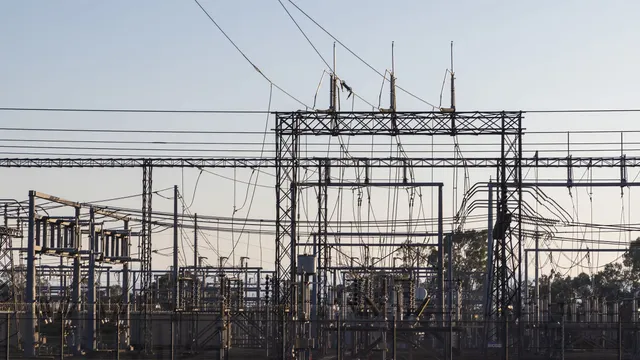
Constellation calls the Google deal “a direct response” to that proposal. Under PJM’s filing, an uprate would count toward a load’s obligation “but only to the extent such incremental capacity is created through an increase in such Generation Capacity Resource’s installed capacity and increase in” Capacity Interconnection Rights, which are the metered rights to inject power at the switchyard where a plant’s output enters the grid. Re-labeled existing supply would not qualify. The 890 MW of new rated capacity could qualify if it came with new interconnection rights and was offered into PJM’s auctions as a price taker for 10 consecutive delivery years. Neither Google nor Constellation has said whether the 890 MW will be registered that way, per POWER.
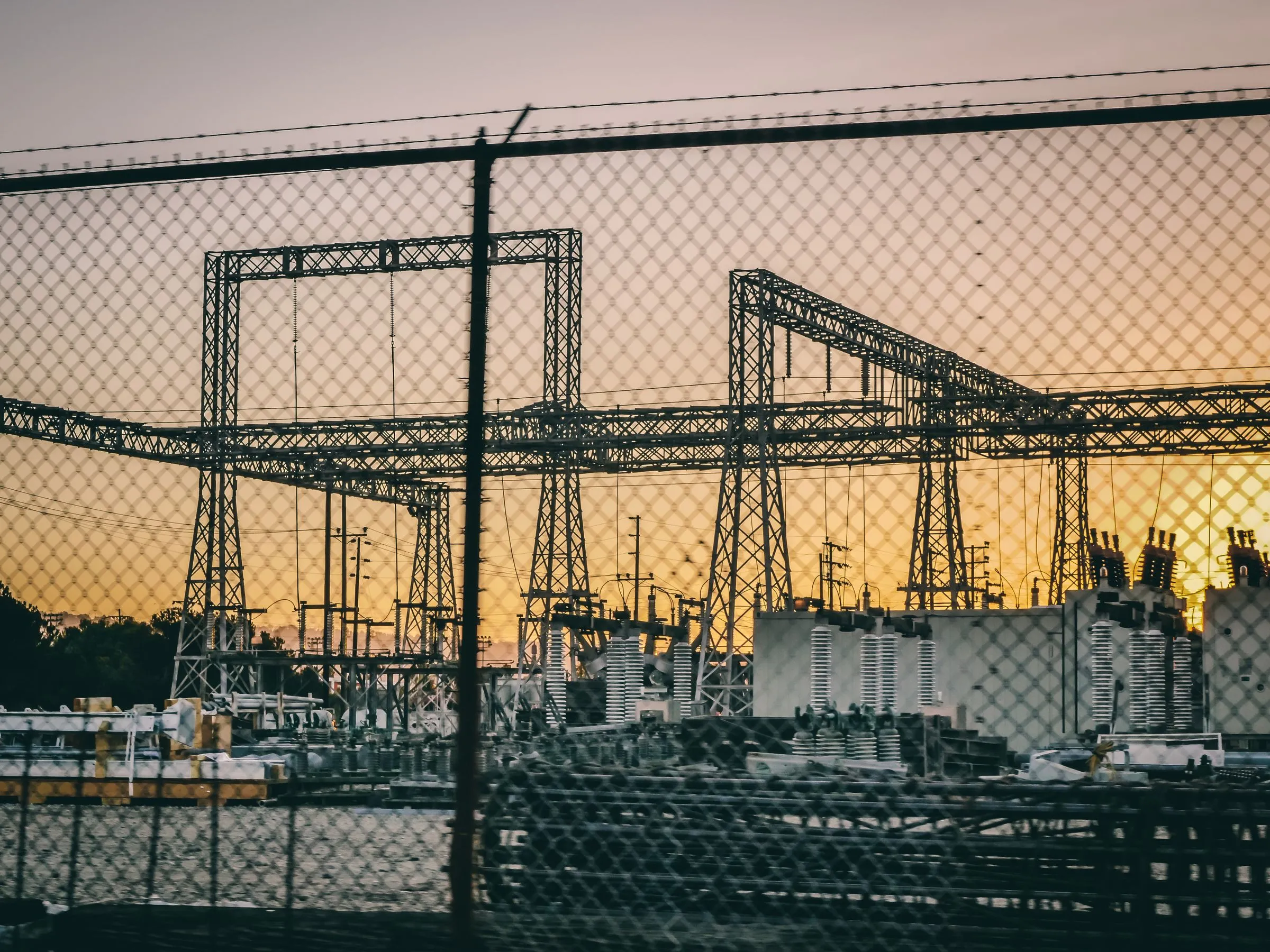
Photo: Kindel Media / Pexels
On Friday, October 9, FERC rejected most of the package. The commission accepted the 50 MW definition of a large load and a registry of large loads, both effective October 12, and found that the interim service and the Bring Your Own New Capacity rules “are either outside of the Commission’s authority or have not been sufficiently demonstrated to be just and reasonable,” per the American Public Power Association. “States have a crucial role to play in this challenge by designating which retail customers must be curtailed,” the order said, per Utility Dive. Utility Dive also reported that Jefferies told clients the outcome means higher capacity prices for longer, which favors Constellation, NRG, Talen and Vistra.
The rule that the Google deal was written to satisfy lasted three days past the announcement. The contract does not depend on that rule, but the threat of curtailment that made it urgent has been set aside for now.
The uprate rush
The Constellation deals are the largest entries on a list that has grown all year. On June 23, Walmart signed its first nuclear contract, for about 176 MW from Dresden in Illinois under two 15-year terms starting in 2029 and 2030. It includes 30 MW from a newly disclosed uprate, per the company. On September 21, Georgia Power filed an agreement under which Google subscribes to a new NU-1 tariff and receives the zero-emission credits from about 96 MW of uprates at Vogtle Units 1 and 2 and Hatch. The utility says the structure protects other customers from the cost, and the deal awaits Georgia Public Service Commission approval, per Power Engineering.
The day before the Google announcement, the Energy Department’s Office of Energy Dominance Financing offered Vistra a conditional loan commitment of up to $4.2 billion for uprates at Beaver Valley in Pennsylvania and at Davis-Besse and Perry in Ohio. Those add up to 433 MW, all of it already contracted to Meta, per Utility Dive. POWER reports the license filings will run from Perry in late 2029 to Davis-Besse in late 2032, with full power as late as 2034.
The federal program behind all of this is UPRISE, which DOE launched on March 12. It set targets of 2.5 GW of added nuclear capacity by 2027 and 5 GW by 2029, offered loan authority for up to 80 percent of eligible uprate costs, and came with no dedicated appropriation, per ANS, DOE and POWER. Jefferies analyst Julien Dumoulin-Smith estimates there are 3 to 5 GW of uprate potential nationwide, Canary Media reported, which would make these deals a third to half of everything available.
The fine print
Nobody has disclosed a price. Enerdatics counts 19 US nuclear power purchase agreements since the start of 2024, and none of them reveals a tariff. Constellation’s $4.3 billion, however, works out to just over $4,800 per kilowatt, Canary Media calculated, which is well above utility-scale solar with storage, a new combined-cycle gas plant or the $1.6 billion Crane restart, and less than half the per-kilowatt cost of Vogtle Units 3 and 4. “For the near term, uprates are the fastest, most practical and cost-effective ways to add reliable, clean nuclear capacity,” Judi Greenwald of the Nuclear Innovation Alliance told the outlet.
“This long-term clean energy collaboration with Google can serve as a model for how technology companies and the energy industry can work together to responsibly develop the digital economy and invest in our nation’s energy infrastructure in a way that delivers grid-wide benefits for all, funded by private entities.”
Joe Dominguez, Constellation’s chairman, president and chief executive, said that in the October 6 release, quoted by Utility Dive. A good deal of the agreement has nothing to do with new nuclear capacity. The 15-year, 2,700 MW supply agreement is a hedge on existing PJM generation that is not tied to any specific plant and adds no capacity, per Enerdatics and POWER. The PPA lets Google cut non-critical consumption during grid stress, the same approach behind the AI Energy Management Alliance that Google, NVIDIA and Emerald AI launched on September 16, per W.Media. A separate five-year technology agreement puts Google Cloud and Gemini Enterprise inside Constellation’s operations.
The jobs figures, about 4,400 sustained and 7,200 in construction across six sites, come from Constellation. Both companies say the structure follows the White House Ratepayer Protection Pledge, the voluntary commitment that Amazon, Google, Meta, Microsoft, OpenAI, Oracle and xAI signed in March to build, bring or buy new supply and pay for it whether they use it or not. Whether a premium contract price finds its way into the capacity auction that sets everyone’s bill, which the ratepayer economics traced, remains an open question.
What this adds before 2030
In September, the honest count of new nuclear supply arriving before 2030 was about 2.25 GW from three restarts plus a few hundred megawatts of uprates. Five weeks later, the uprate column has filled in, and the dates matter more than the totals. Dresden’s 30 MW starts in 2029. Google’s 890 MW begins in 2028 and finishes by the end of 2032. Calvert Cliffs’ 190 MW arrives between 2030 and 2032. Vistra’s 433 MW ramps up from 2031 to 2034. Georgia’s 96 MW is waiting on its commission. Of roughly 1.6 GW of contracted uprates, the portion that could plausibly be generating before PJM’s June 2028 shortfall is one plant’s worth, and nobody has said which plant.
Meanwhile PJM is short 6.8 GW for 2028, the backstop meant to buy that capacity is suspended, the curtailment rule meant to force the issue has been rejected, and PJM projects that data center demand alone will add 30 GW by 2030, per NEI. Uprates are still the one category in the nuclear ledger that adds electrons this decade rather than re-labeling them. Even in the most generous reading, the category holds less than a quarter of one grid operator’s shortfall. The plants will make more power from the same reactors, and the grid will still be waiting on everything else, as Bring Your Own Power Plant laid out.
More in Power & Energy
All Power & Energy →
The Backstop That Stalled: PJM's One-Time Auction for Data Center Power Runs Into FERC
PJM was supposed to open a six-week window on September 30 to buy 6.8 GW of new power plants for data centers on 15-year contracts. FERC approved the price cap, threw out the cost allocation, called the filing a mess, and the largest grid operator in the country put the whole thing on hold.
Nuclear's Comeback: Restarts, Small Reactors, and the Gap Between Deals and Electrons
Hyperscalers have signed close to 10 gigawatts of nuclear deals, and Palisades just loaded fuel. But most of the announced capacity is either re-labeled output from existing plants or reactors that will not run until the 2030s. Here is what will actually deliver before 2030.
The AI Power Crunch: How Data Centers Are Straining the Grid
Data center electricity demand is set to double worldwide by 2030. In the US, the scramble for gigawatts is rewriting utility economics, reviving nuclear plants, and jamming interconnection queues.